
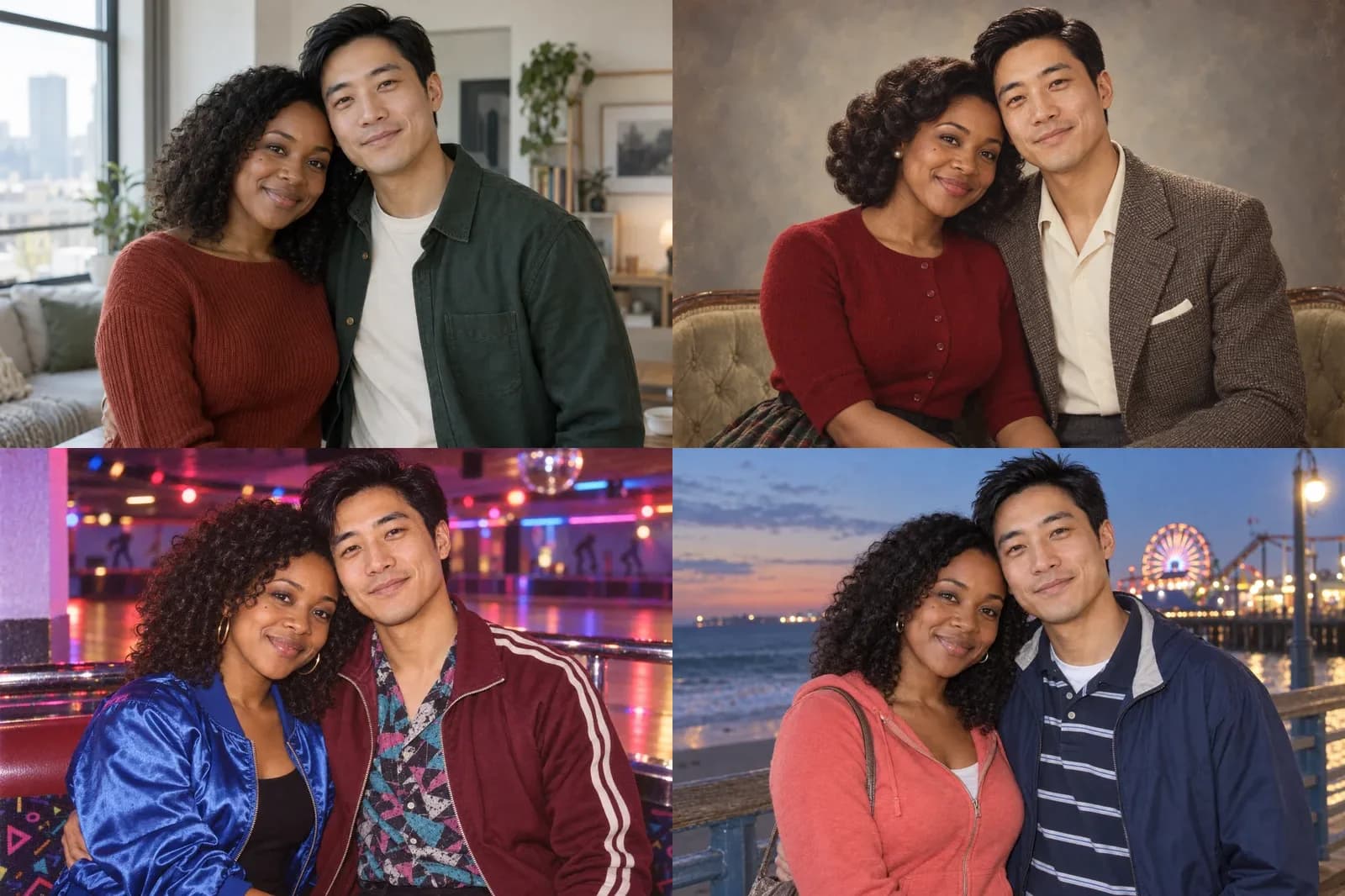


The best AI couple photos do more than put two people in vintage clothes. They carry the relationship into another visual world: the way the pair stand together, where they are, what the light is doing and what kind of photograph someone in that era might have kept.
Start with one photo that already contains both people. Throwback's current AI Time Portrait flow accepts a selected photo and asks the model to preserve the recognizable people and scene while reimagining the decade. It does not combine two separate portraits, and no generative result can promise perfect identity. Open AI Time Portrait when you have a shared photo you are allowed to use.
Choose a source that gives both faces a fair chance
A useful source is not necessarily formal. A phone photo can work if both faces are clear, reasonably sized and free from heavy blur, sunglasses or another person's hair. Look for:
- both people facing the camera or turned only slightly away
- even enough light to see eyes, nose and mouth clearly
- no hand, drink or prop covering either face
- a crop with some room around shoulders and hair
- an expression or gesture that feels like the two of you
Do not crop one partner into a tiny corner. If one face has far less detail than the other, the comparison will be harder to judge.

A clear shared source gives both identities, and the relationship between them, a place to begin.
Nine couple portrait ideas, from the 1950s to the 2010s
These are starting points, not historical reconstructions. Pick the idea that feels like another life you would actually want to glimpse.
1. A 1950s neighborhood studio portrait
Keep the pose composed and close: shoulders touching, hands relaxed, painted backdrop behind you. Let neatly set hair, a cardigan and a textured sport coat do more work than novelty props. The charm is in the formality of an ordinary portrait appointment.
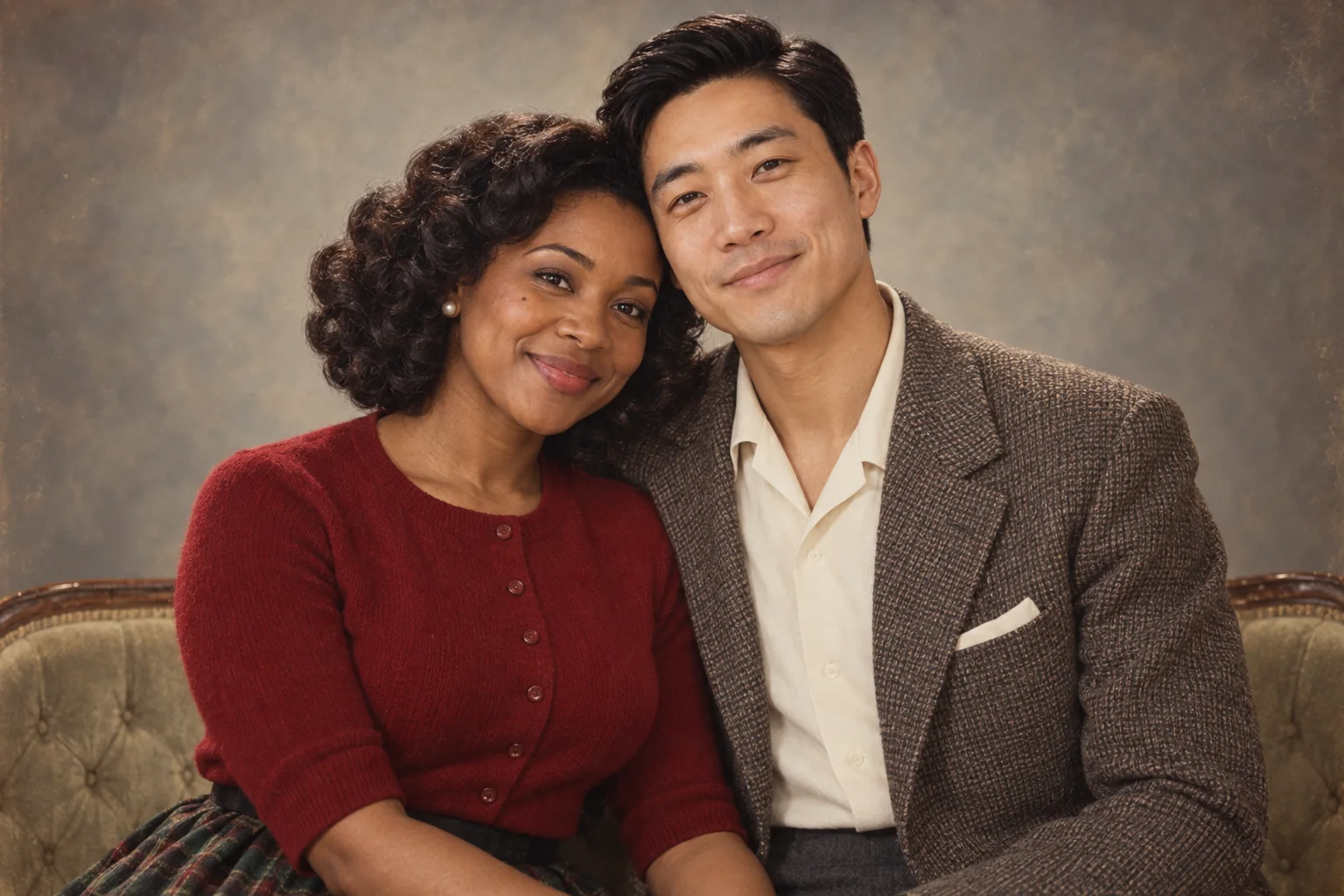
A painted backdrop, broad studio light and a composed pose turn the shared portrait into a mid-century keepsake.
2. A 1960s city-weekend snapshot
Imagine the pair outside a small cinema or cafe in clean daywear, caught between plans rather than arranged in a studio. A tighter color palette and a simple street setting can carry the idea without making every object shout the decade.
3. A 1970s record-store afternoon
Try warm window light, layered knitwear and a casual lean against a record bin. The relationship cue could be one person holding an album while the other looks over their shoulder. It reads as a shared afternoon, not two separate costumes.
Once one concept feels right, choose its decade in the portrait studio. Each generation is a new image based on the people and scene in the photo you provide, so inspect the result rather than assuming every detail stayed fixed.
4. A 1980s roller-rink night
Direct flash, colored practical lights and a playful arm-around pose can change the energy completely. Let satin, track-jacket texture and fuller hair belong to the location. A neon wash alone would leave the story half-finished.
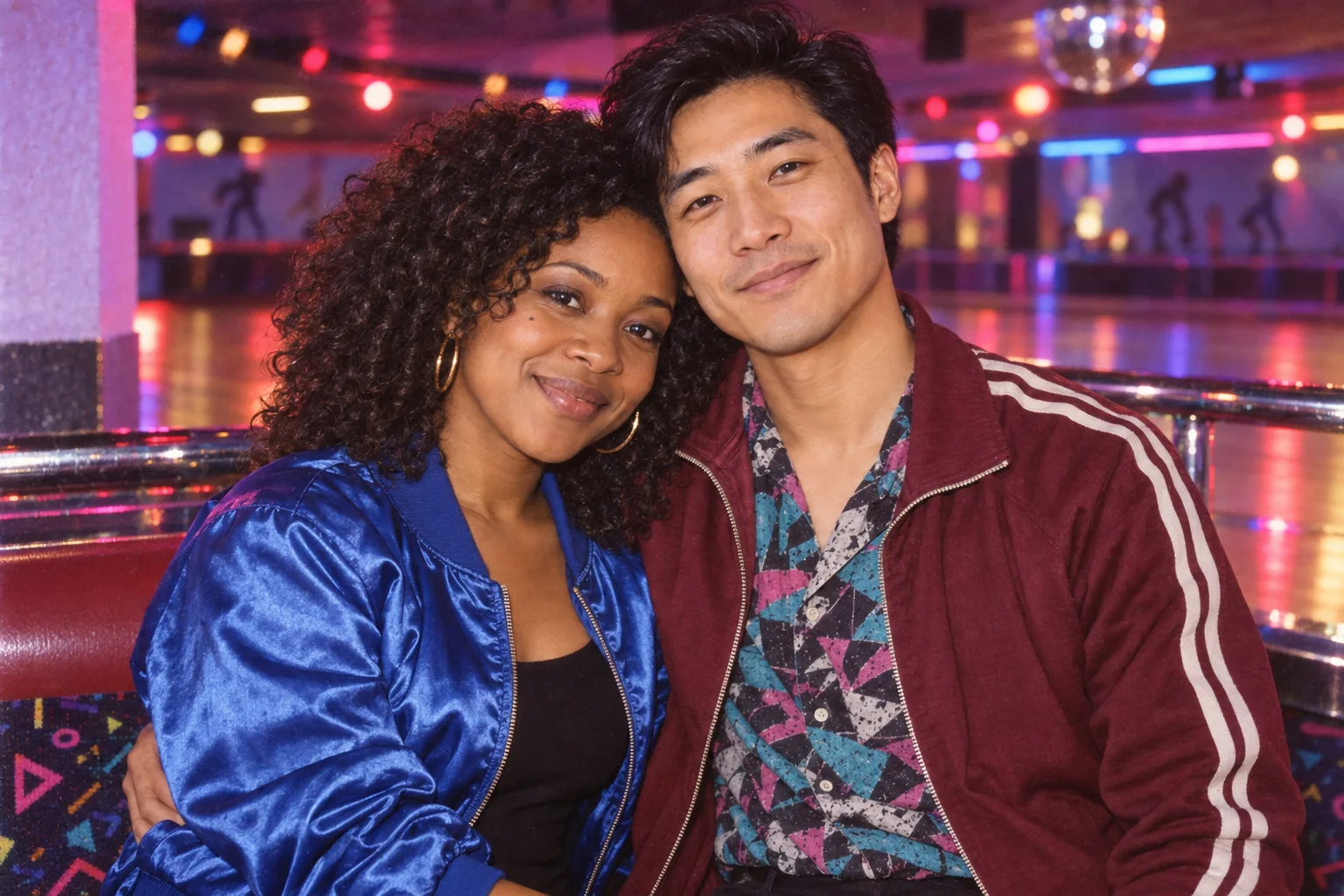
Direct flash and a roller-rink setting give the couple a lively 1980s snapshot energy.
5. A 1990s mall-photo-booth strip
Go close and slightly imperfect. One frame might be straight-faced, the next laughing, the last interrupted. Simple denim, windbreakers or a plain sweatshirt can feel more convincing here than an overloaded nostalgia costume.
6. An early-2000s boardwalk holiday
Use cool built-in flash against blue-hour sky, with amusement lights slipping out of focus behind the pair. A zip hoodie, polo and casual shoulder bag make sense because they belong to a day out.
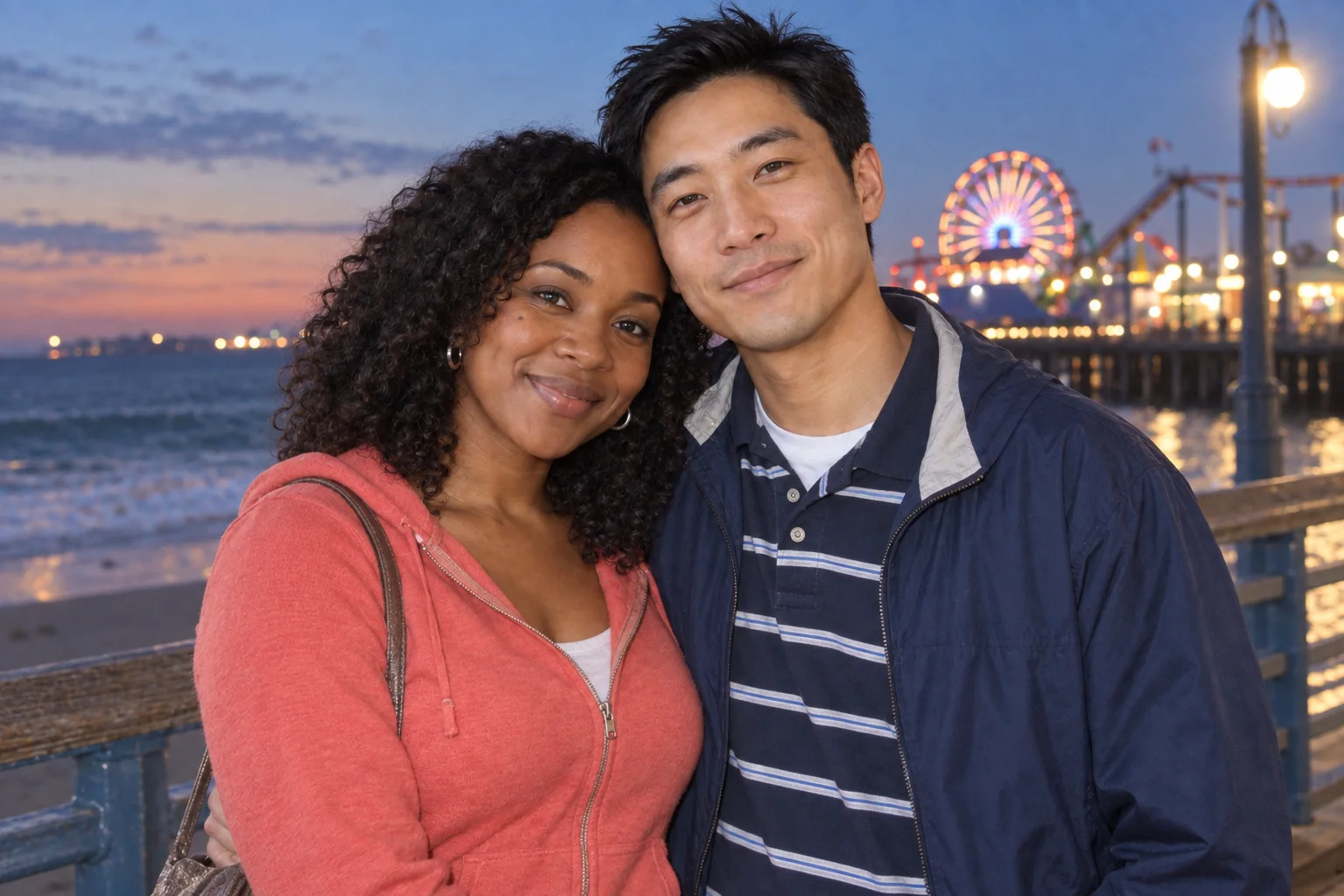
Cool digicam flash against the evening boardwalk makes the scene feel like a holiday photo saved from the early 2000s.
7. A 2010s festival portrait
Think phone-camera immediacy: bright outdoor light, a busy but soft background and a quick portrait between sets. Keep the styling plausible for the setting. The strongest cue may be the casual framing rather than a dramatic wardrobe change.
8. The same anniversary in two eras
Choose one relationship detail, such as linked hands or one partner leaning into the other, and repeat it in two different decade worlds. A 1950s studio and a 2000s boardwalk can feel unrelated at first glance, yet the gesture holds them together.
9. A three-generation family-wall set
Plan three portraits that could hang side by side: perhaps a formal 1950s sitting, a 1980s night out and an early-2000s holiday. Keep the couple recognizable while varying pose, distance and setting. The set should feel like three chapters, not one image with three color grades.
Check both identities, not only the mood
Put the source beside each result and check each partner separately. Start with facial structure and proportions, then look at the eyes, nose, mouth, skin tone and distinguishing features. Check hairlines, earrings, glasses, hands and teeth too. If either person reads as someone else, treat that generation as a miss.
Then check the relationship. Do the people still look connected in a way that feels true to the source? A beautiful period scene is not enough if one partner has disappeared into the styling or their gesture now feels awkward.
Finally, scan the world around them. Generated lettering can be nonsense, background faces may be malformed and period objects may not hold up to close inspection. Save only what you are comfortable presenting as a creative AI image.
Keep the product boundary clear
AI Time Portrait is a generative transformation. It can change clothing, hair, setting and the photographic world because it creates a new image. Throwback's local camera processes do a different job: they keep the original scene and alter its camera and print character. Use the AI transformation explainer if you are deciding between the two.
Throwback asks for permission before the selected photo is sent for AI processing. Only use a couple photo when everyone shown has agreed. Results vary, and a source with two clear faces still does not guarantee that both identities will survive every generation.
When you are ready, take one shared photo into AI Time Portrait, choose a decade and compare the result with both people in the original.