
Build a whole world, not a costume
A good 90s grunge portrait should feel as though you found someone in a real place, not sent them to a costume party. Start with loose, ordinary layers. Let the setting show some wear, keep the expression unperformed and choose a camera treatment that feels immediate rather than polished. Flannel is optional. A picture that holds together is not.
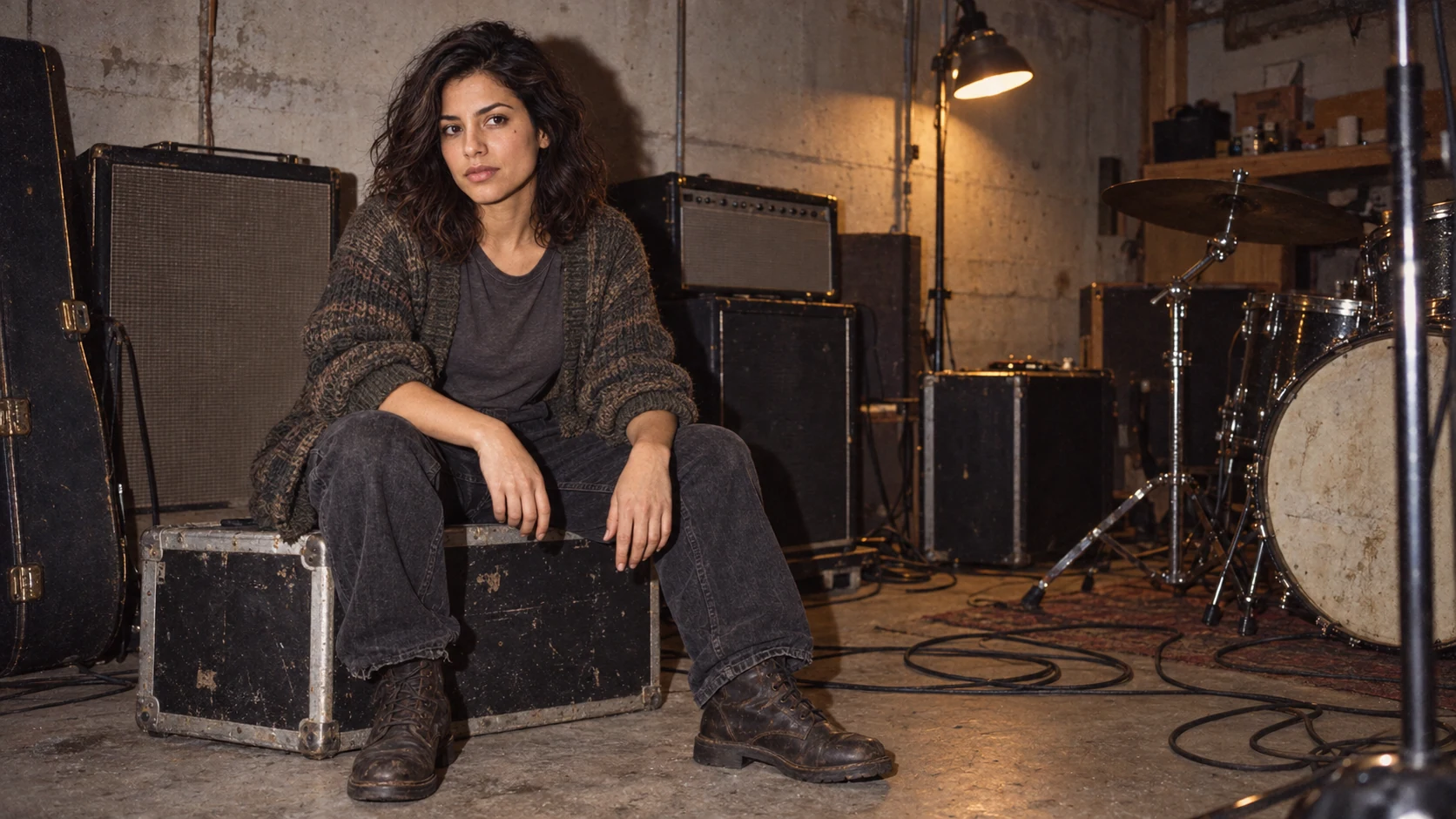
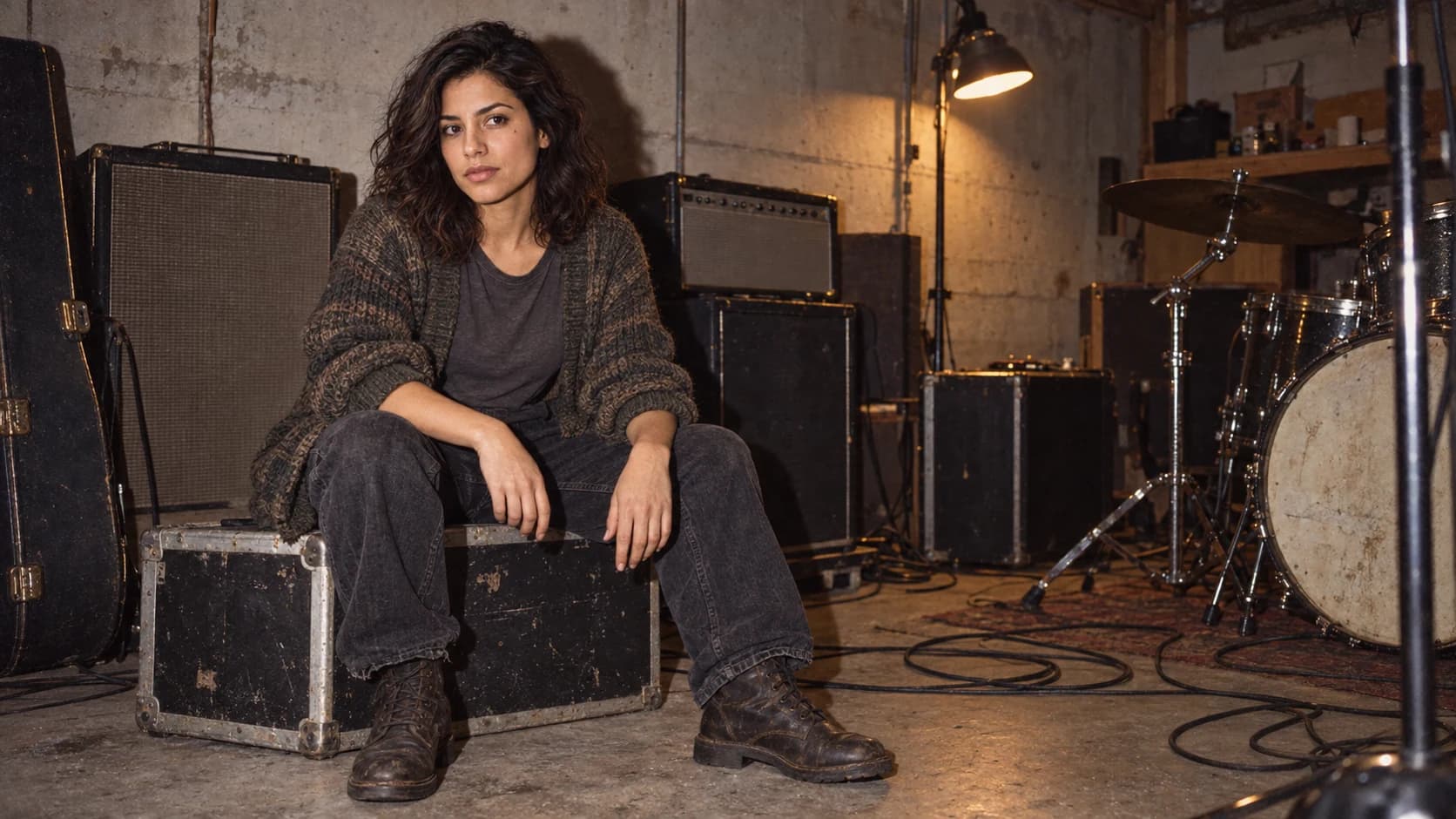
Loose layers, direct flash and an unperformed gaze turn a rehearsal room into a complete portrait world.
The rehearsal room works because nothing fights for attention. The cardigan hangs instead of hugging the body. An equipment case gives the subject somewhere believable to sit, while the averted gaze and direct flash make the moment feel recorded rather than arranged. No single prop or garment has to announce the theme.
Treat grunge as a visual logic, not a uniform
Vogue traces the aesthetic to Seattle’s rock-music renaissance in the 1980s, with grunge emerging more widely in the early 1990s. Its description of the look as gritty, raw and distorted gives you a better starting point for a portrait than a checklist of famous outfits.
Early grunge styling combined outdoorsy staples with vintage finds and everyday clothes, often sourced from thrift stores and workwear shops. It also pushed against mainstream fashion and consumer culture. That is why a spotless costume made entirely from obvious theme pieces can miss the point, even when each garment looks right on its own.
Take the underlying logic: comfort over display, layers that look accumulated rather than carefully coordinated, and wear that feels natural instead of theatrically distressed. Above all, the person should seem to have a life beyond the frame. There was no single official grunge uniform, and your portrait does not need one.
Make six decisions before choosing individual clothes
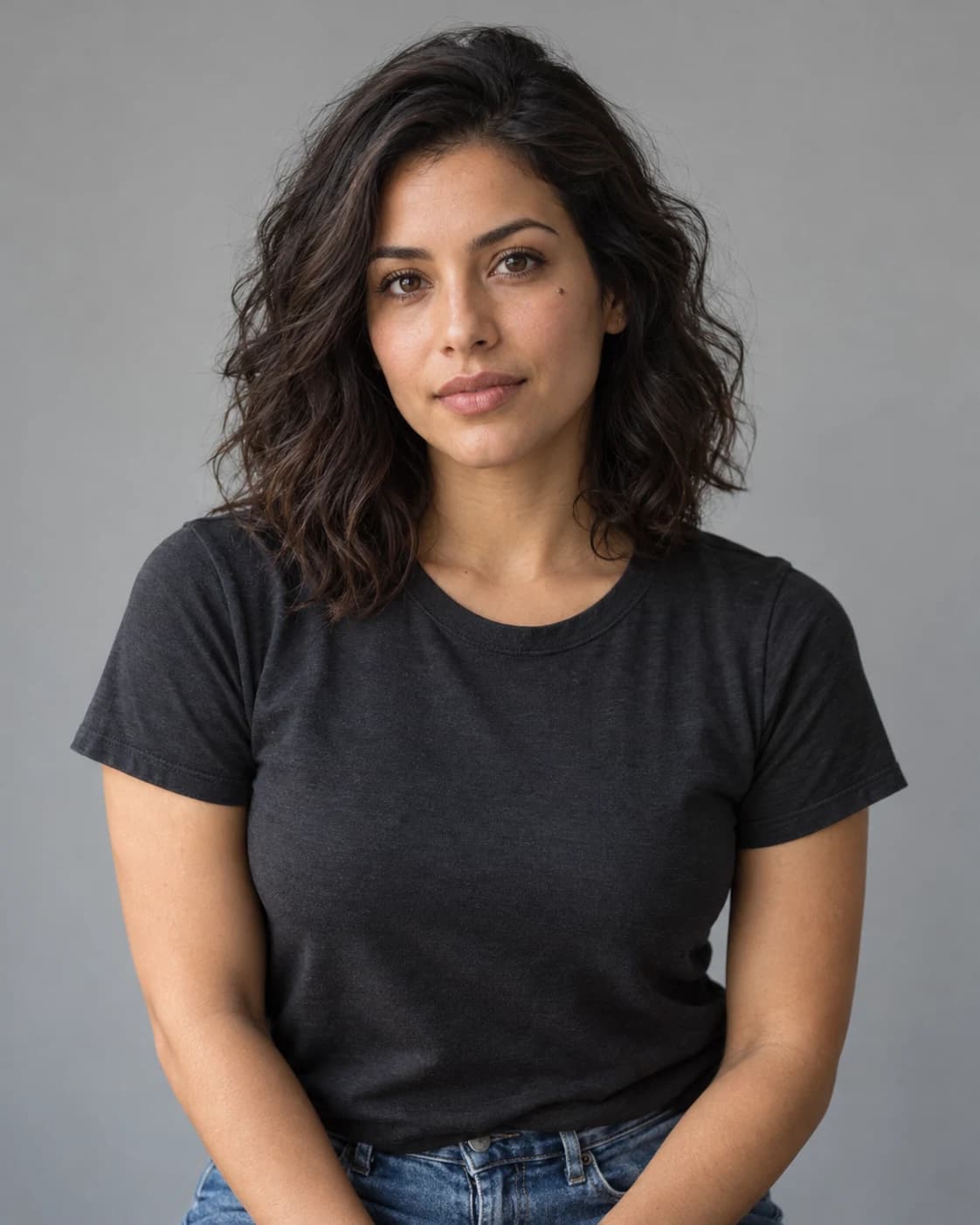
These examples follow the same fictional person through three different portrait worlds. The neutral reference keeps their identity clear, so you can see what changes when the clothes, setting and photographic treatment shift.
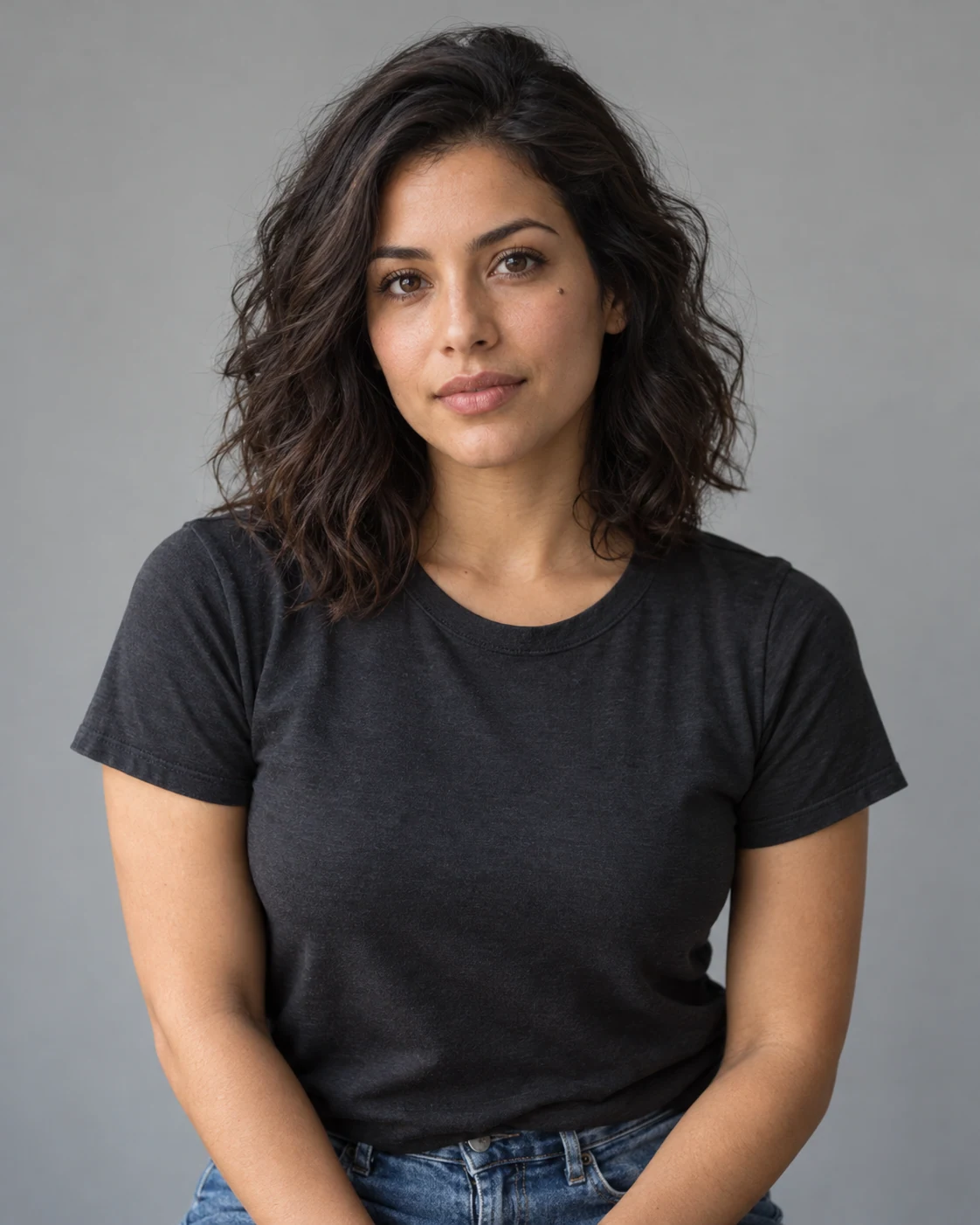
A neutral contemporary portrait with simple styling, soft daylight and a clear view of the face.
-
Silhouette: start loose and slightly collapsed. A long sleeve might bunch at the wrist, a cardigan can drop past the hip or a jacket can sit wider than the body.
-
Layers: choose pieces that could have been added for warmth or convenience. A thermal, blank tee and work jacket feel more lived-in than several statement garments competing for attention.
-
Texture: washed cotton, soft knitwear, corduroy, faded denim and naturally scuffed footwear all fit. A little distress goes further than tearing up every surface.
-
Palette: stay within a narrow family such as soot, moss, faded burgundy, dirty cream or worn blue. One pale or saturated piece can break up the murk without making the outfit feel overly coordinated.
-
Expression: try a gaze just past the camera, a brief direct stare or the pause after movement. Skip the theatrical scowl.
-
Setting: the person needs a believable reason to be there. A rehearsal room, concrete overhang, plain bedroom corner or stripped studio works better than a random distressed wall.
Portrait world two: thrifted street quiet
For a quieter, less performative take, head outside and let practical layers do the work. A thermal, faded shirt, work jacket and loose denim add depth without leaning on a band tee or obvious slogan. Wet concrete, a blank shutter and overcast light keep the scene grounded in an ordinary place.
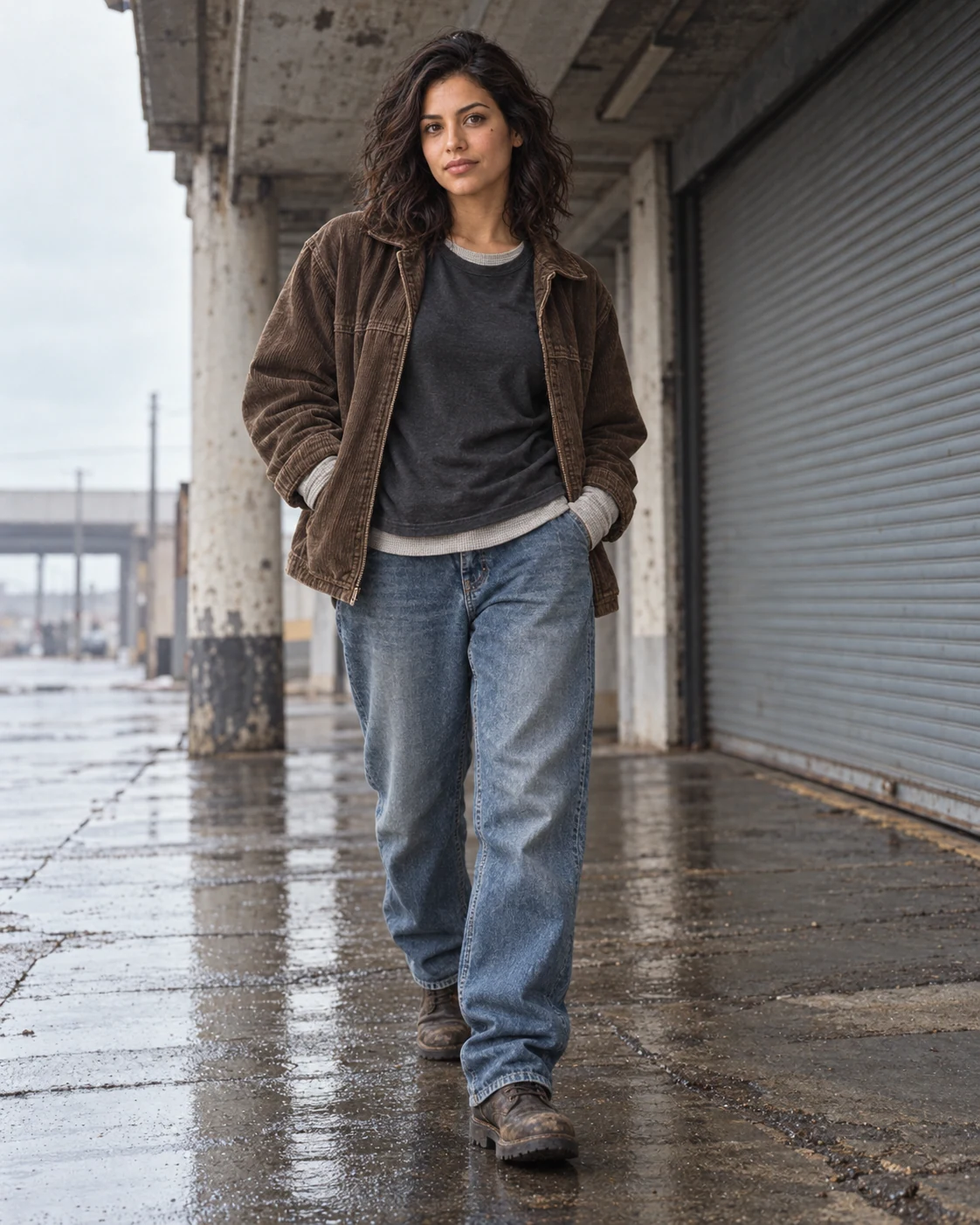
Workwear layers, wet concrete and a paused mid-step pose create a quieter street-level mood.
Treat the photograph as an interruption. Have the subject walk slowly, stop mid-step and look just past the camera. One hand can catch a pocket or jacket cuff. That slight imbalance usually feels more natural than planting both feet and arranging every limb.
Portrait world three: fashion without the polish
A fashion-editorial version can be more deliberate, though runway grunge was already an interpretation of an underground aesthetic. Vogue points to the Perry Ellis spring 1993 collection as an important moment in grunge-inspired style’s move into high fashion.
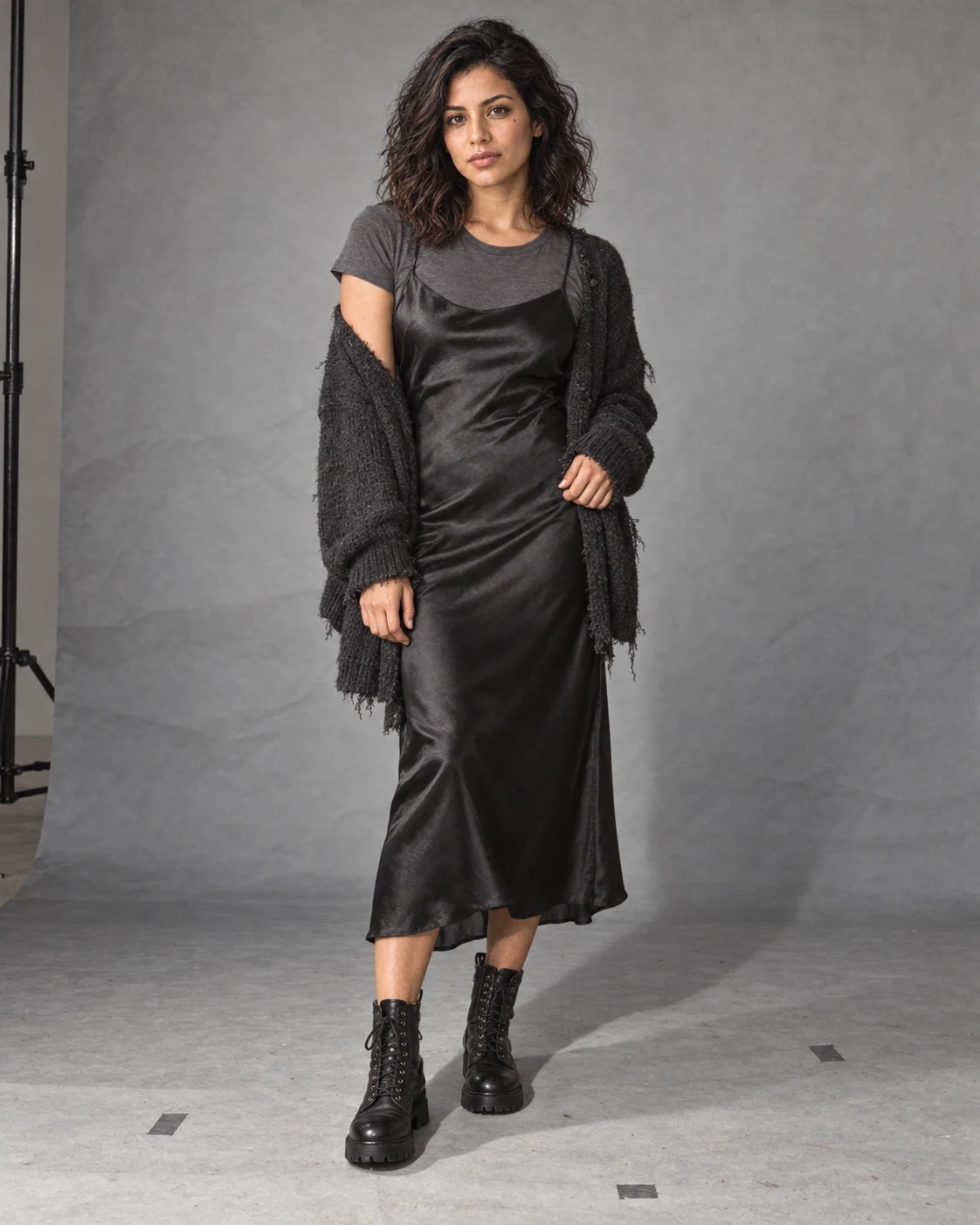
A broken backdrop edge and controlled styling push the mood toward fashion without cleaning it up.
Contrast is more useful here than simple messiness. Pair a fluid slip dress with heavy boots, put a fitted base under an oversized knit or keep the makeup controlled except for one smudged edge. Let a piece of the set remain visible: a backdrop seam, some floor tape or the edge of a light stand. The photograph can admit that it was constructed instead of pretending to be documentary.
Choose one camera character and commit to it
Camera treatment should deepen the scene, not rescue styling that never worked. Pick one direction, test it with the complete outfit and carry it through the final edit.
-
Direct-flash rehearsal: hard-edged shadows, a dark room behind the subject, slightly wide framing and a few small compositional imperfections.
-
Muted street portrait: soft overcast light and restrained color, with enough fabric and background detail left to establish the place.
-
Stripped fashion set: hard frontal light, a simple gray or dirty-cream backdrop, deliberate negative space and one visible studio edge.
Do not stack every sign of age into one frame. Heavy grain, extreme color casts, light leaks, torn borders and blur can quickly turn the portrait into an effects demo. One or two controlled imperfections leave more room for the person.
Use a shot list that leaves room for accidents
-
Begin with a wide frame that explains the room, street or studio.
-
Then make a waist-up portrait where the clothes and expression carry equal weight.
-
Come closer for a face-led frame, with hair crossing part of the forehead or cheek.
-
A seated pose gives the clothes room to fold and pool on their own.
-
Catch one transition, such as standing up, turning away or pulling on a sleeve, instead of directing a conventional action pose.
-
End on a texture detail: a frayed cuff, stacked layers or a worn boot against the floor.
Edit until the person comes before the theme
When you review the set, forget about choosing the frame that looks the most grunge. Find the clearest glimpse of this person in this place. If every element is shouting the concept, take one away. Lose the flannel, simplify the makeup, clear part of the background or ease off the grain.
Once the clothes, setting and expression feel like they belong together, use that brief to explore the 1990s experience. Keep the person’s identity and emotional direction steady while the decade changes the portrait world around them.
Sources
- Vogue on the grunge aesthetic
Images in this article are editorial AI reimaginings of a fictional person for inspiration; they are not archival photographs or actual Throwback output.