
Build four chapters around one friendship
A good best-friend photoshoot needs more than a stack of unrelated poses. Give it four chapters instead. Keep the same pair and one recurring visual detail, then change the setting, clothes and mood around them. A record-shop afternoon, arcade rivalry, yearbook session and bedroom hangout can feel like four different lives while still telling one friendship story.
Before sorting out clothes, choose an anchor. Maybe it is a shoulder bump, a cobalt accessory that appears in every scene or the contrast between one friend's calm expression and the other's grin. That small repetition is what keeps the finished series from looking like four separate costume changes.
Both friends can also explore AI Time Portraits separately before the shared shoot. Use those individual experiments to collect styling or mood cues, then bring the favorite ideas back to the plan.
Begin with a clear modern reference
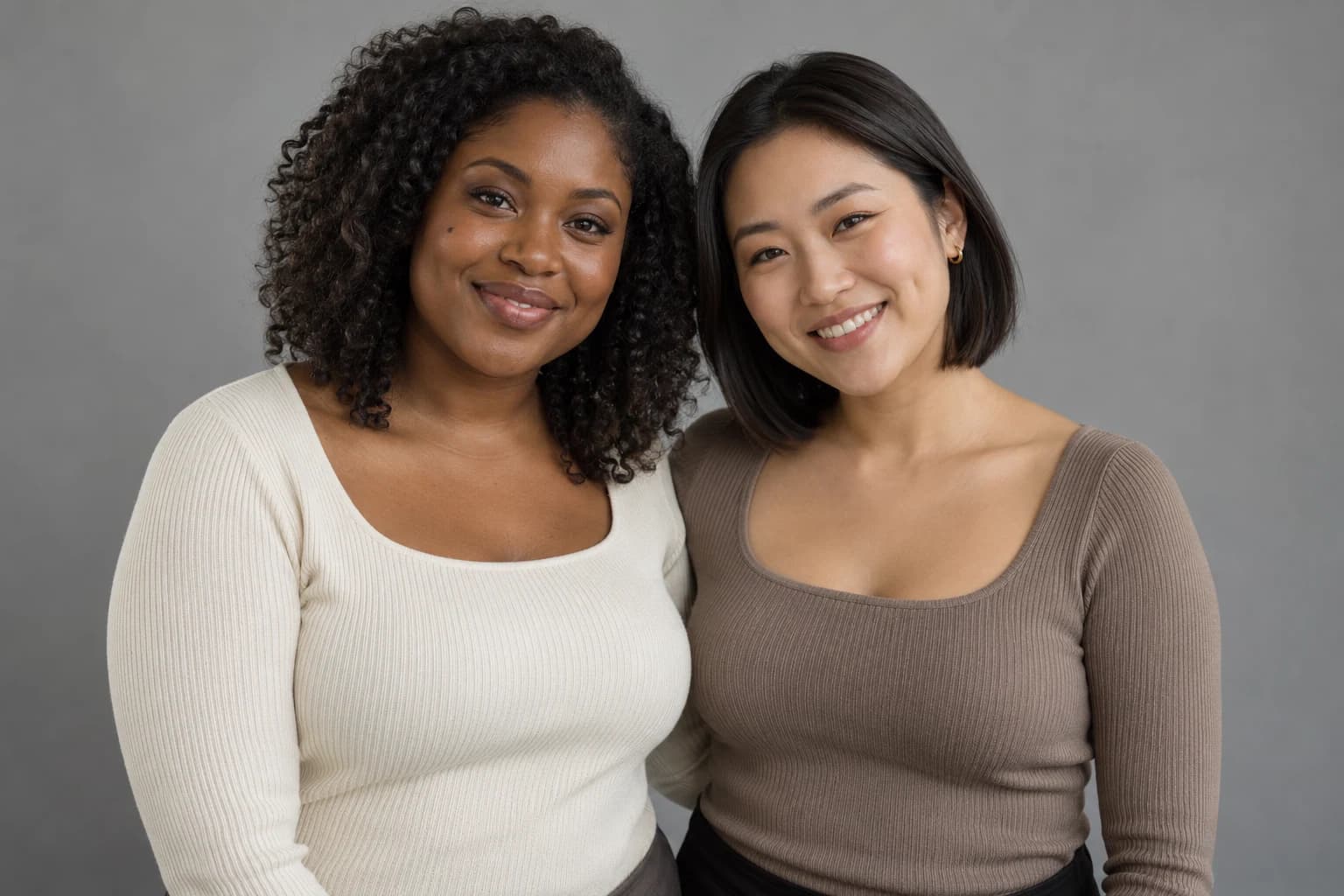
A generated concept series needs a clean starting point. Choose a neutral image where both faces are unobstructed and equally prominent. Plain clothes, even light and a quiet background make comparisons easier across the four imagined settings. Every new scene should refer directly to this original image, never to another generated result.
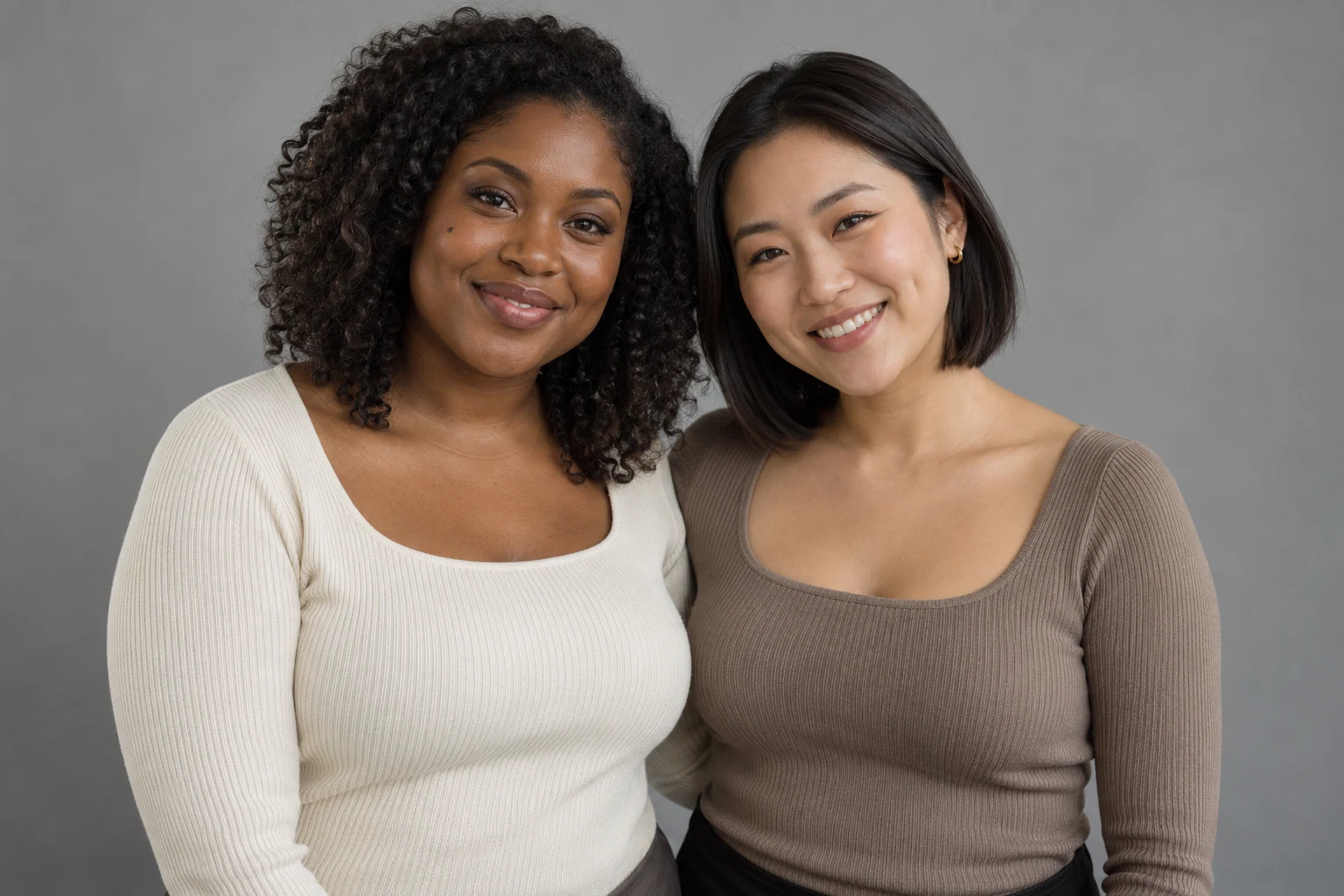
Two friends share an easy shoulder-to-shoulder pose in a quiet modern portrait.
1970s-inspired idea: record-shop regulars
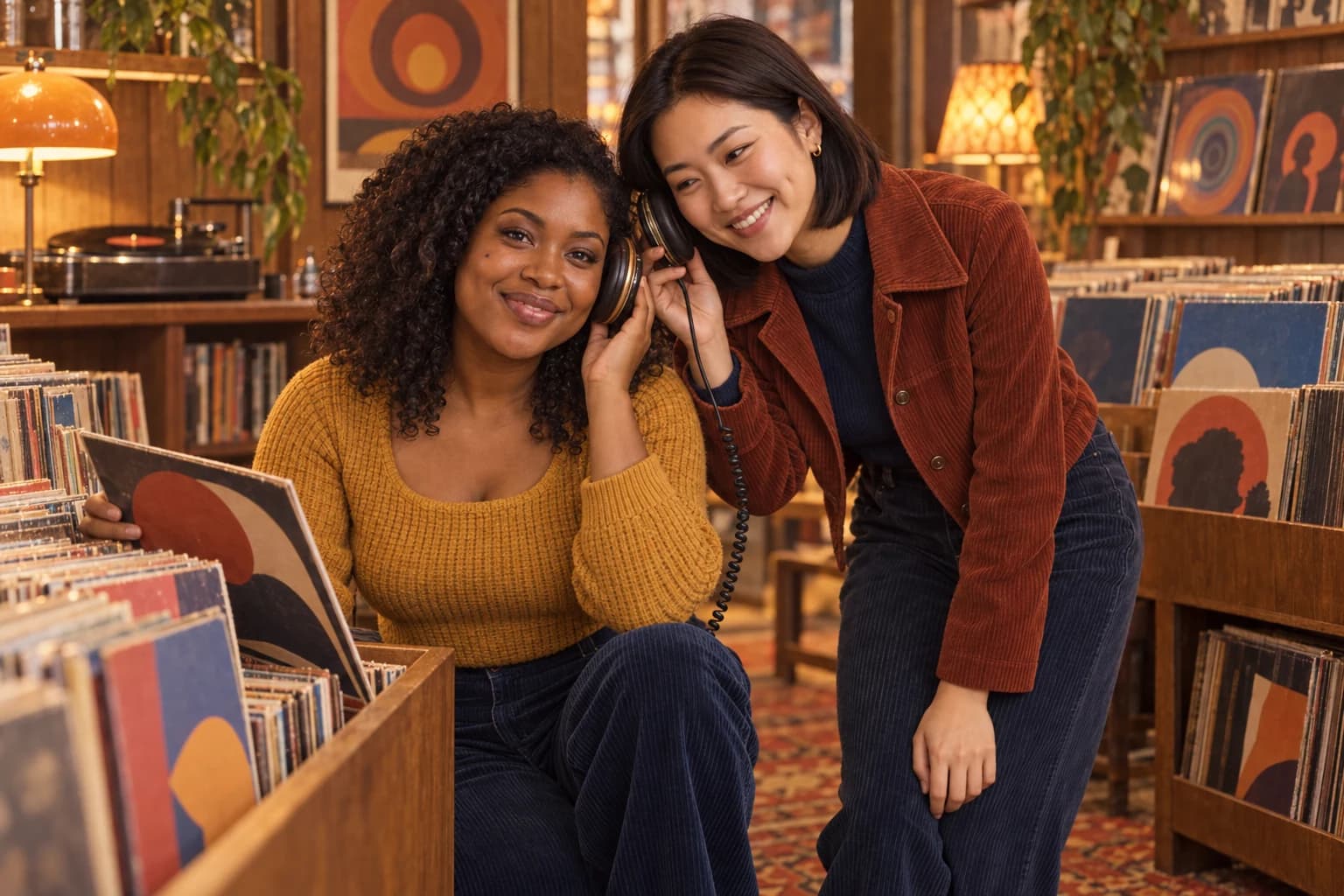
The friendship matters more than the records. Put one friend low beside a bin and let the other lean into the frame. Shared headphones or a record sleeve gives them a natural point of connection, while the staggered heights stop the pose from becoming stiff.
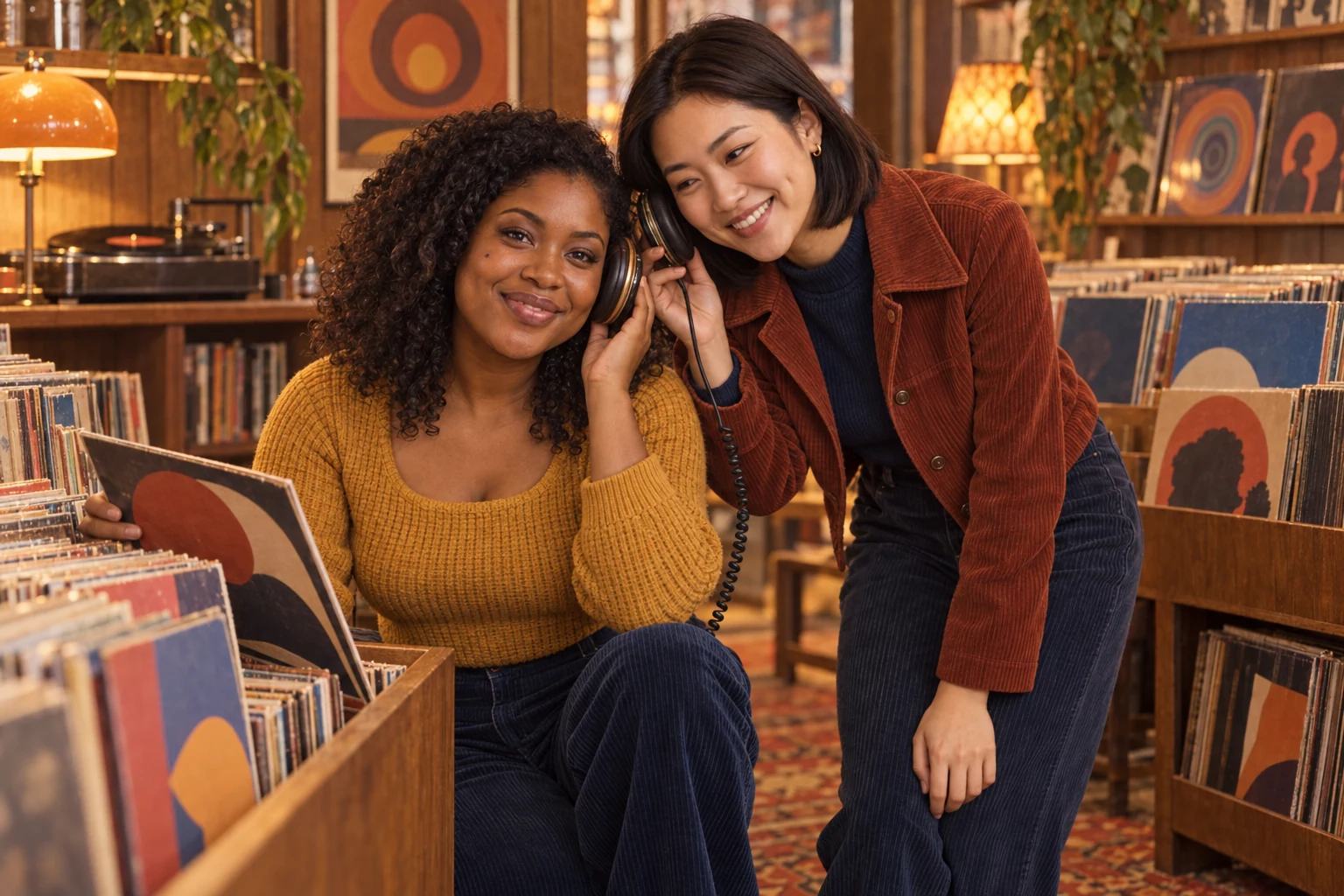
Shared headphones and a staggered lean turn a record-shop stop into a friendship portrait.
-
Have one person browse while the other reacts, points or leans over a shoulder.
-
Mix rust, mustard and indigo, but give each friend a different texture or silhouette.
-
A few wooden shelves, unbranded sleeves and warm pools of light are enough. There is no need to pack every corner with props.
1980s-inspired idea: arcade rivals
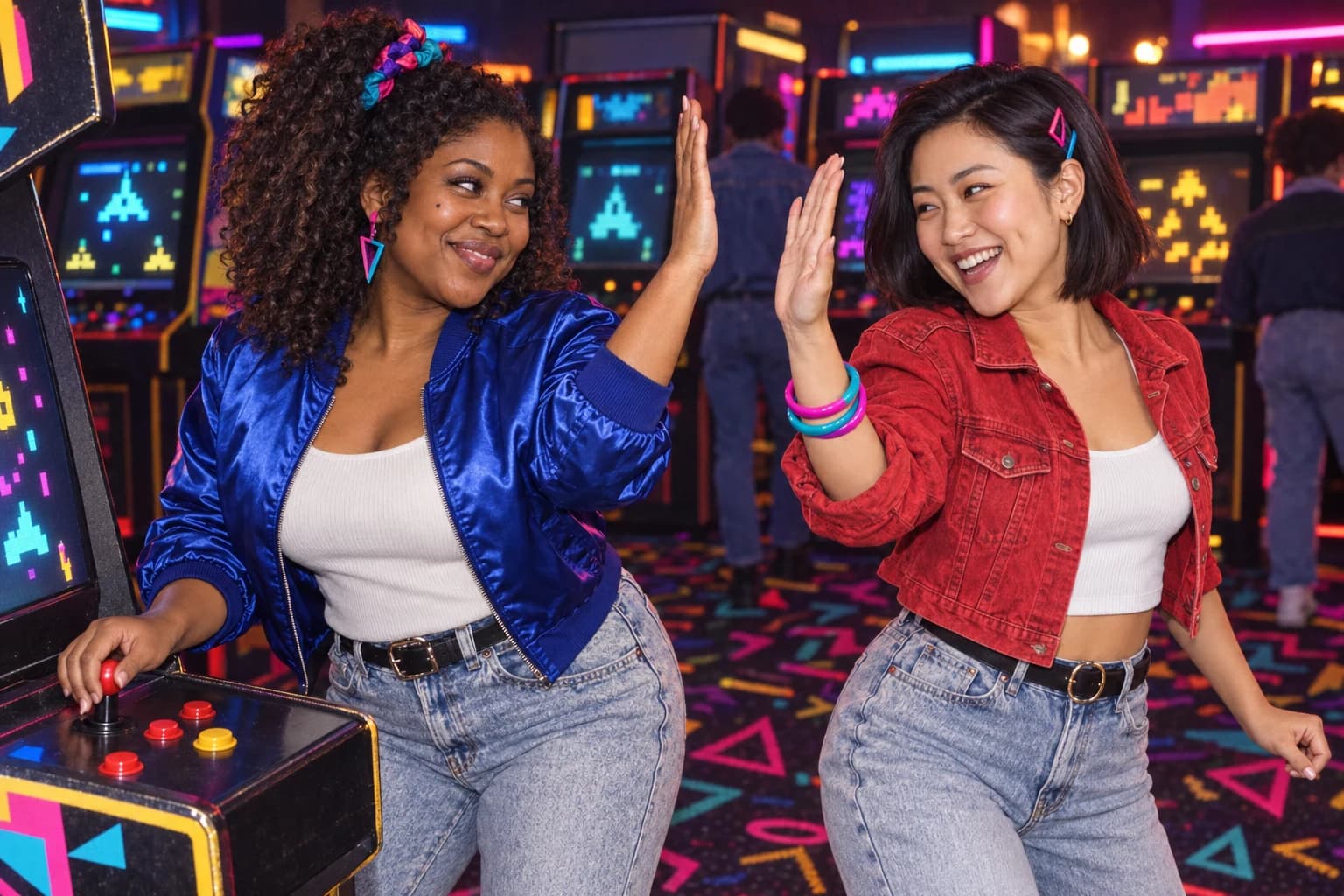
The direction for this scene is simple: compete. Catch the pair as they turn away from the game and toward each other, right between concentration and celebration. Try a high-five, a mock victory pose or an exaggerated dispute over the score. Any of those will say more about the friendship than standing neatly beside a cabinet.
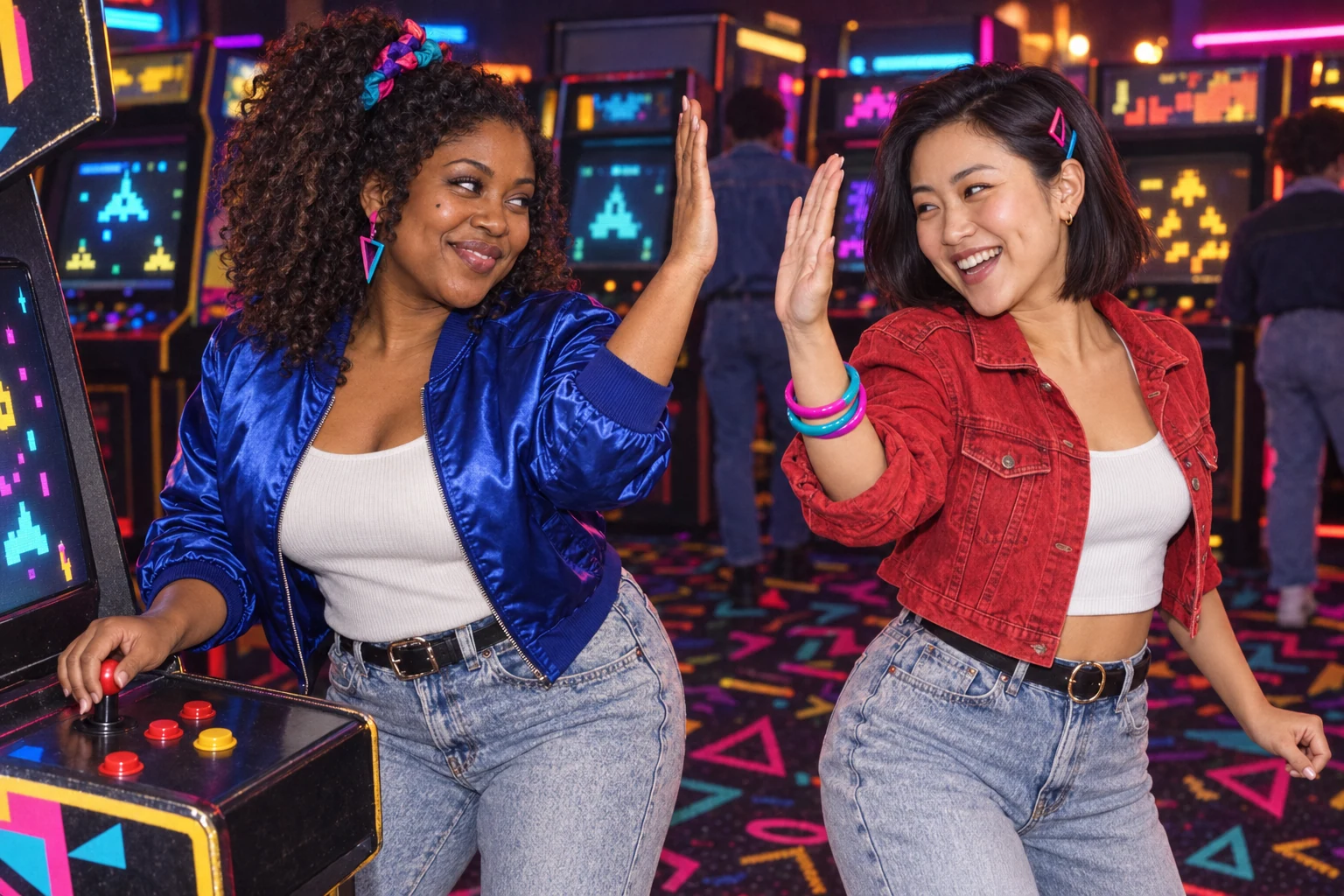
An arcade face-off gives the pair movement, bold color and a playful reason to interact.
-
Catch the split second before their hands meet, or the moment just after one friend starts celebrating.
-
Let cobalt and red lead the clothes, with black separating the friends from the surrounding color.
-
Treat cabinet glow, patterned carpet and direct flash as bold shapes, not background clutter.
1990s-inspired idea: the double yearbook portrait
The fun here comes from taking the formal setup a little too seriously. Seat one friend on a stool and place the other just behind. Then split their expressions: one restrained smile, one deadpan stare. It feels more personal than asking both people to make the same face.
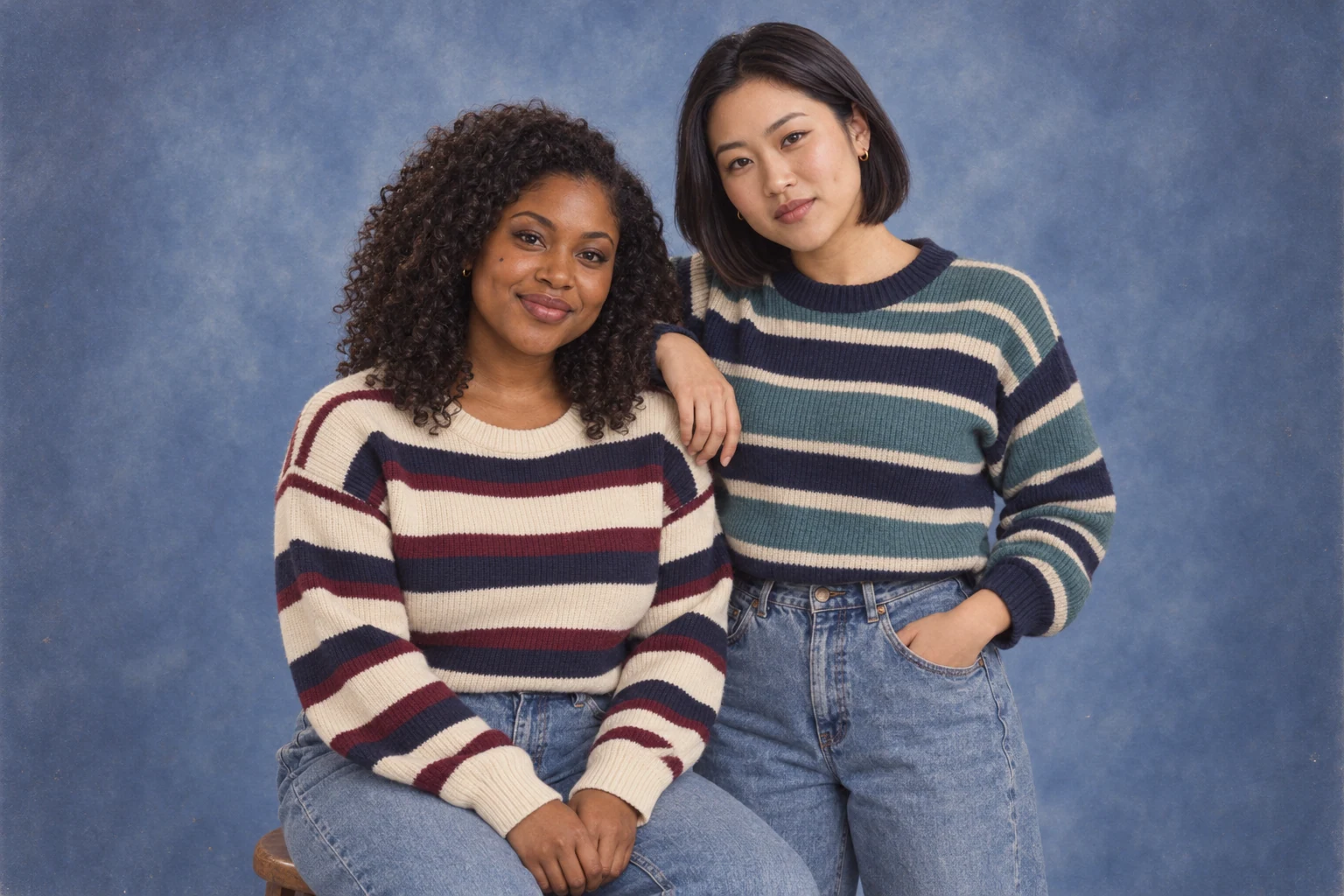
Two distinct yearbook poses share one backdrop, one color accent and the same deadpan energy.
-
Connect the composition with an elbow on a shoulder, crossed arms or matching head tilts.
-
Repeat one color across striped knitwear, denim or a campus-inspired jacket without matching the full outfits.
-
Keep the studio plain enough for the expressions to become the memorable part of the frame.
Early-2000s-inspired idea: bedroom camera check
End the series somewhere private and easygoing. Sit the friends on the floor and let them review a compact camera, trade accessories or lean over something just outside the frame. The room may be colorful and busy. The friendship should still be the first thing anyone notices.
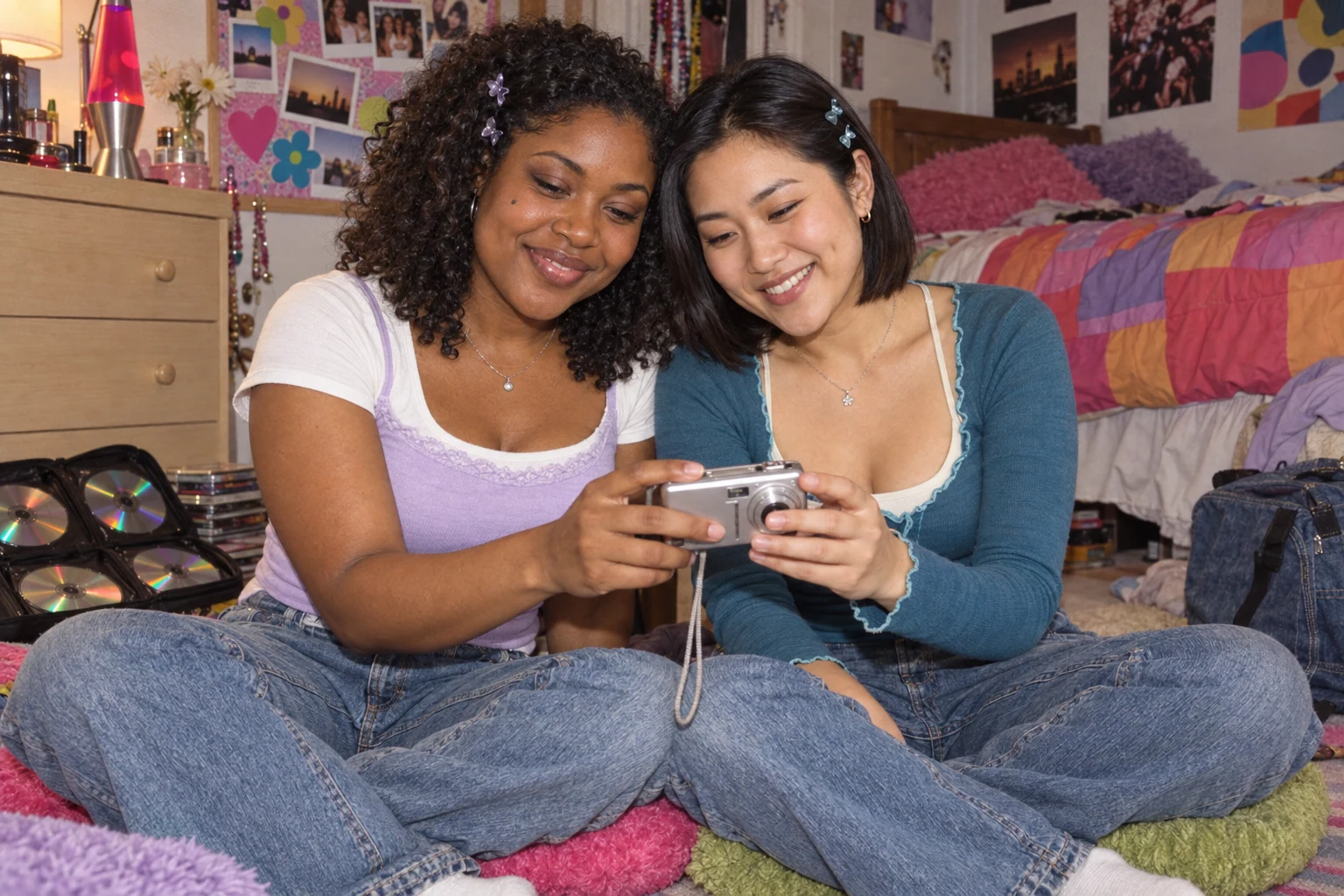
Floor cushions, a compact camera and colorful clutter build an intimate hangout scene.
-
Sit close enough for shoulders or knees to overlap, and point both eye lines toward the same object.
-
Choose layered casual pieces and small metallic details without flattening the friends into identical styles.
-
Use a handful of readable details, perhaps floor cushions, a colorful duvet and a CD wallet, rather than a roomful of anonymous clutter.
Give every scene a relationship verb
A decade label helps with styling, but the relationship verb makes the photograph. Decide what the friends are doing before choosing props. They might discover something in the record shop, compete in the arcade, perform for the yearbook camera or confide in each other in the bedroom.
-
For discovery, point something out, exchange a look or share headphones.
-
For competition, race for a button, celebrate too early or stage a mock disagreement.
-
For performance, hold contrasting expressions within the same formal composition.
-
For a quieter moment, move closer and let both friends focus on the same private detail.
Use a repeatable shot list
Run through the same short shot list in every setup. The repetition gives the gallery a steady rhythm, and once those dependable frames are finished, everyone can relax and leave room for spontaneous photographs.
-
Begin with the anchor portrait: both faces clear, recurring gesture or color in view.
-
Next, photograph one friend starting an action and the other responding.
-
Change the balance by varying height, direction or distance instead of mirroring every detail.
-
Bring in one prop that gives both friends a reason to look or move.
-
Finish by returning to the anchor pose so the four decades sit together as a matched sequence.
Coordinate outfits without becoming identical
Match one ingredient instead of the whole outfit. A shared color could be a jacket on one friend and an accessory on the other. Similar textures can connect completely different silhouettes. Those small echoes make the styling feel deliberate without erasing either person's taste.
-
Carry one accent color through both outfits.
-
Keep the silhouettes different so each friend has a distinct presence.
-
Choose one or two unmistakable accessories for each scene.
-
Put the hair, makeup and clothes in the same visual world. A color filter cannot do that work by itself.
Choose the chapter that feels most like you
Which scene feels most like the friendship? Start there. Competitive friends may loosen up in the arcade, while quieter friends might feel more at home in the record shop or bedroom. Once the first chapter clicks, carry that same emotional contrast into the other decades.
Each friend can take an optional solo detour through AI Time Portraits. Treat it as a place to collect personal ideas for styling and settings before planning the shared portrait series.
Best-friend photoshoot questions
How many decade scenes should we plan?
Four scenes give the story enough contrast without trying to cover every decade. Pick settings that invite different kinds of interaction so each chapter has its own purpose.
Do best friends need matching outfits?
No. Repeat a color, texture or accessory, then give each friend a different silhouette. The pair will look coordinated without losing either person's style.
How do we keep the series from feeling like costume changes?
Carry an anchor pose, gesture or color through all four scenes. The world around the friends can change, but their familiar way of interacting should remain easy to spot.
Where does AI Time Portraits fit into the plan?
It is an optional individual exploration for each friend, not a claimed group-transformation workflow. Use it separately to collect alternate-lifetime ideas, then plan the shared photoshoot around the cues both friends like.
The decade scenes are creative inspiration rather than exhaustive historical reconstructions.
Every reimagining must use the original fictional pair as its direct reference, never another generated result.
Both faces require visual identity-continuity review before an image is accepted.
The editorial images are not Throwback output or evidence of product behavior.
The product bridge is limited to optional individual exploration and must not imply multi-person transformation support.
These images are editorial AI reimaginings created for inspiration; they are not archival photographs or actual Throwback output.