
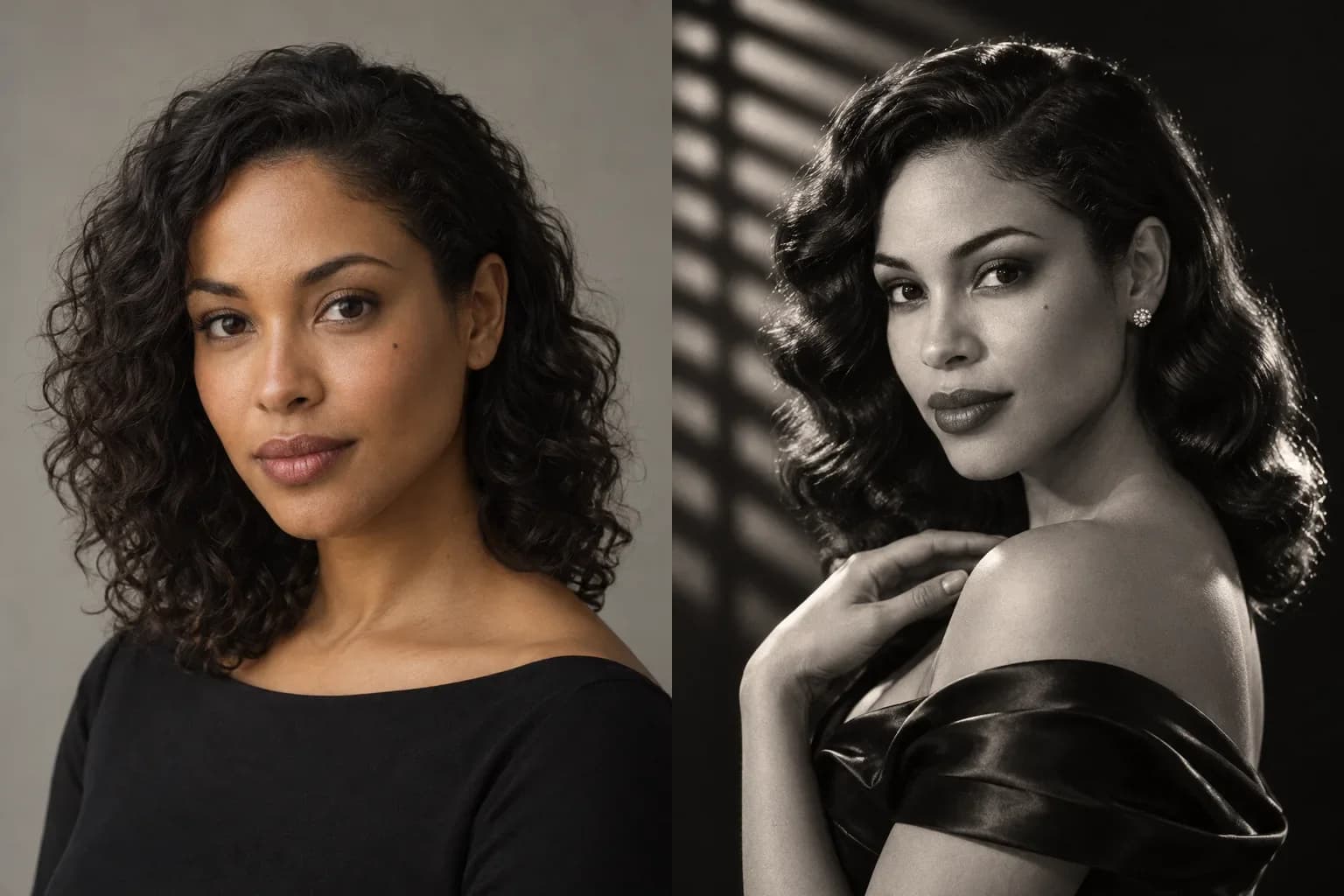
An Old Hollywood glamour photoshoot works when the portrait feels designed in light before it feels decorated by wardrobe. Shape the face with a clear key light, decide what the shadows should hide, build a clean silhouette, and let hair, fabric and backdrop support that decision. Turning an ordinary portrait grayscale is only the last few percent of the job.
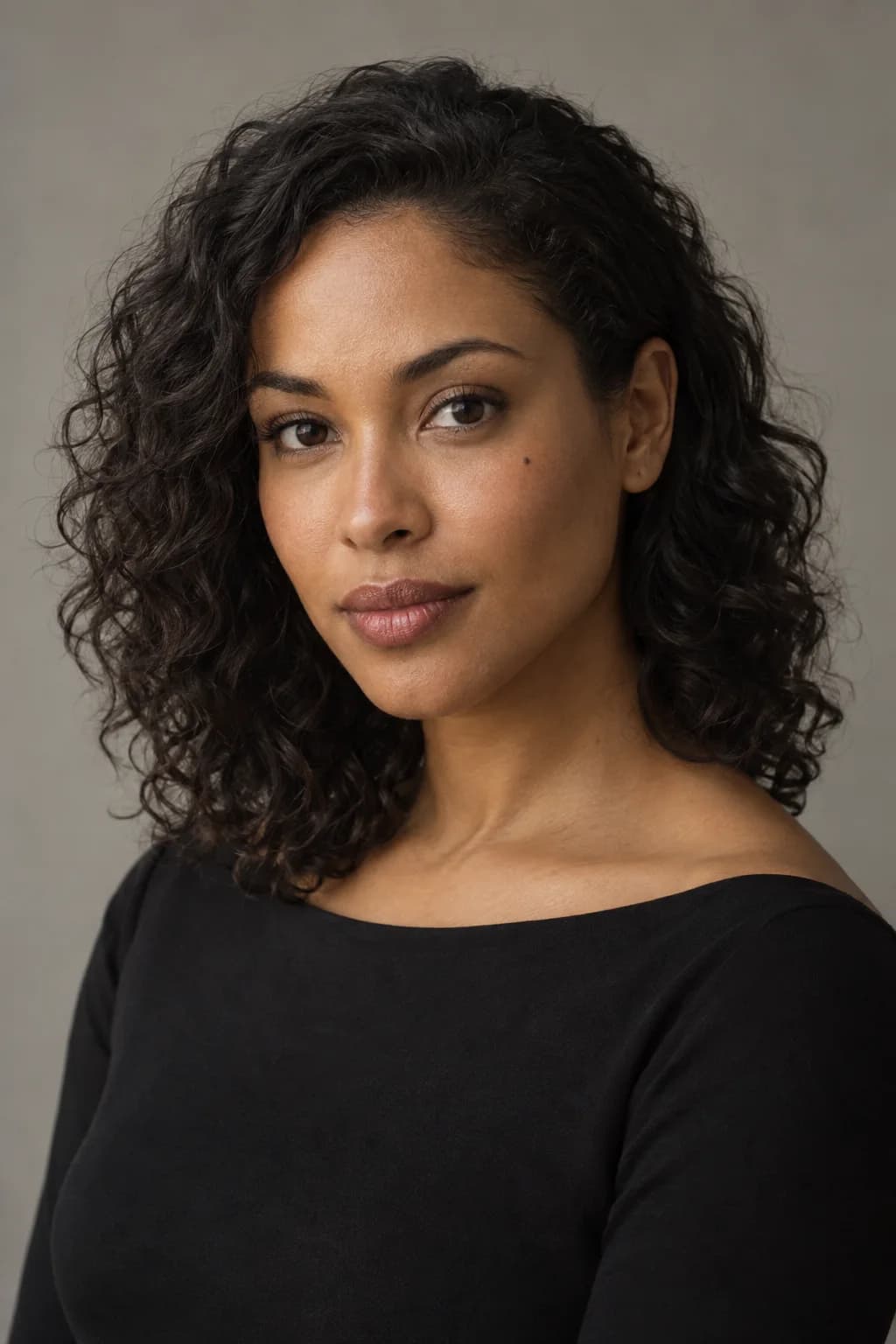
The matched images begin with the same invented modern subject. Her facial structure, eyes, nose, mouth, skin tone and small cheek beauty mark stay recognizable while the pose, styling, set, light and photographic character move around her.
Start with the shadow, not the filter
The most useful first question is not "Which black-and-white preset?" It is "Where should the light stop?"
A high side light can cut the face into bright planes and deep shadow. Move it closer to the camera and the portrait becomes softer and more open. Add a narrow backlight and the hair separates from a dark set. Remove too much shadow, though, and the image loses its sense of design. The face may still look polished, but the drama has gone flat.
That is why grayscale alone is unconvincing. It removes color without deciding which features should glow, which should recede, or how the subject should sit inside the frame. A modern headshot converted to black and white remains a modern headshot.
One face, a completely different picture
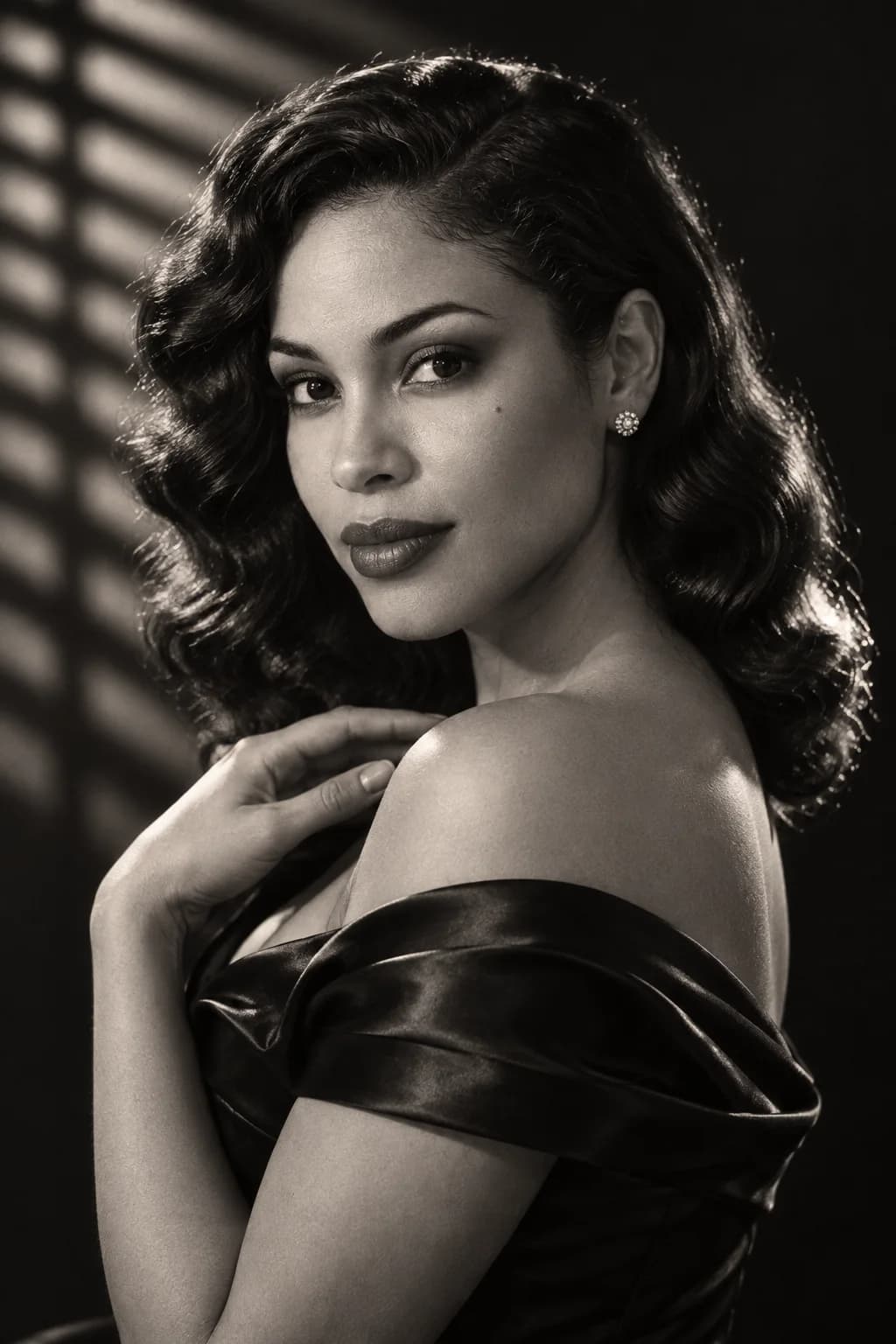
The modern source uses broad window-like light, a warm gray background, natural curls and a straightforward chest-up pose. The first reimagining changes every surrounding choice. The shoulders turn away, the chin returns to the lens, sculpted waves replace the loose curls, satin catches the highlights, and slatted light breaks across a much darker set.
The person needs to survive that change. Check the eye shape, nose, mouth, jaw and distinctive details before admiring the wardrobe. If the transformed face reads as someone else, the picture has lost its anchor.
Hard light: make the face architectural
Hard light is the bold route. Place the key above eye level and to one side so the brow, nose, cheek and jaw each make a readable shape. A small change in angle can decide whether the eye stays alive or disappears into shadow.
The darker side does not need to be empty black. A trace of detail in the cheek and eye can keep the person recognizable while the bright side carries the glamour. A fine rim on the hair helps the head separate from the backdrop, especially when both hair and wardrobe are dark.
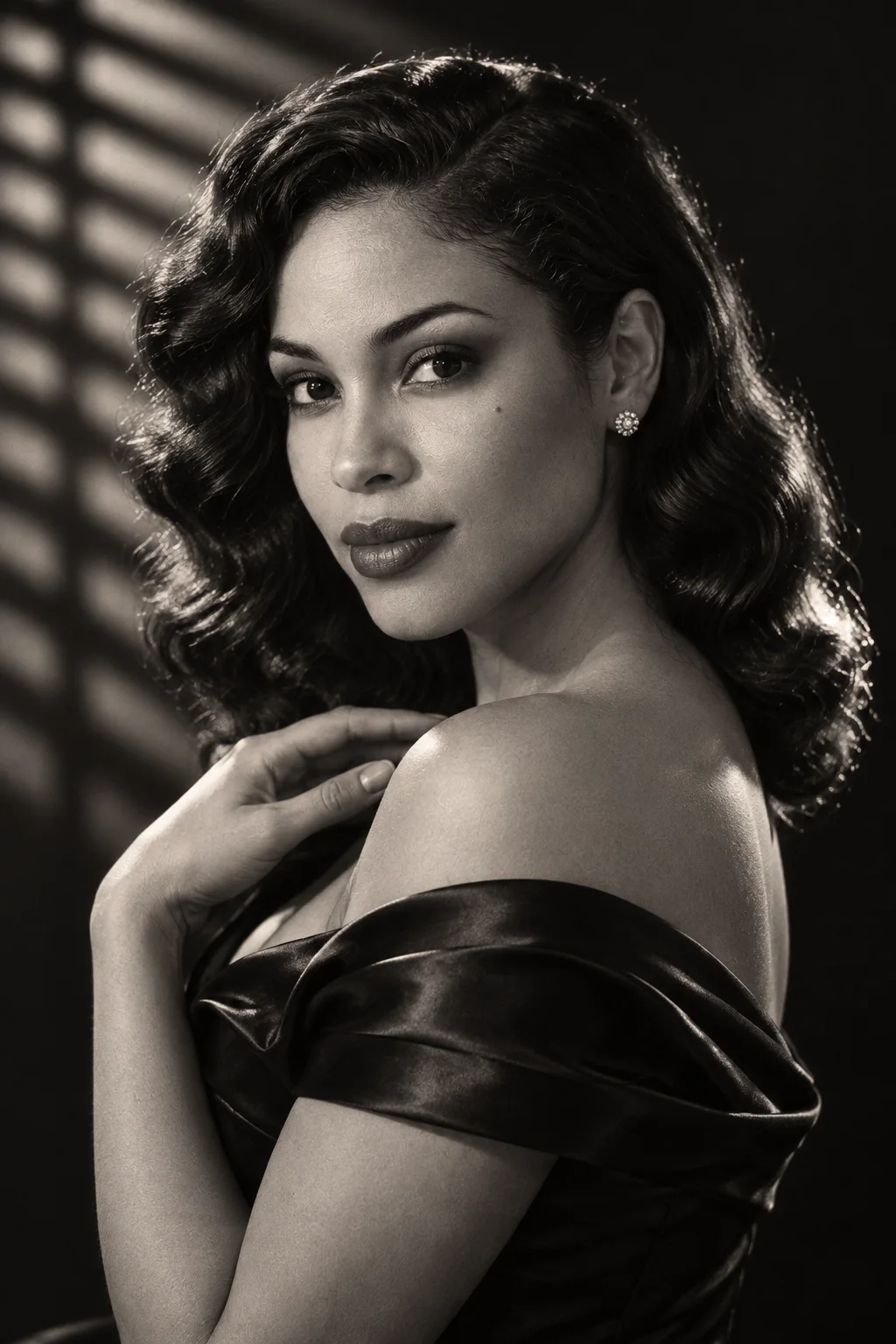
A turned shoulder, crisp eye light and narrow highlights give the hard-lit portrait its structure.
This setup rewards precision. Watch for a nose shadow that cuts into the mouth, an eye socket that goes dead, or a shoulder highlight brighter than the face. The frame should lead back to the eyes.
Soft light: keep the shape, lose the severity
Old Hollywood glamour does not have to mean crushing blacks. A large diffused source near the lens can open the shadows while preserving gentle modeling around the nose and cheek. Keep the eyes crisp, then let a little softness settle over skin and highlights.
The pale backdrop changes the emotional temperature. So does the pose. A close crop and a gaze just past the camera feel quieter than the hard-lit over-the-shoulder portrait. The hair is still carefully shaped, but the image relies on luminous midtones rather than sharp contrast.
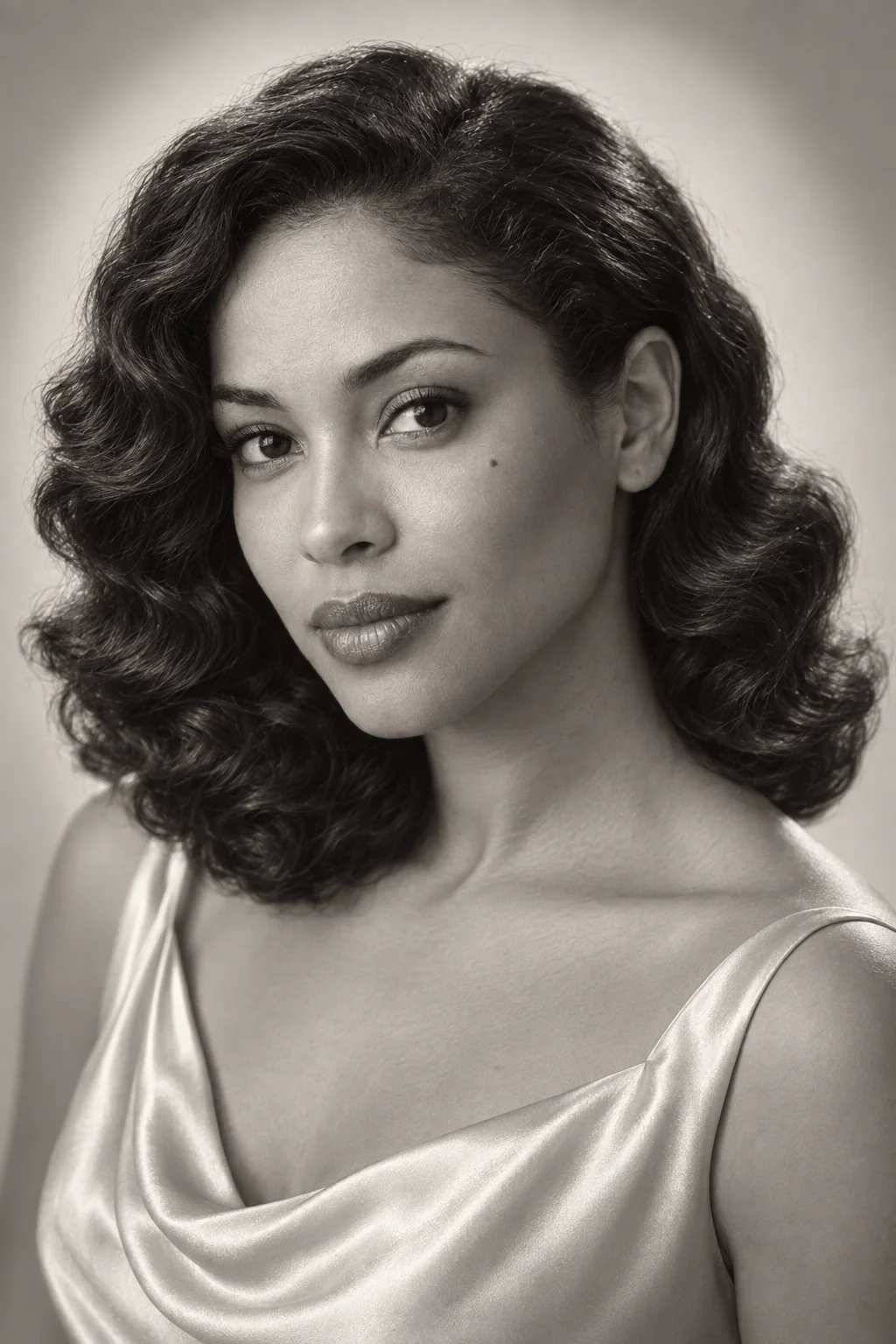
Soft frontal light turns satin, skin and backdrop into a narrow family of pearly tones.
Softness should look optical, not smeared. If every eyelash, strand of hair and edge of the lips dissolves equally, the portrait stops feeling intentional. Let detail remain where recognition matters.
Pose for a shape the camera can read
Glamour posing often begins with separation. Turn the shoulders away from the camera, lengthen the neck, then bring the face back toward the light. The opposing angles create a line through the frame without asking the subject to contort.
Hands need a reason to be present. A hand at the collarbone can echo the neckline. A gloved hand on a rail can steady a full-length pose. Flat palms, tense fingers and elbows pointed directly at the camera pull attention away from the face.
For a close portrait, make tiny adjustments. A lowered chin makes the eyes more prominent. A slight turn changes the relationship between the nose and cheek. In a full-length frame, step back and judge the whole silhouette before refining the expression.
Let the silhouette tell the story
The full-length version is less about makeup and more about outline. The long satin column, gloves, curved stair rail and circular pool of light form one graphic arrangement. The body turns in profile while the face returns toward the camera, so the identity remains available inside a much larger composition.
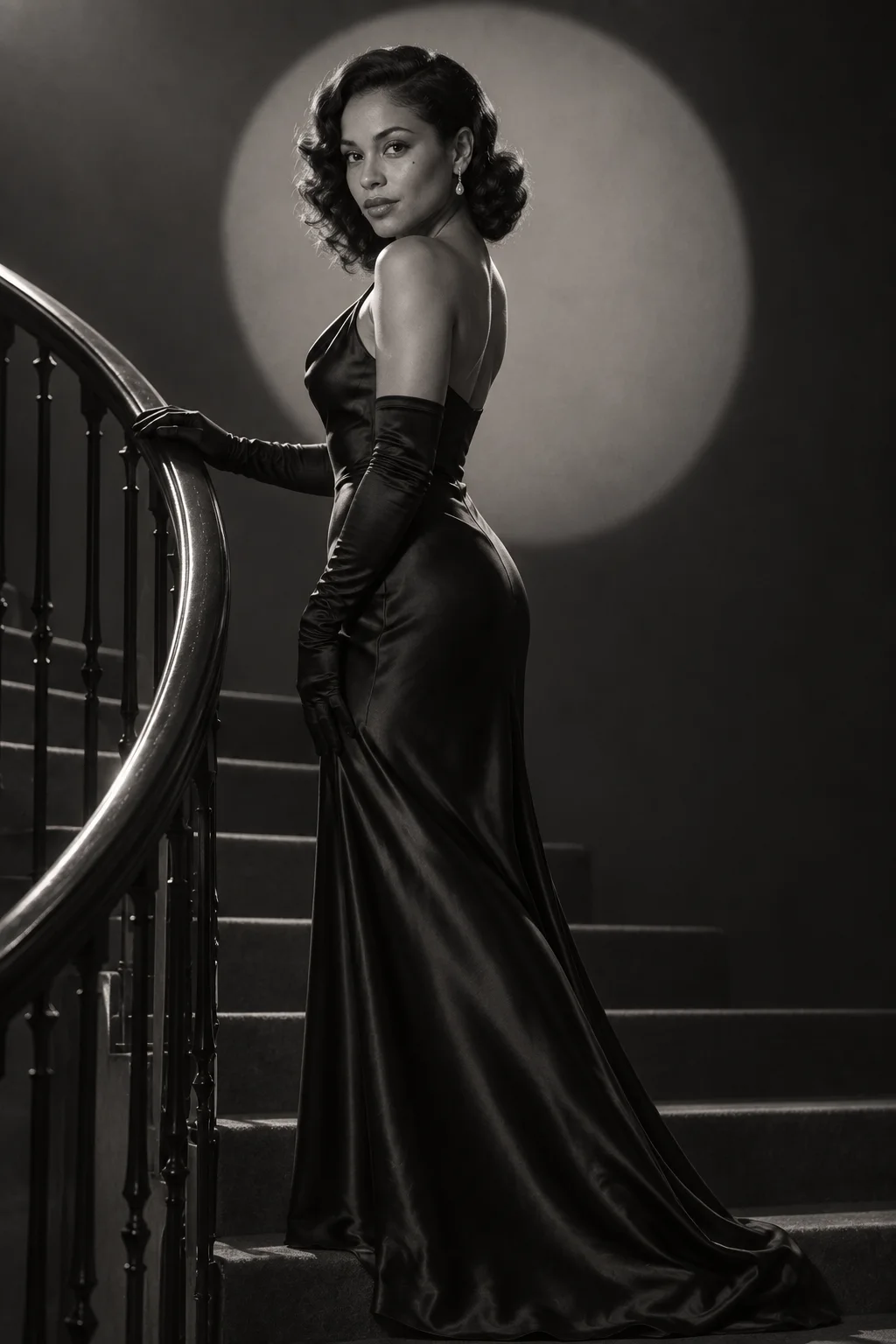
The gown, stair rail and spotlight create three large curves before the eye reaches the face.
This is a useful test for the set. Squint at the image or view it as a thumbnail. If the pose and wardrobe merge into one unreadable dark mass, add edge light or change the subject's angle. If every prop remains equally visible, simplify.
Hair and makeup should work with the light
Sculpted waves make highlights travel across the hair in broad ribbons. Loose texture scatters those highlights into smaller fragments. Neither choice is automatically better, but the hairstyle should cooperate with the lighting plan.
Makeup has the same job. Brows, lashes and lips can give a black-and-white portrait definition, yet their color matters less than how light or dark they reproduce. Check the actual monochrome result. Two shades that look different in a mirror may collapse into the same gray.
Keep the face recognizably human. Texture in the skin, fine lines around the eyes and small asymmetries stop the portrait from becoming a polished mask.
Build a set with one strong idea
A plain dark sweep may be enough. If the frame needs more, choose one architectural gesture: a staircase, a pool of light, a curtain or a slatted shadow. The backdrop should create depth and rhythm without competing with the subject.
Fabric earns its place because it reacts to light. Satin can run from near-black folds to sharp white highlights in a single dress. Velvet absorbs more light and feels heavier. A matte backdrop keeps those material differences visible.
Props should clarify the scene. A rail supports the pose and continues its curve. A random telephone, champagne coupe and feather fan only announce that the set decorator had a checklist.
Choose the tonal finish last
Once light, pose and set are working, decide how the black-and-white image should feel.
- A deeper black point makes the frame graphic, but can erase hair and clothing detail.
- Open midtones suit luminous skin and pale satin.
- Fine grain can give smooth areas a little surface without disguising mistakes.
- Gentle diffusion can soften bright edges while the eyes stay clear.
Compare the finish at full size and at phone width. Fine tonal separations that look beautiful on a large monitor can collapse on a small screen. Keep the face, silhouette and brightest fabric edge distinct in both views.
A practical shot sequence
Begin with the modern identity reference. Use even light, a neutral expression and a clear view of the face. Then make three deliberate changes rather than twenty random variations.
- Start close with soft light to settle hair, makeup and facial angles.
- Move to the harder side-lit portrait and refine the eye light and shadow edge.
- Finish with the full-length silhouette once the subject understands the posture and mood.
Review identity and expression after each setup. Do not wait until the end to discover that the beauty mark moved, the nose changed shape or the eyes no longer belong to the same person.
Keep inspiration separate from product claims
Throwback does not have an Old Hollywood mode. This feature is a visual study in building a glamour portrait, not a promise that a named preset will reproduce these scenes.
If you want to explore how a generative portrait can rebuild hair, clothes and surroundings, the AI photo transformation guide explains that wider kind of change. For another example of one identity moving through distinct styled worlds, see the 1980s portrait ideas. Those are adjacent creative routes, not an Old Hollywood button.
The real trick is not black and white. It is deciding what the light reveals, what the shadow withholds, and how every line in the frame returns to the person.