
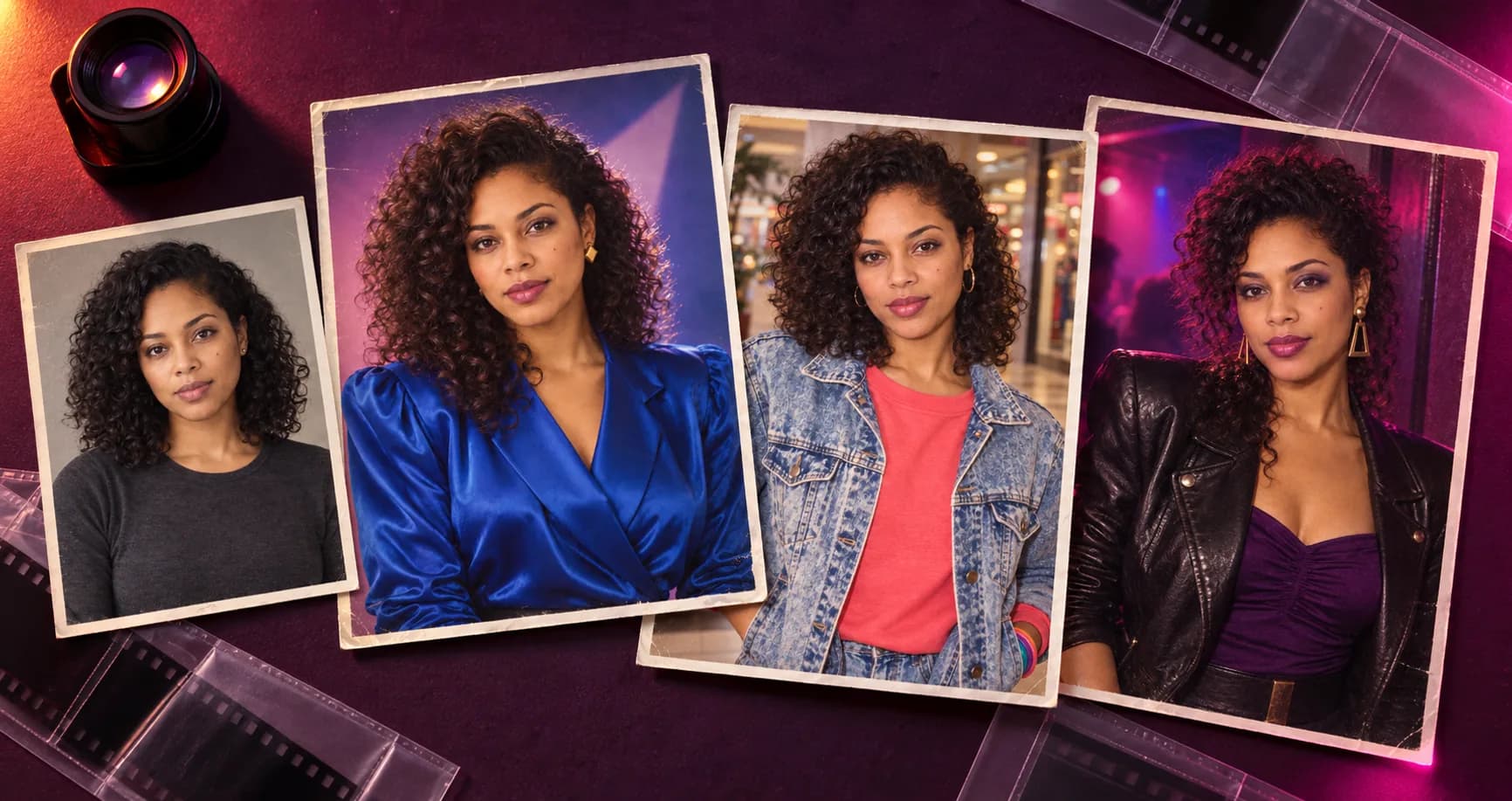
Your 1980s version could be a polished studio regular, a mall-era teenager, a young professional or the person who never misses a night out. The face is still yours. Hair, clothes, setting, light and photographic character decide which 1980s life appears around it.
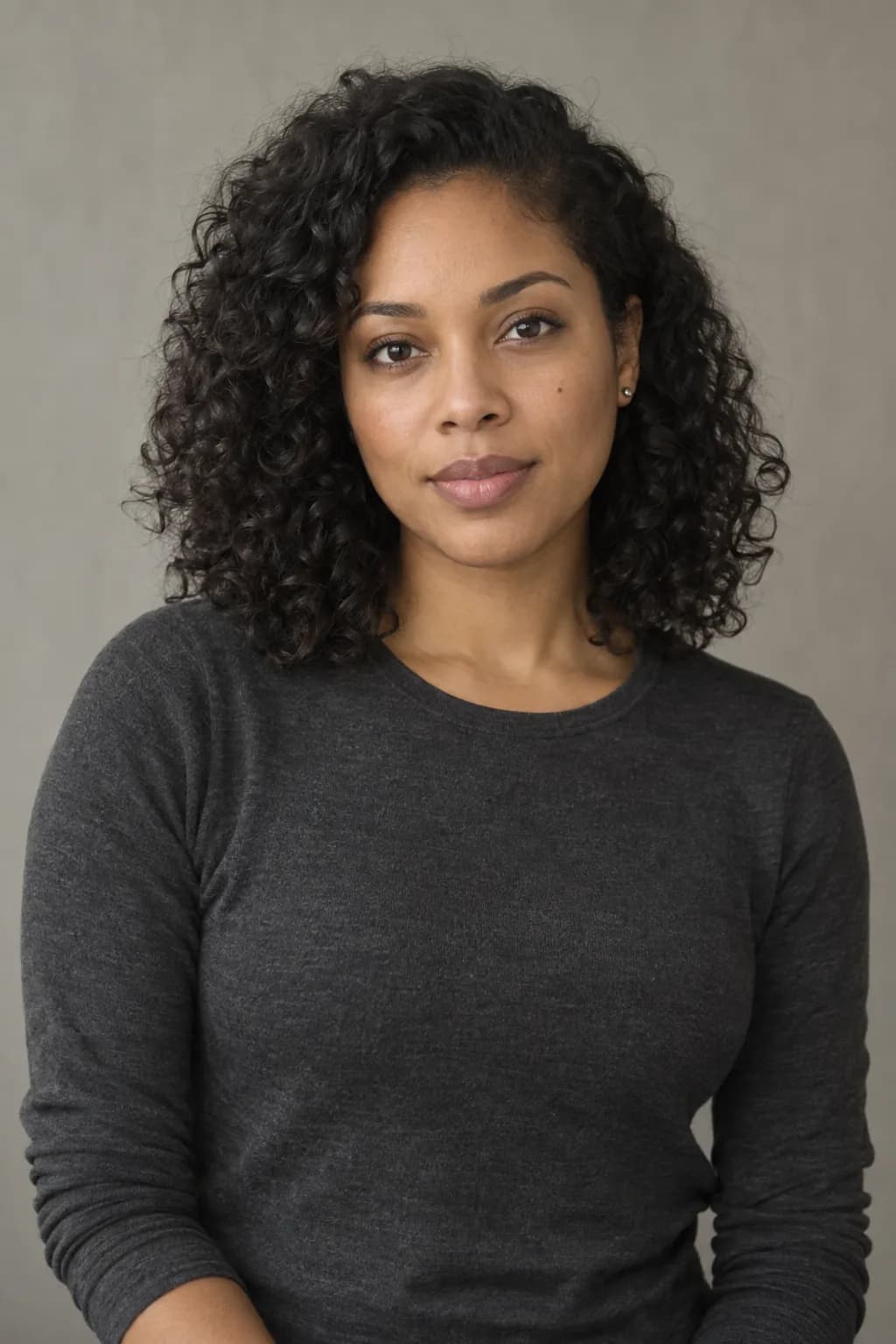
The images in this guide begin with one fictional modern portrait, reimagined as three different 1980s personas. They are here to help you decide which version of the decade you would actually want to meet.
The decade is bigger than one neon stereotype
Ask for an "80s look" and it is tempting to pile everything into one frame: enormous hair, electric blue light, a leather jacket and a laser-grid background. Fun, yes. Specific, not really.
The more interesting question is: where is your 1980s self going? A department-store studio portrait wants careful posture, soft light and a painted backdrop. A mall snapshot wants denim, direct flash and a public space humming behind you. Nightlife can take the stronger makeup, sharper shoulders and colored light. A yearbook or prom portrait has its own formality.
Pick the life first. The visual details become much easier after that.
Already have a version in mind? See yourself in the 1980s with a one-photo Time Portrait.
Same fictional person, another lifetime
For this editorial set, we began with one fictional contemporary portrait and kept the same core identity across every image: face shape, skin tone, eyes, nose, lips and a small cheek beauty mark. The curls, styling, clothes, setting and camera mood were allowed to move.
That balance matters. If nothing changes except the color grade, the picture still feels modern. If the face changes completely, the time-travel idea disappears. The sweet spot is recognition with surprise.
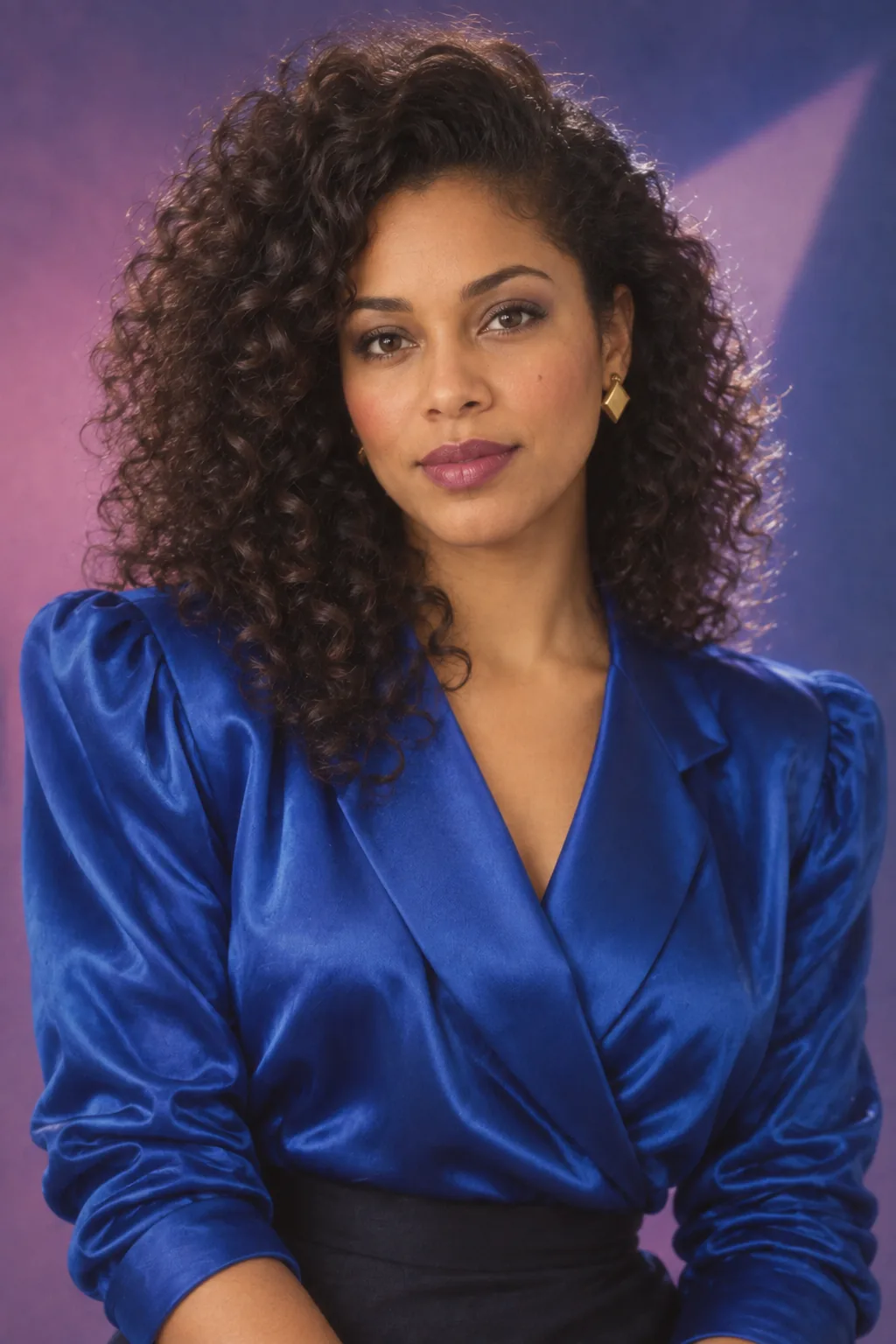
Persona one: the glamorous studio portrait
This is the polished version of the decade. Think fuller sculpted hair, a satin blouse, geometric earrings, berry lipstick and a mauve-to-blue studio backdrop. The light is soft, the pose is deliberate, and the finish has a little optical glow instead of modern razor-sharp detail.
The fun is in restraint. One strong shoulder line and one confident color can do more than five competing props. If you want your 1980s self to feel composed, ambitious or ready for a framed portrait on the family piano, start here.
Studio glamour — editorial AI reimagining.
Persona two: the mall-era snapshot
The mall version is less posed. Acid-wash denim, a coral sweatshirt, hoops and bright bangles give it an ordinary Saturday energy. Direct flash keeps the person crisp while storefronts, tile and greenery soften into the background.
This persona works when you want the decade to feel lived in rather than performed. It is the version of you who has somewhere to be after the photo, possibly with a shopping bag and just enough change left for the food court.
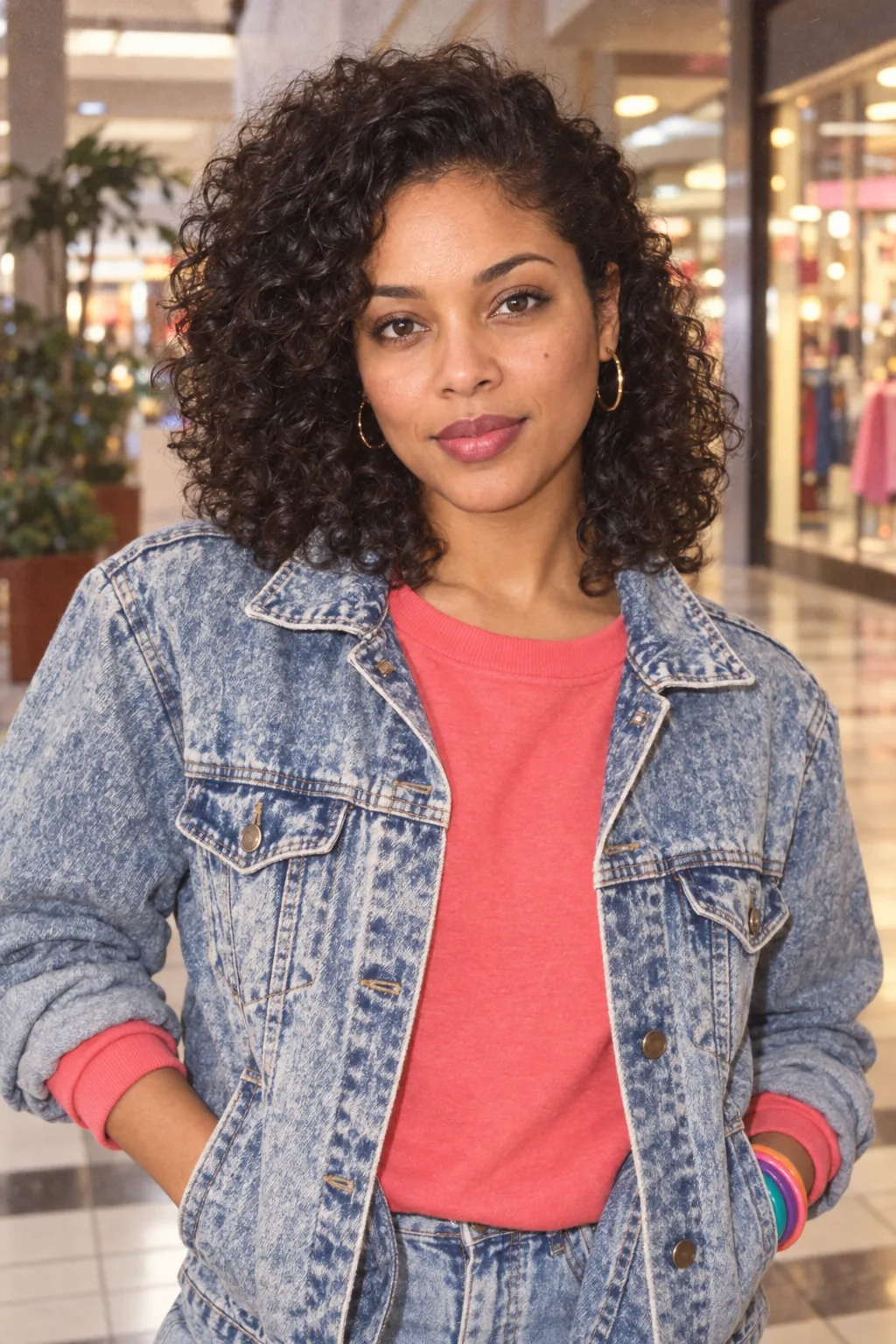
Mall-era casual — editorial AI reimagining.
Persona three: the big-hair nightlife version
After dark, the choices can get louder. Swept-up curls, a black leather jacket, geometric gold earrings and plum makeup belong comfortably under magenta and cobalt club light. Direct flash on the face stops the scene from dissolving into pure color.
This look suits a music persona, a birthday night out or the alternate-life version of you who somehow always knows the person at the door. Keep one or two features visually dominant. Hair plus lighting is enough. Add giant earrings, sequins, smoke, a microphone and a neon sign, and the portrait can become costume very quickly.
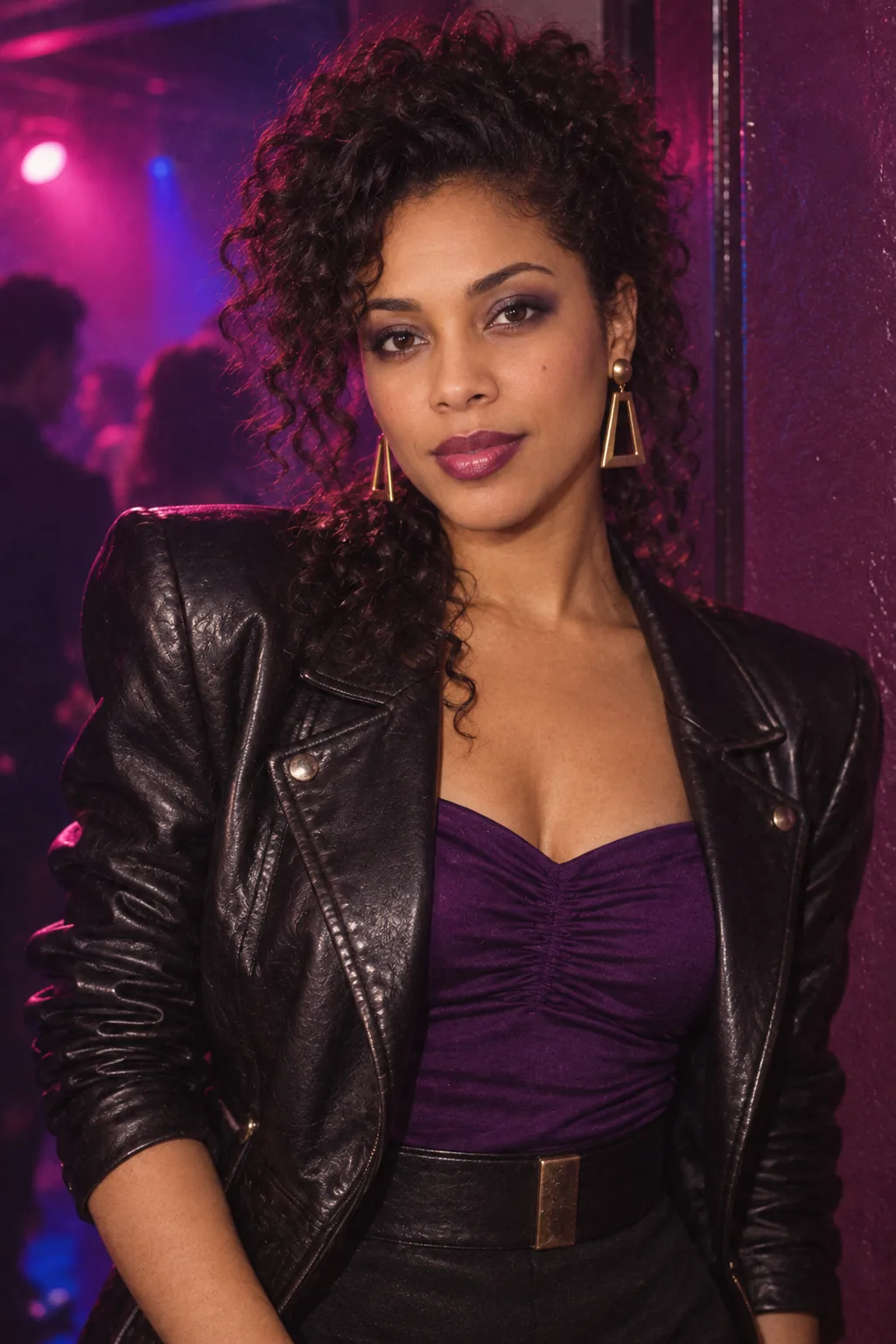
Nightlife — editorial AI reimagining.
Other 1980s selves worth trying
You do not have to choose one of these three. A few more directions can produce a very different answer to the same question:
- The young professional: a tailored suit, restrained jewelry, office portrait lighting and a neutral background. Let the silhouette carry the decade.
- The prom portrait: formal clothes, careful hair, a soft-focus studio glow and a painted pastel backdrop. More sincere than ironic usually works better.
- The yearbook photo: simple shoulder-up framing, direct eye contact and one clear school-portrait background. The awkwardness can be part of the charm.
- The colorful casual snapshot: knitwear, windbreakers or patterned separates in an ordinary home, park or party setting. This is where flash and slightly imperfect framing help.
- The music persona: leather, dramatic hair or a graphic jacket, but grounded in a believable rehearsal room, club entrance or backstage corridor.
None of these is the definitive 1980s. The decade held formal portraits, candid family pictures, glossy fashion images and blunt point-and-shoot flash at the same time. Choose the photographic situation that fits the person you want to imagine.
Found a persona that feels like yours? Try a 1980s Time Portrait and see which authored year and style the decade gives you.
Hair changes the silhouette first
Hair is often the quickest route into the decade because it changes the outline of the face and shoulders. Volume at the sides feels different from height at the crown. Sculpted curls read differently from a sharp bob, a soft perm, a mullet or a high ponytail.
Think about shape, not just size. The hairstyle should suit the persona and still leave the face recognizable. A studio portrait can handle control and polish. A casual snapshot benefits from a little movement. A nightlife image can push height and asymmetry further.
Clothes and accessories should tell the same story
A jacket with structured shoulders can suggest a professional or nightlife portrait. Denim makes more sense in a casual mall or outdoor scene. Satin and geometric jewelry suit a deliberate studio setup. Formalwear belongs naturally in prom and event portraits.
Choose a small visual family rather than a costume box. If the jacket is the statement, accessories can stay simple. If the earrings are huge, the backdrop does not need to shout as well.
Background and camera mood finish the illusion
The backdrop tells you what kind of picture you are looking at. Airbrushed gradients feel posed. A mall corridor feels social and public. A dark club entrance suggests a whole night beyond the frame. A plain blue-gray studio can turn the same face into a yearbook portrait.
Photographic character matters too. Soft studio diffusion belongs to a different memory than direct flash. Slight lab-print softness can help the image feel handled and physical. A strong colored cast can work for nightlife, but it should come from the scene rather than covering every surface equally.
For a closer look at that distinction, the 1980s photo guide separates camera-style treatments from generative scene changes. The AI photo transformation guide explains why rebuilding hair, clothes and surroundings is different from applying a filter.
How to make your own 1980s Time Portrait
If you want to meet your own version of the decade, choose one clear photo. A visible face, uncomplicated lighting and an unobstructed view give the transformation a useful identity reference.
Throwback's Time Portrait is a separate generative experience from the local Photo Lab. It can reimagine the person and wider scene after consent. A local process such as Synth Flash keeps your existing clothes, background and composition while changing the camera character. Use Time Portrait when the question is "Who might I have been?" Use Synth Flash when the moment is already right and only the photograph needs to travel.
You can also explore AI Time Portraits, browse the wider 1980s visual guide, or read the current privacy explanation before choosing a photo.
The best result lets you recognize the person first. The other lifetime arrives a moment later.