
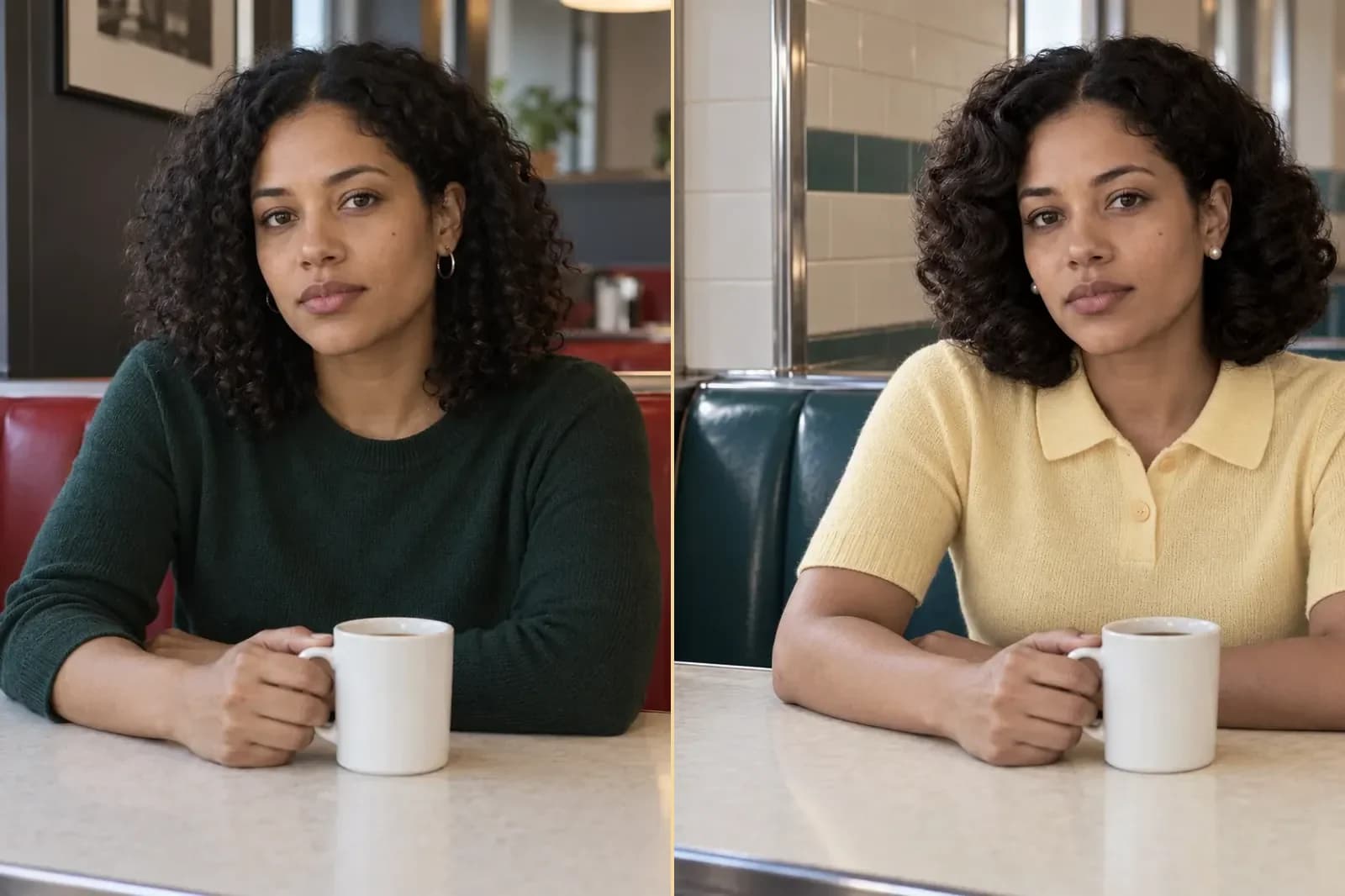
A convincing retro diner portrait starts before the edit. The booth, clothes, hair, objects, action and light establish the world. Color and grain can strengthen that world, but they cannot remove a QR menu, replace a modern pendant light or turn a present-day room into a period scene.
The diner is a small world, not a preset. This visual experiment uses one invented person to separate the two parts of the job: what happens in front of the camera, and what happens to the photograph afterward.
Choose the memory before the props
"Retro diner" can point to several different pictures. Maybe it is a tidy late-1950s roadside stop. Maybe it is a warm 1970s booth, a blue-hour movie scene, or a present-day diner built as a loving revival. They can all have chrome and coffee. That does not make their clothes, movement or light interchangeable.
Start by writing one sentence about the moment. "Waiting for a friend over late-morning coffee" is more useful than "1950s aesthetic." The first gives the subject something to do. It also helps you decide whether the room should feel busy or still, whether the cup is untouched or half-finished, and whether the eyes meet the camera.
Historical references are useful when they stay specific. The Library of Congress diner feature brings together dated photographs and catalog records that show how much diner buildings and interiors varied. The Fashion History Timeline's 1950s overview is a better wardrobe starting point than the idea that everyone wore the same novelty skirt. Neither source is a shopping list. They are ways to look more closely.
The controlled comparison
The four pictures below are designed to pull scene and treatment apart. This is an editorial demonstration, not a scientific experiment. The scene reimagining keeps the same fictional face and approximate composition, but generative changes are not perfectly isolated.
A: the modern source
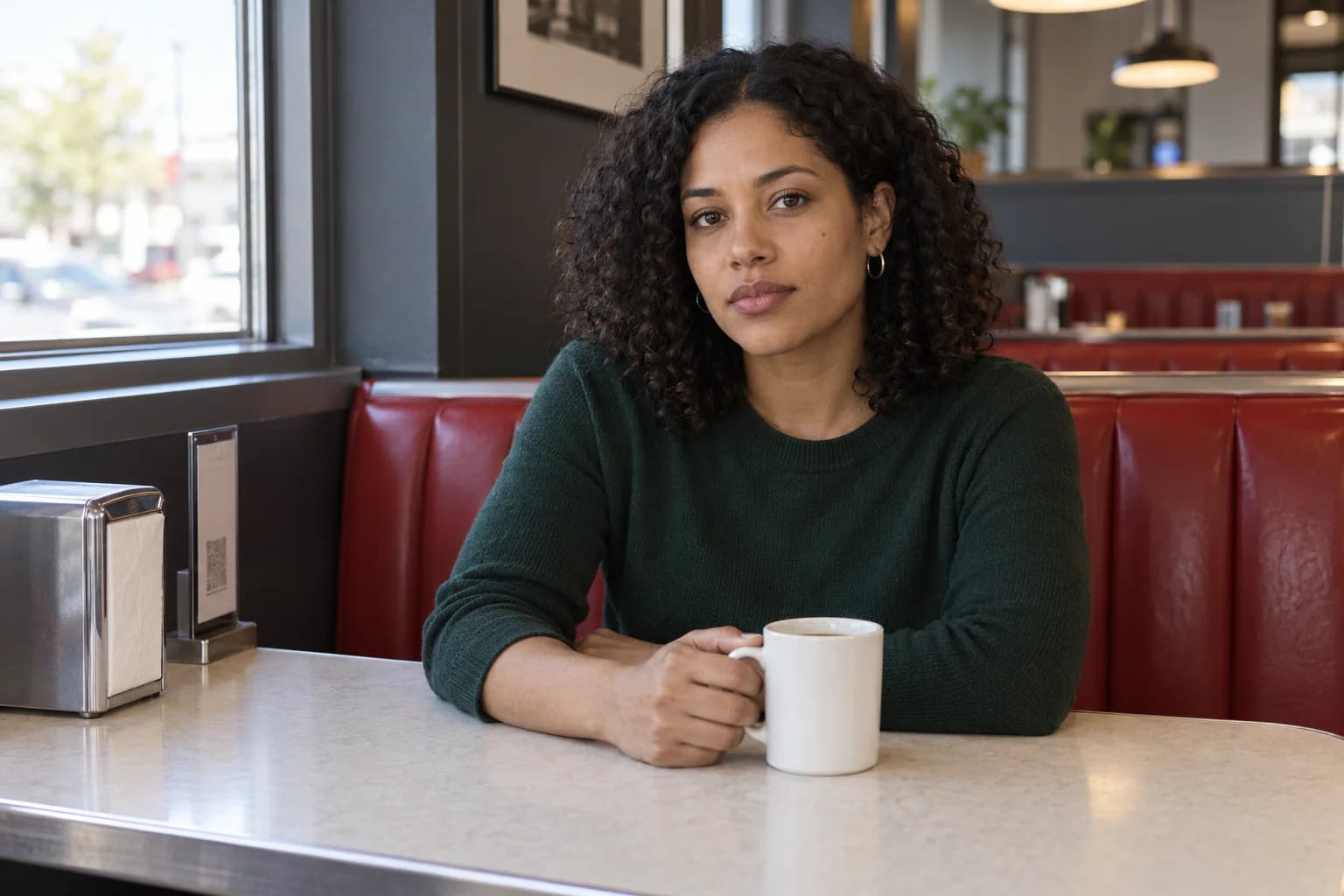
The source is deliberately ordinary: a contemporary knit top, dark wall panels, minimalist pendant lights and a QR menu stand. Window light is neutral. The subject sits with a white mug, facing the camera in a relaxed booth portrait.
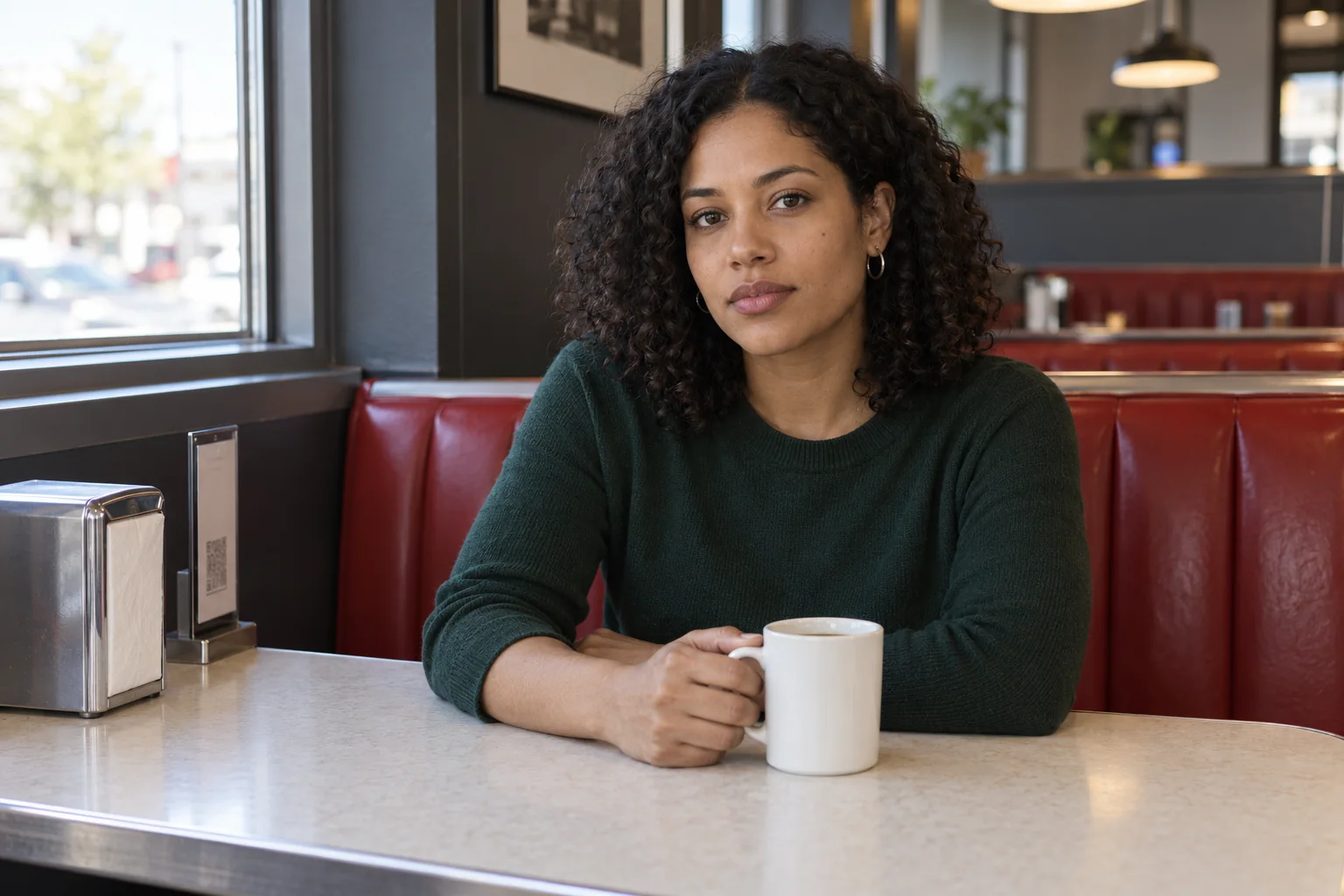
A clear face, plausible hands and an uncomplicated pose establish the identity and composition baseline.
B: treatment only
For B, the scene, objects and composition remain the same as A. A repeatable finishing operation changes pixel values: it slightly lowers saturation and brightness, adds a modest contrast curve, softens color separation and lays down a fine fixed-seed monochrome texture. Nothing in the room is moved or replaced.
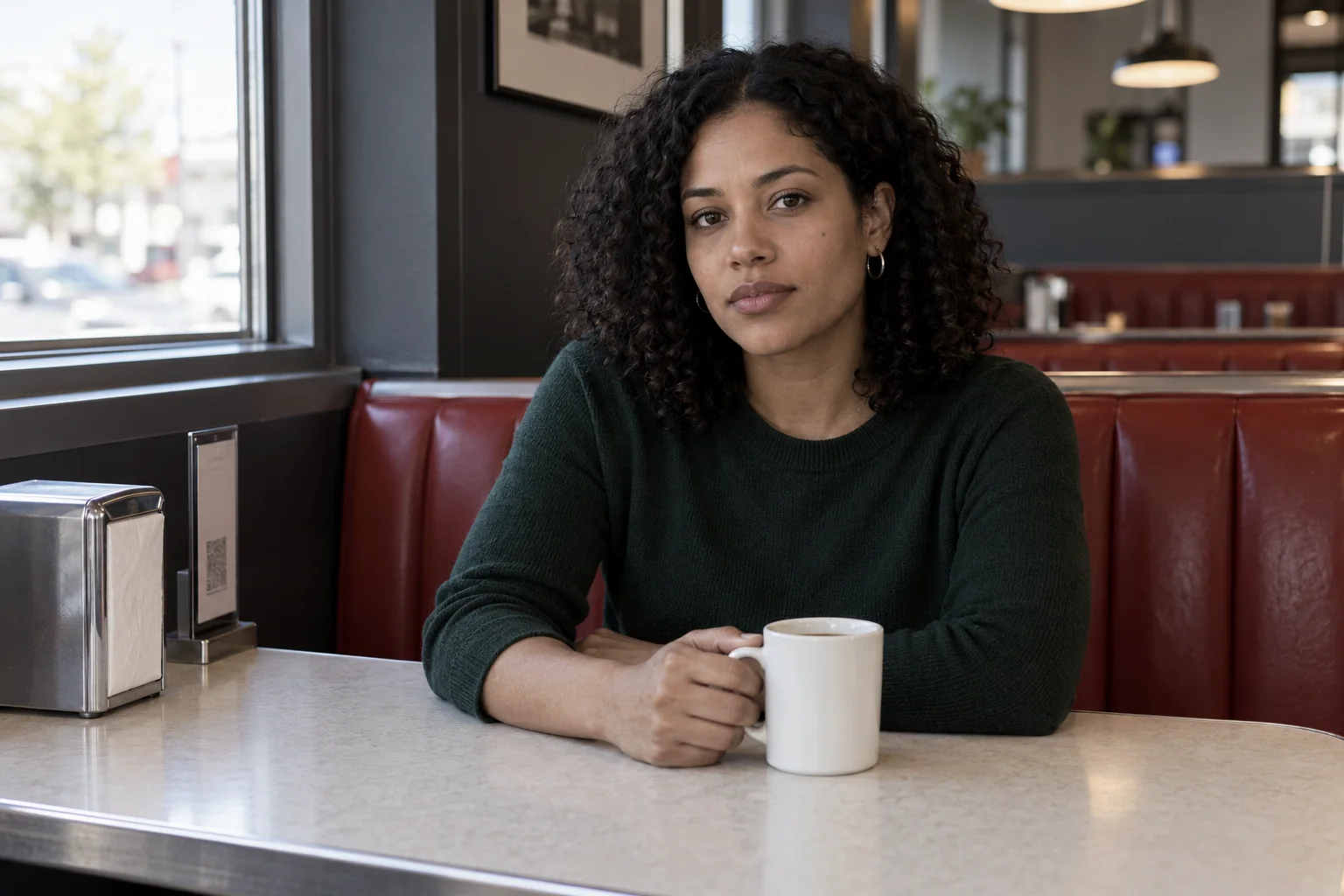
The finish changes the surface. The QR stand, modern fixtures, wardrobe and room are still plainly contemporary.
This is the useful failure. The treated picture has a quieter palette and more texture, yet its story has not traveled in time. Color relationships have changed. Production design has not.
C: scene reimagining
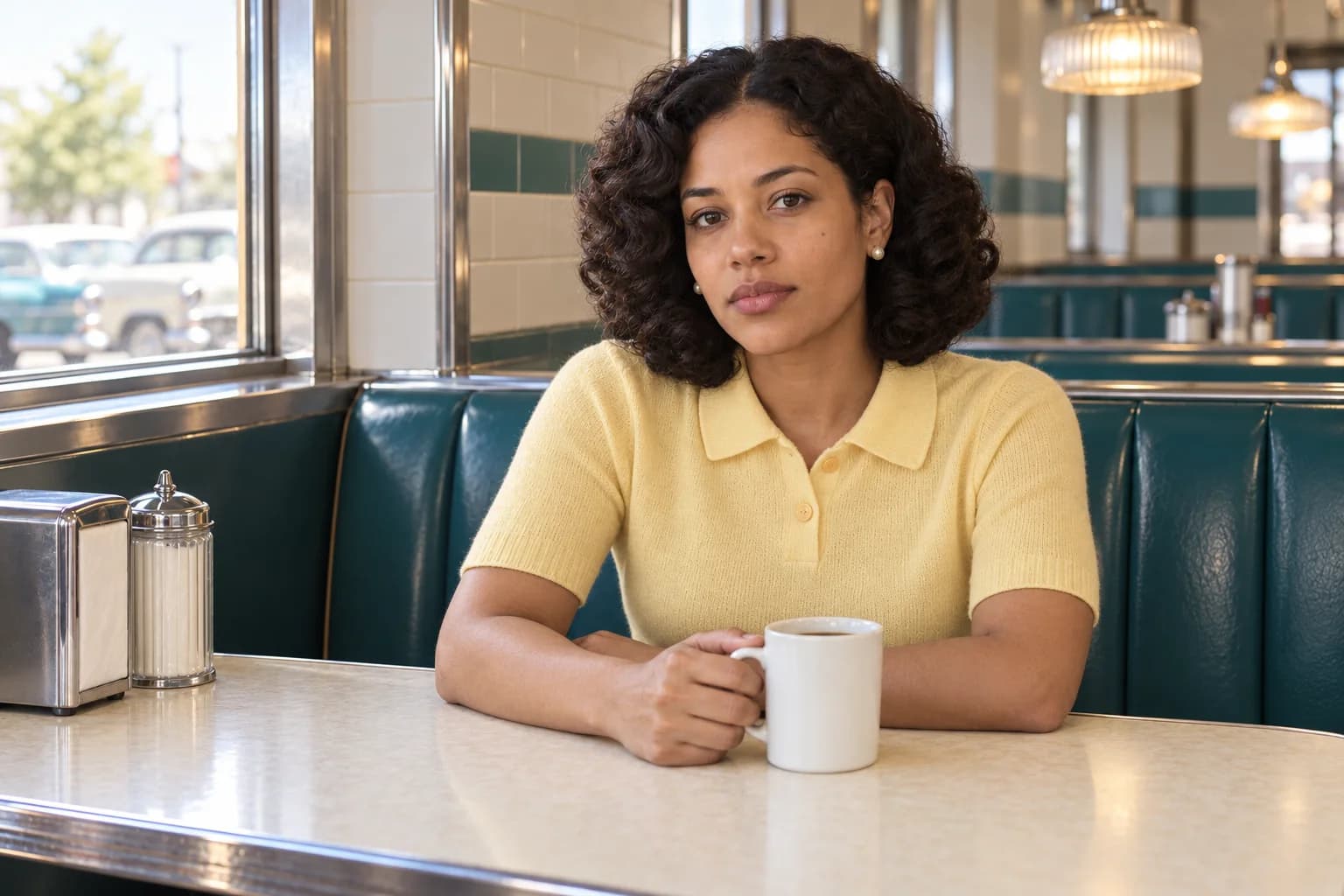
C returns directly to A as its reference. The identity, mug, seated pose and approximate framing remain recognizable. The dark contemporary panels become tiled walls and chrome trim. The red booth turns deep teal. Hair, earrings and clothes move toward a restrained late-1950s interpretation. The finish stays clean so those scene decisions are easy to read.
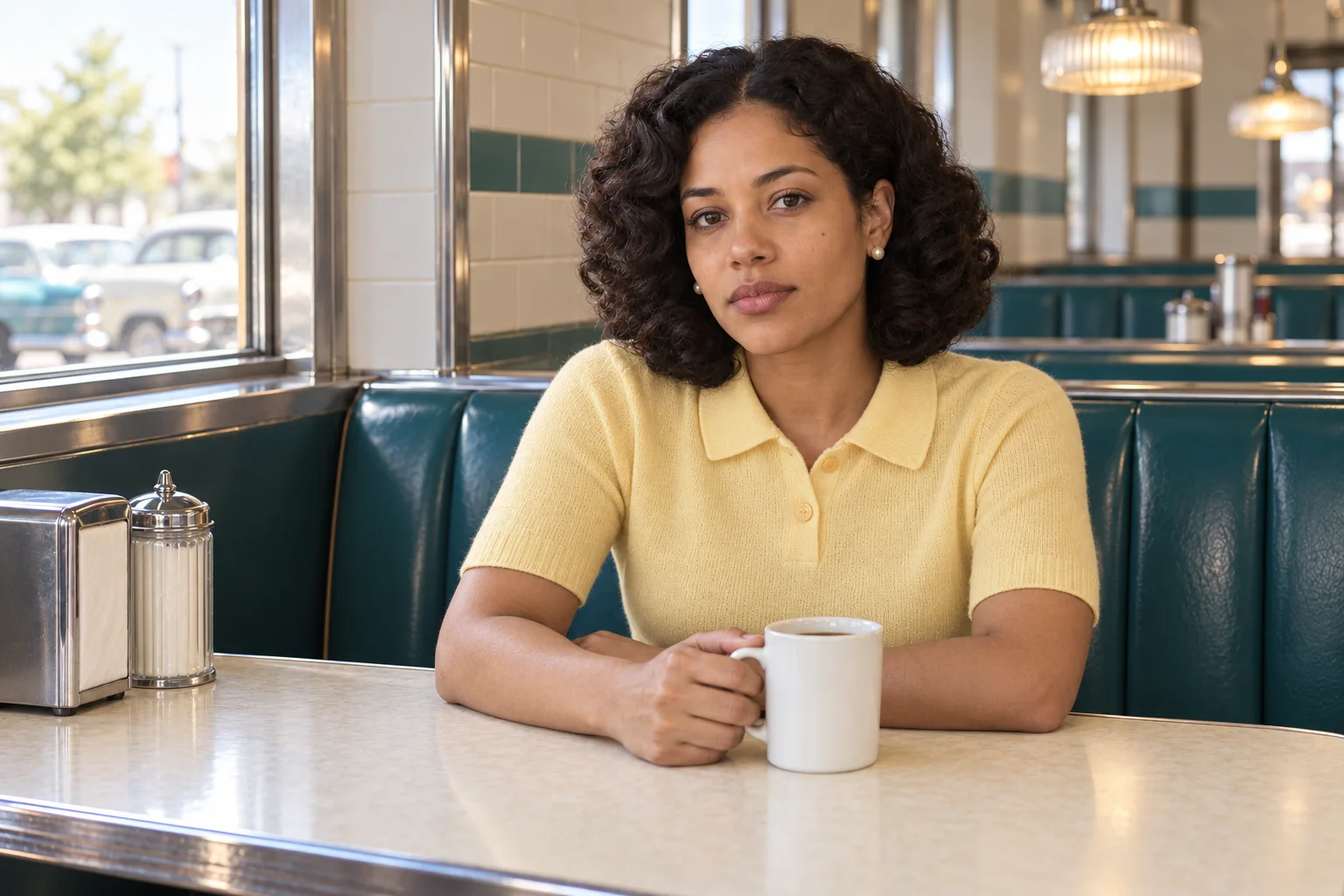
Change the room, styling and objects, and the picture makes a different promise before any grain is added.
The reimagining also reveals the limits of the control. Her shoulders and forearms shift slightly. The cup moves a little, the window view changes, and the light is warmer. The face remains recognizably the same, including its proportions and small cheek beauty mark, but C is not a perfectly locked photographic plate.
D: scene plus the same treatment
D is C passed through the exact finishing operation used for B, without another identity generation. Its pixel values change, while the scene and geometry stay intact. What does the treatment contribute once the world is already doing its job?
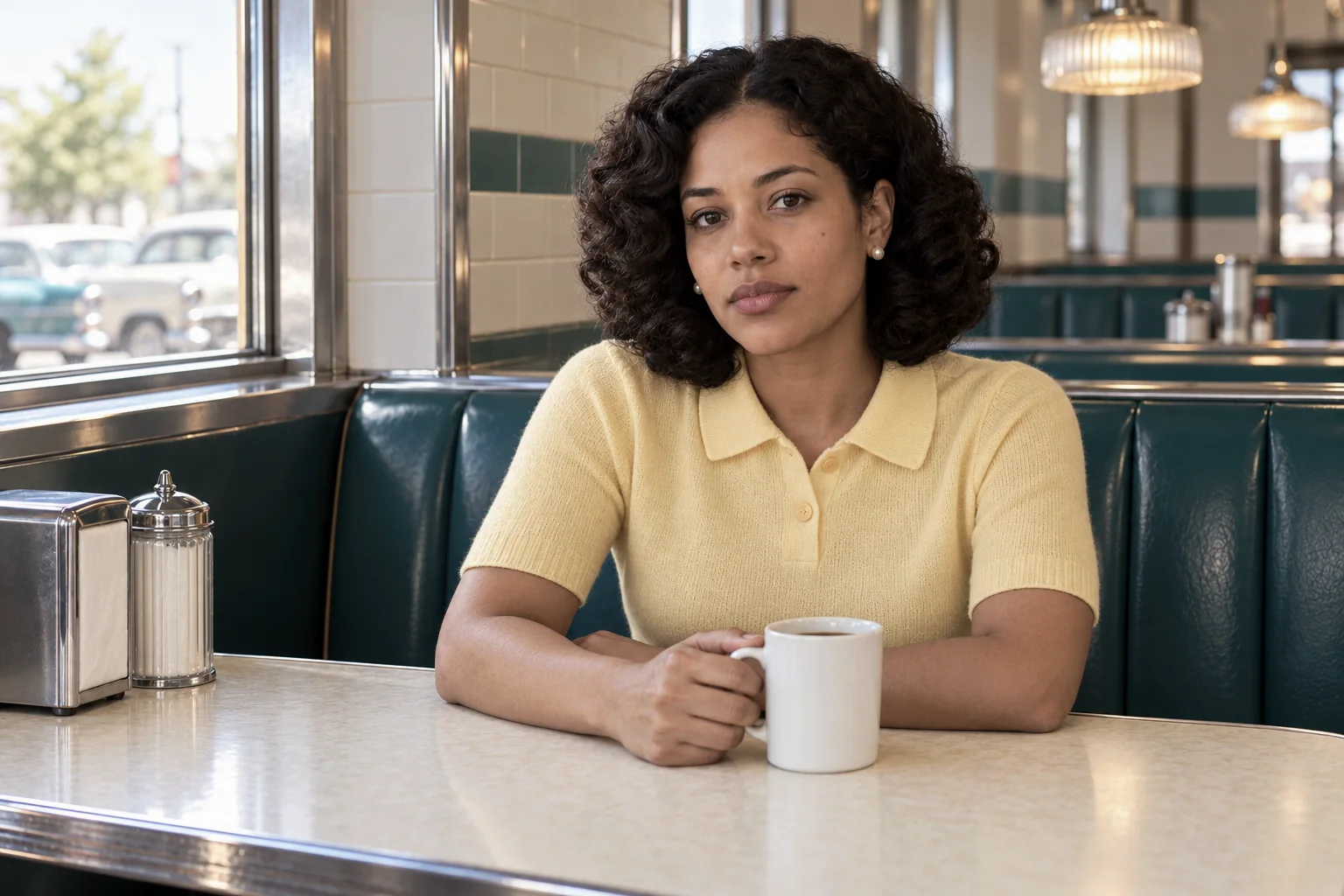
Scene first, finish second. The treatment supports the interpretation instead of being asked to invent it.
The quieter color and fine texture help the frame settle, but they are doing less work than they first appear to be. The teal booth, tiled wall, structured curls and pale knit top carry the period idea. C still works without the finish. B, even with that finish, remains in the present.
Give the subject a reason to be there
Costume posing is usually the fastest way to make a retro shoot feel like a theme party. A believable action is smaller: stir the coffee, read the menu, wait by the window, or pause halfway through a conversation. The person should look as though they occupy the room, not as though they are performing a decade.
Keep props few enough to use. A mug, sugar dispenser and folded menu can create hand positions and sight lines. A jukebox, milkshake, pie slice, tabletop radio and stack of records all competing in one frame read as inventory. If an object has no role in the action or composition, leave it out.
Hands deserve a rehearsal. Decide where the cup handle points and whether the free hand rests on the table or turns a page. Check fingers before changing angles. Chrome edges and laminate seams also expose warped geometry quickly, so inspect them near hands, cups and the booth corner.
Window light and neon tell different stories
Light decides which diner memory the frame belongs to.
A quiet window booth
Broad window light makes the room feel open and observational. Place the subject close enough for the light to reach the eyes, then let it fall gently across the face. Keep the far side readable instead of forcing a dramatic shadow. A gaze toward the street gives the light a narrative reason to exist.
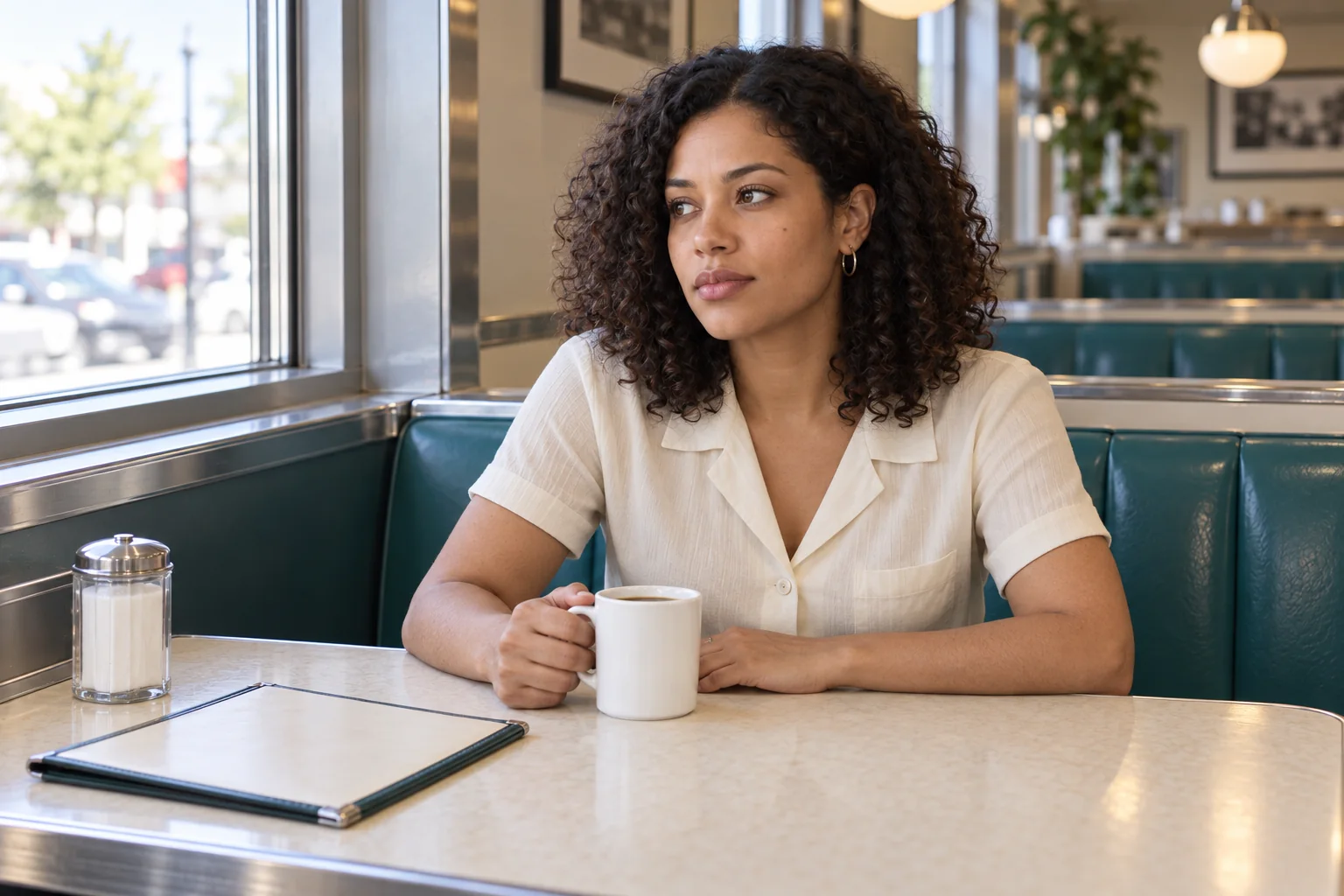
Open shadows and a glance toward the street make this feel like a pause in the day.
Blue hour with a neon edge
At night, separate the colors by source. Cooler window ambience can hold the street side of the frame while a restrained rose edge picks up hair, chrome and the booth. Keep a believable skin tone between them. If every surface turns electric pink, the person and the room collapse into one effect.
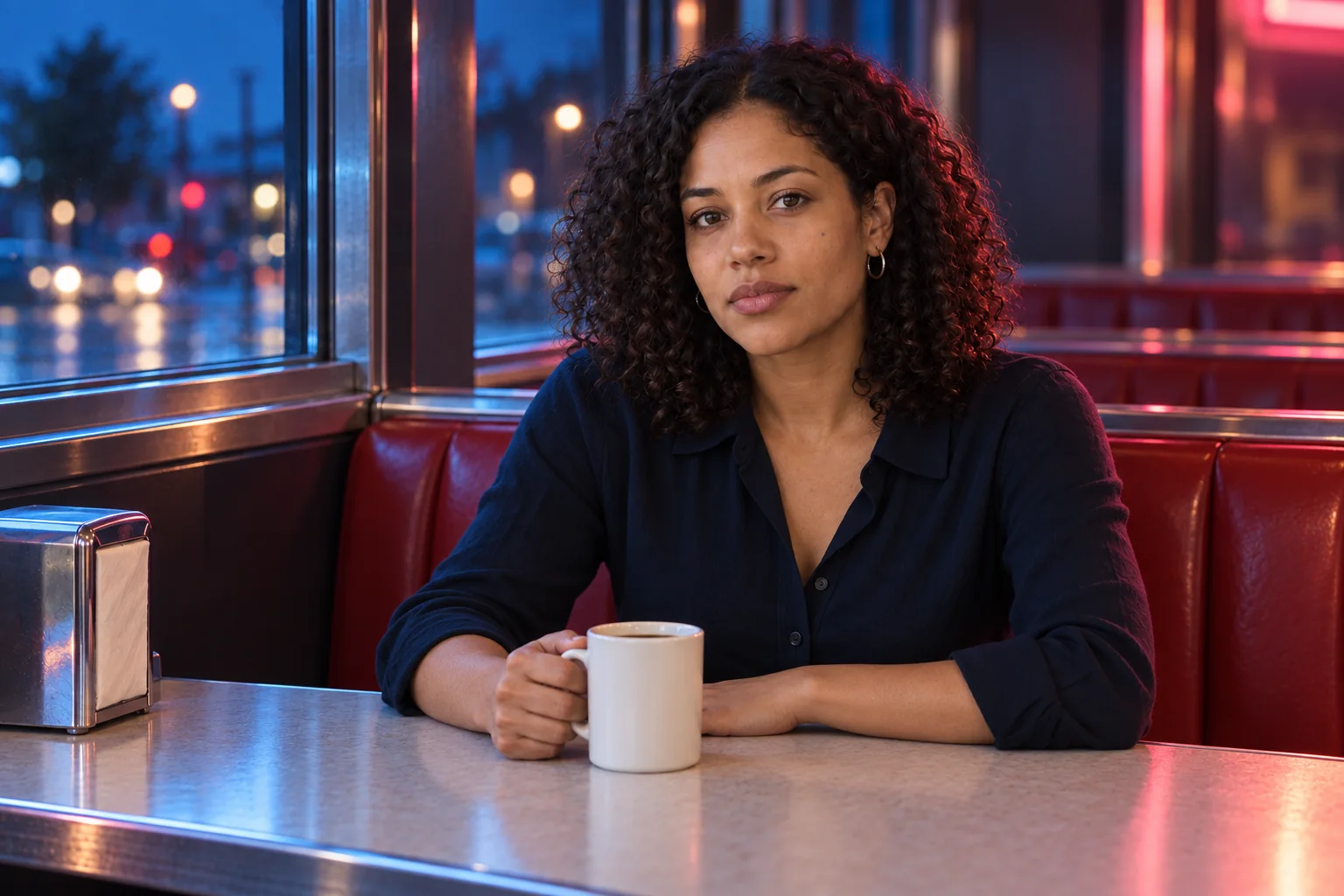
Cool street light and a narrow warm edge turn the same coffee pause into a night scene.
Adobe's neon photography guide is useful on mixed color, reflections and supplementary light. Treat those ideas as technique, not as proof that neon belongs to every historical diner. These two pictures are mood interpretations, not measured exposure tests or universal recipes.
A practical shoot plan
Scout the location before bringing wardrobe. Ask the venue for permission, learn when the booths are quiet, and avoid blocking staff or photographing patrons who have not agreed to be in the frame. Take phone snapshots from the intended camera position and mark every modern cue you cannot crop or temporarily move.
Keep the shot list short:
- A clean identity frame with a clear face and both hands visible.
- The main booth action, framed wide enough to establish the room.
- One closer portrait that keeps a useful object or architectural line.
- A window-light variation if daylight is part of the story.
- A night or mixed-light variation only if the location supports it.
Choose wardrobe after seeing the booth color and wall surfaces. A muted top may separate beautifully from red vinyl and vanish against teal. Test the silhouette while seated, not only while standing in front of a mirror. Watch collars, cuffs and jewelry where hands or chrome already create small highlights.
On the day, build the neutral version first. Once pose, hands and geometry work, try the more expressive light. Save the finish for last. If the untreated frame cannot communicate the world, adding stronger grain will mostly make the problem harder to see.
Where Throwback fits, and where it does not
Throwback does not offer a guaranteed diner mode or a diner selector. If you want to explore the broader difference between rebuilding a scene and changing a camera finish, the AI transformation guide explains that boundary. The After Hours camera process is a separate route for giving an existing photograph disposable-camera character without inventing a new room.
For another portrait built from light, styling and set choices, see the Old Hollywood glamour photoshoot. It is a different visual world, not a promise of a diner scene or mode.
For the final check, forget the color treatment for a moment and look at what remains. If the clothes, action, room and light still belong to one story, the finish has a solid picture to work with.