
Your 1970s self could be dressed for a disco night, leaning into a warm family-room snapshot, posing under department-store studio lights, carrying a guitar into a rehearsal space or simply crossing town in corduroy and worn leather. The useful question is not which 1970s filter to choose. It is which life you want the portrait to imply.
Meet the person before you pick the decade
A good time-travel portrait has two jobs. You should recognize the person, then notice the other lifetime around them.
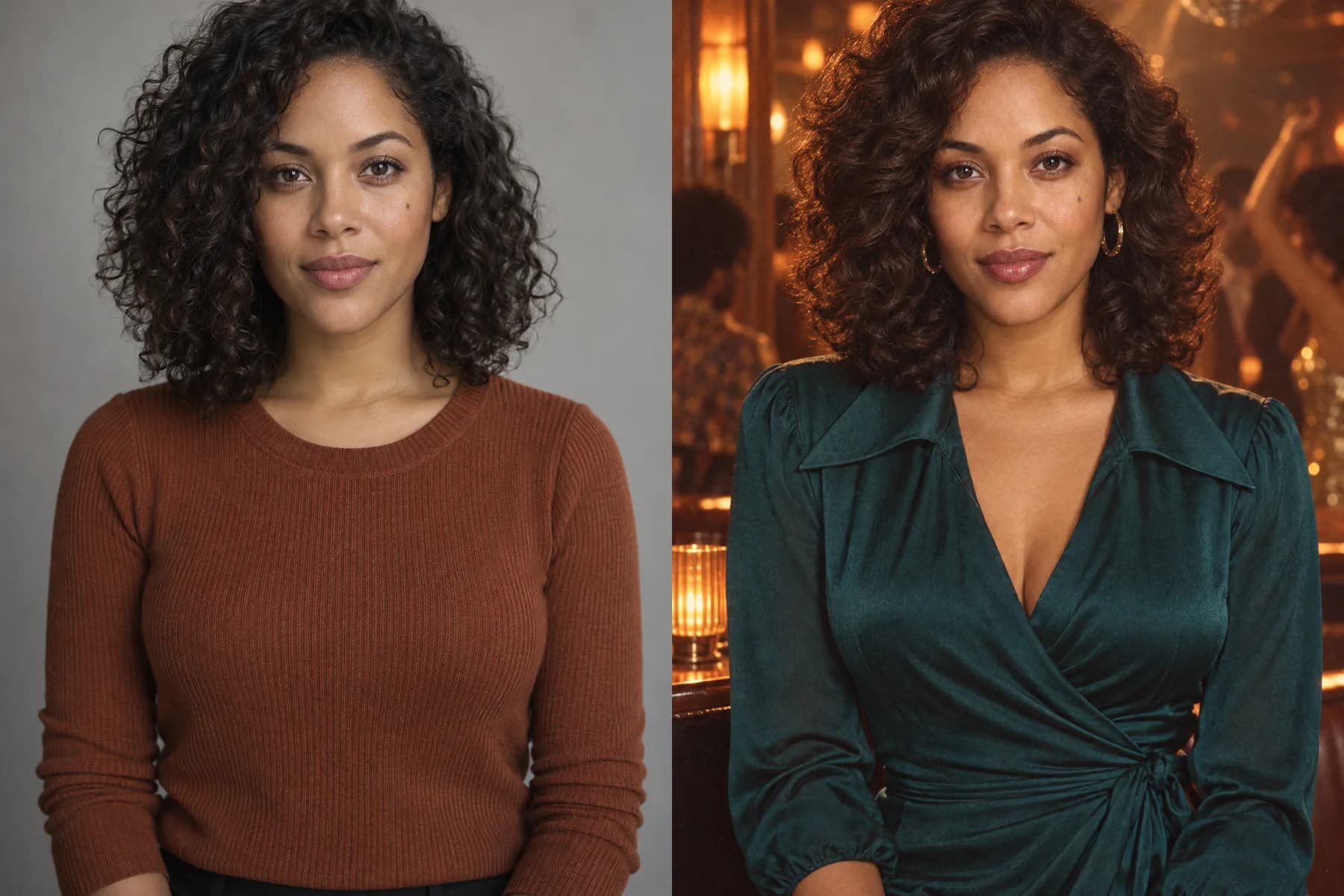
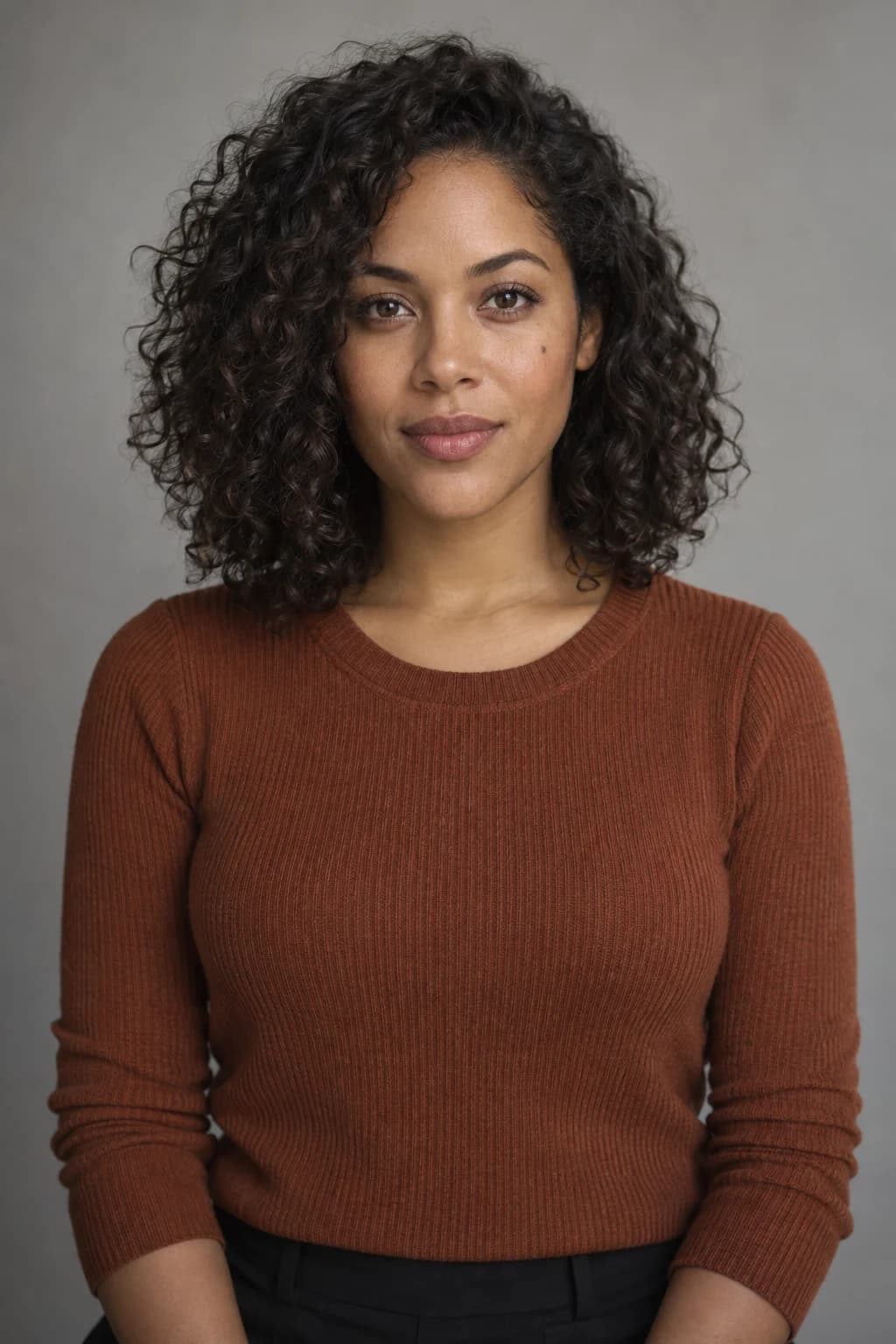
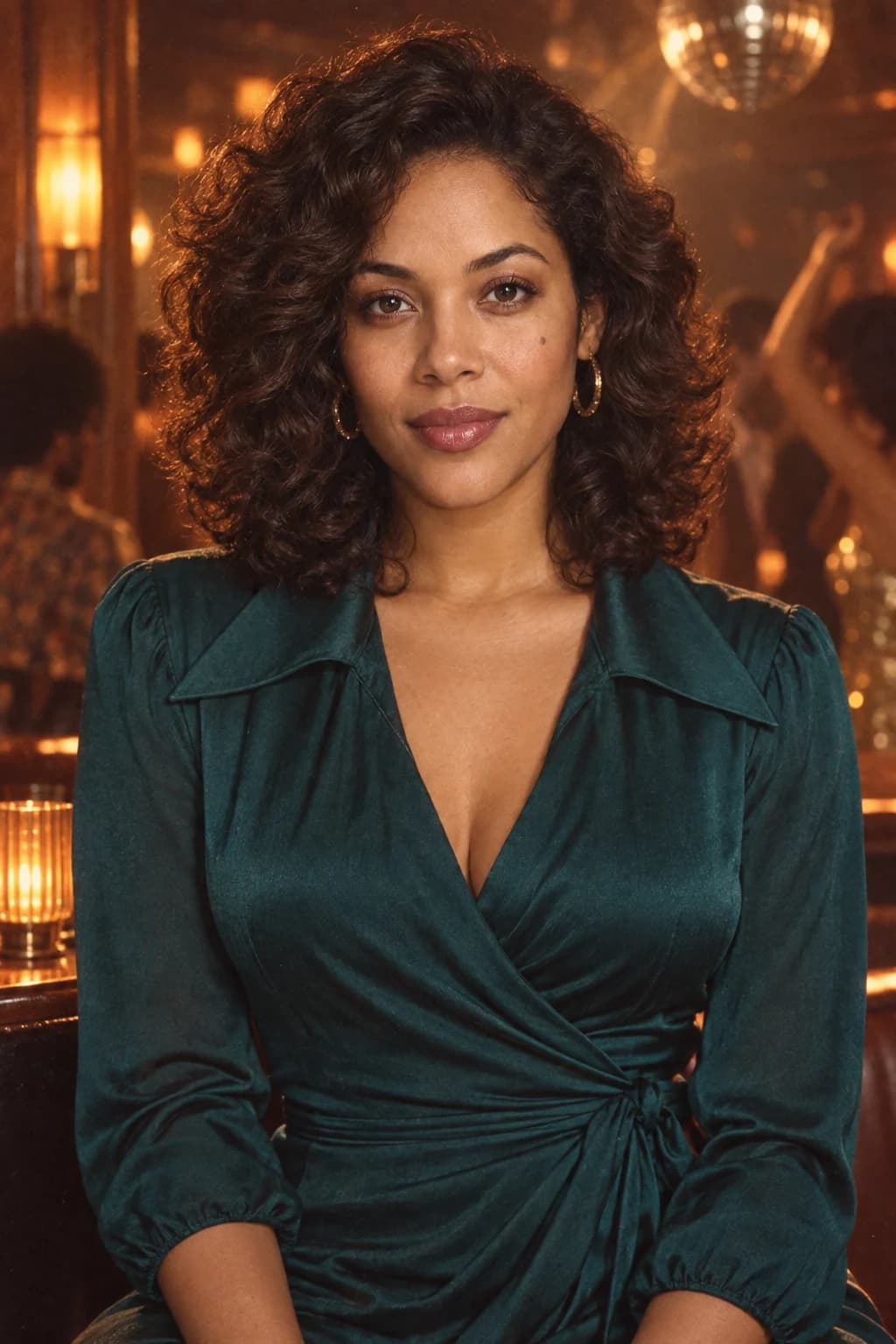
The portrait starts with a recognizable face, then lets the scene do the time travel: shaped curls, a deep teal wrap dress, warm practical lights and direct flash shift a quiet sitting into a night out.
The face is not the decade. Everything around it is doing the time travel.
If that is the kind of change you want, the 1970s Time Portrait experience is the direct route. It is a generative portrait experience that can change the wider scene, not a local color treatment applied to the existing photograph.
Persona one: disco night without the costume box
Disco is an obvious 1970s answer, which also makes it easy to overdo. A mirror ball, platform shoes, giant sunglasses, sequins, smoke and a dance floor crammed into one frame can make the person disappear under references.
Start with the social situation instead. Perhaps this is the photograph taken at the edge of a club before the music pulls everyone back onto the floor. The important choices are a fluid silhouette, a wide collar, warm amber light and a touch of direct flash. One quiet glint from a mirror ball can set the scene. It does not need to occupy half the image.
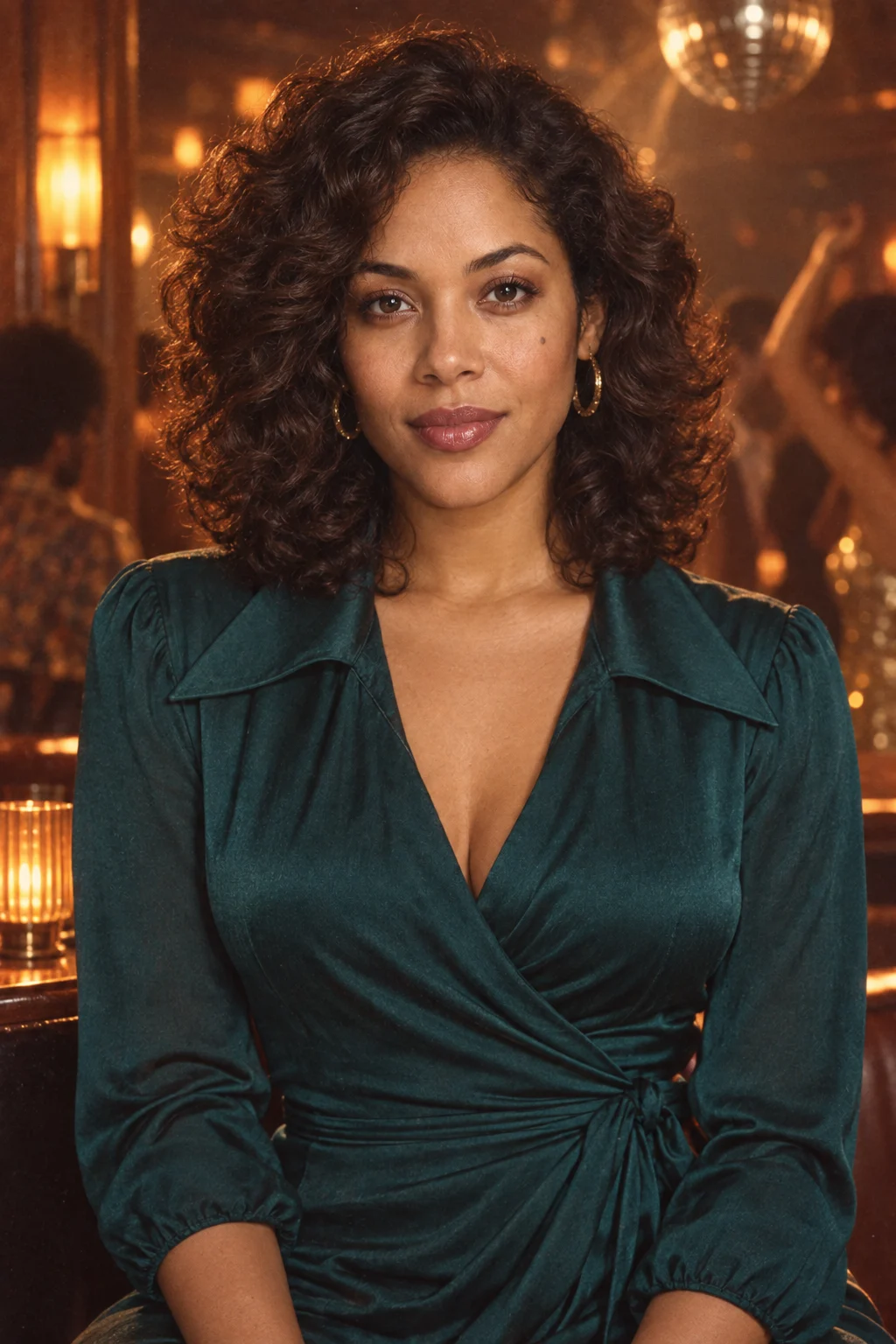
A teal wrap dress, warm club light and one bright reflection set the late-night mood.
Persona two: the family-room snapshot
This version should feel less designed. Think a textured sofa, wood paneling or warm painted walls, a table lamp and the slight clutter of a room people actually use. Knitwear, a simple blouse or a patterned shirt belongs here more naturally than a fully coordinated party look.
The camera character changes too. A family snapshot can tolerate imperfect framing, a little lab-print softness and direct flash that falls away toward the edges. That slight awkwardness is useful. It suggests someone raised a camera because the people mattered, not because the room was ready.
Keep the pose casual. Sitting on the arm of a sofa, turning from a conversation or holding a mug tells a more convincing story than a fashion stance in a domestic room.
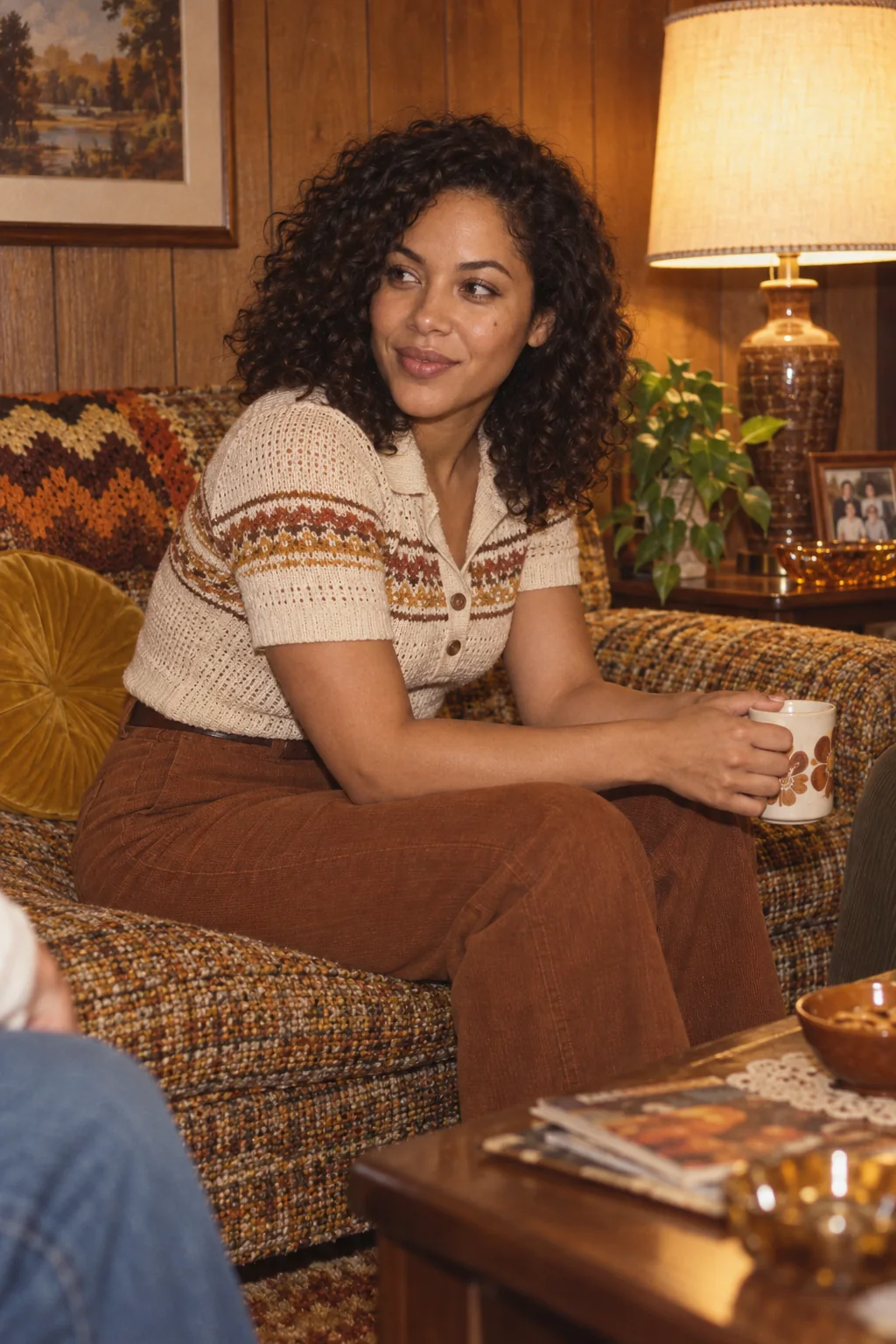
A quiet family-room snapshot, where lamplight, furniture and relaxed styling carry as much of the decade as the clothes.
Persona three: the department-store studio portrait
For the polished route, picture a portrait made to be printed, framed and given to relatives. The background might be painted brown, amber, olive or muted blue. The pose is careful. Hair is shaped, the collar is considered and jewelry is visible without becoming the whole idea.
Soft frontal light suits this persona better than nightclub flash. A gentle optical glow and subdued contrast can help, but blur should never be used to hide a face that no longer matches the source.
This is a strong choice if you want your 1970s self to feel composed rather than ironic. A rust shirt, patterned scarf or tailored jacket can carry the decade without turning the image into fancy dress.
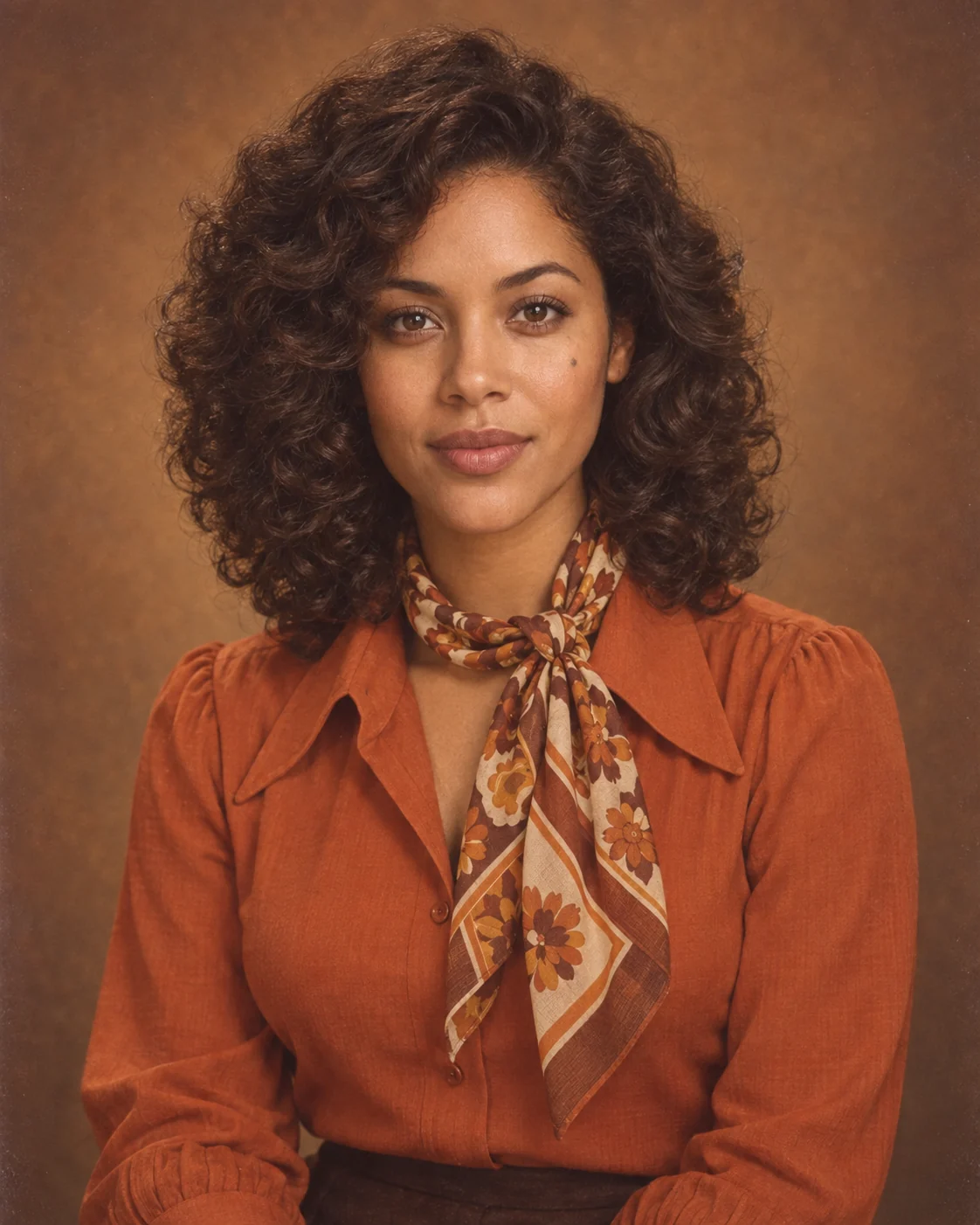
A composed studio pose, warm painted backdrop and patterned scarf turn the portrait into a keepsake.
Persona four: the music version
The 1970s held many music worlds. Decide where your fictional life lands before choosing the clothes.
A singer-songwriter portrait might use natural window light, denim, a rehearsal room and a guitar case leaning against the wall. A funk or soul persona could take a sharper silhouette, richer color and stage-side light. A punk-adjacent club image wants a smaller room, rougher wall texture and a much less polished pose.
The instrument should not be a random prop. If the image says rehearsal, let cables, cases or a microphone stand make the space believable. If it says record-store afternoon, leave the stage equipment out.
This is where specificity pays off. "1970s musician" is a label. "Keyboard player waiting backstage in a small amber-lit venue in 1978" is a picture.
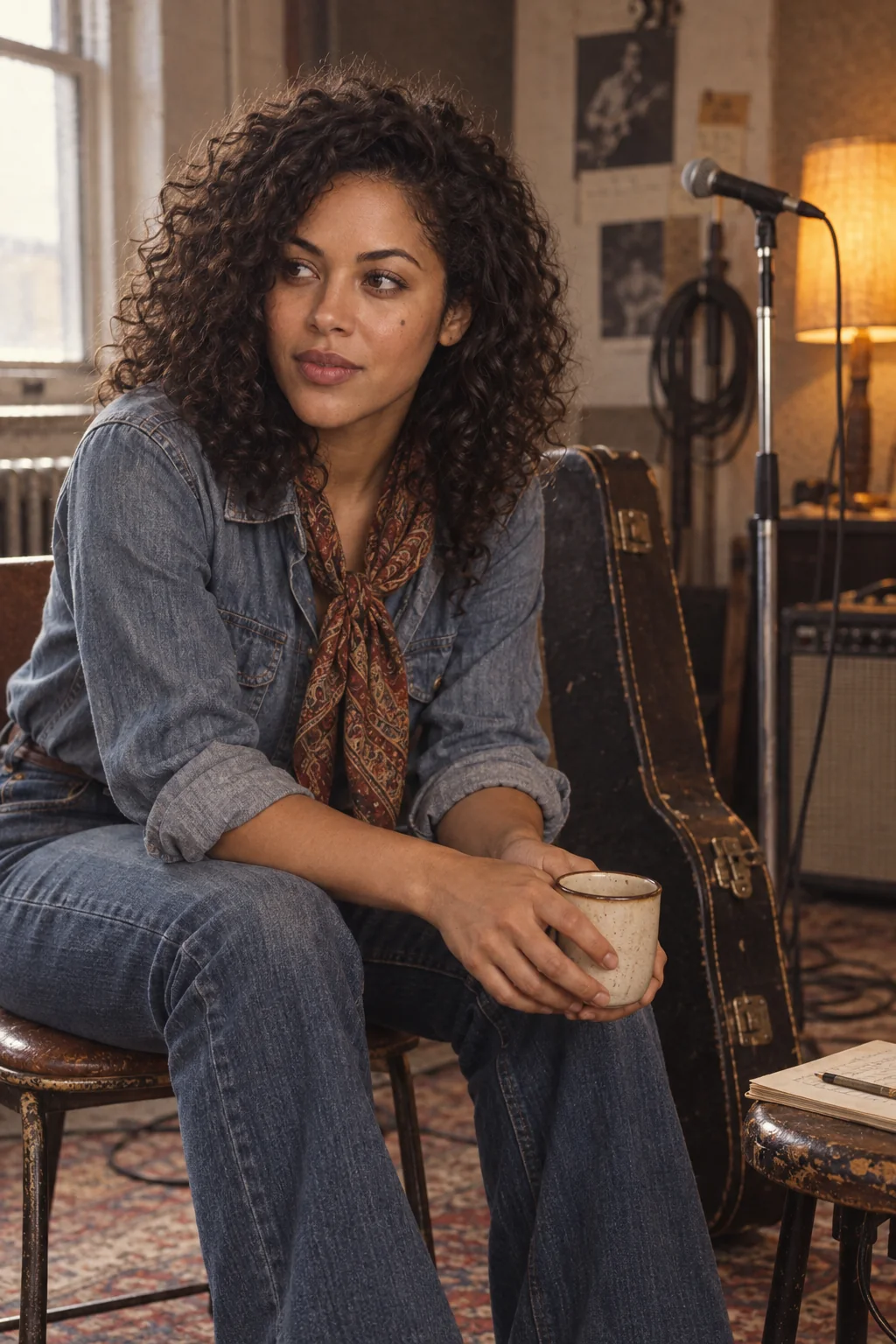
Between takes in a small rehearsal room, with the guitar case and microphone stand setting the scene.
Persona five: ordinary street style
Not every other lifetime needs a big event. An everyday 1970s portrait can use high-waisted denim, corduroy, a knit polo, a suede jacket or a practical shoulder bag. Put the person near a brick storefront, bus stop, apartment entrance or neighborhood park.
Daylight makes the clothing and environment do more work. Muted greens, tobacco brown, cream, mustard and deep blue can fit the era, but the whole image does not need a brown wash. Real scenes contain neutral surfaces and mixed color.
An ordinary street persona often feels more personal than the glamorous options. It answers a different question: not "Who would I be at the party?" but "What would a normal Tuesday have looked like?"
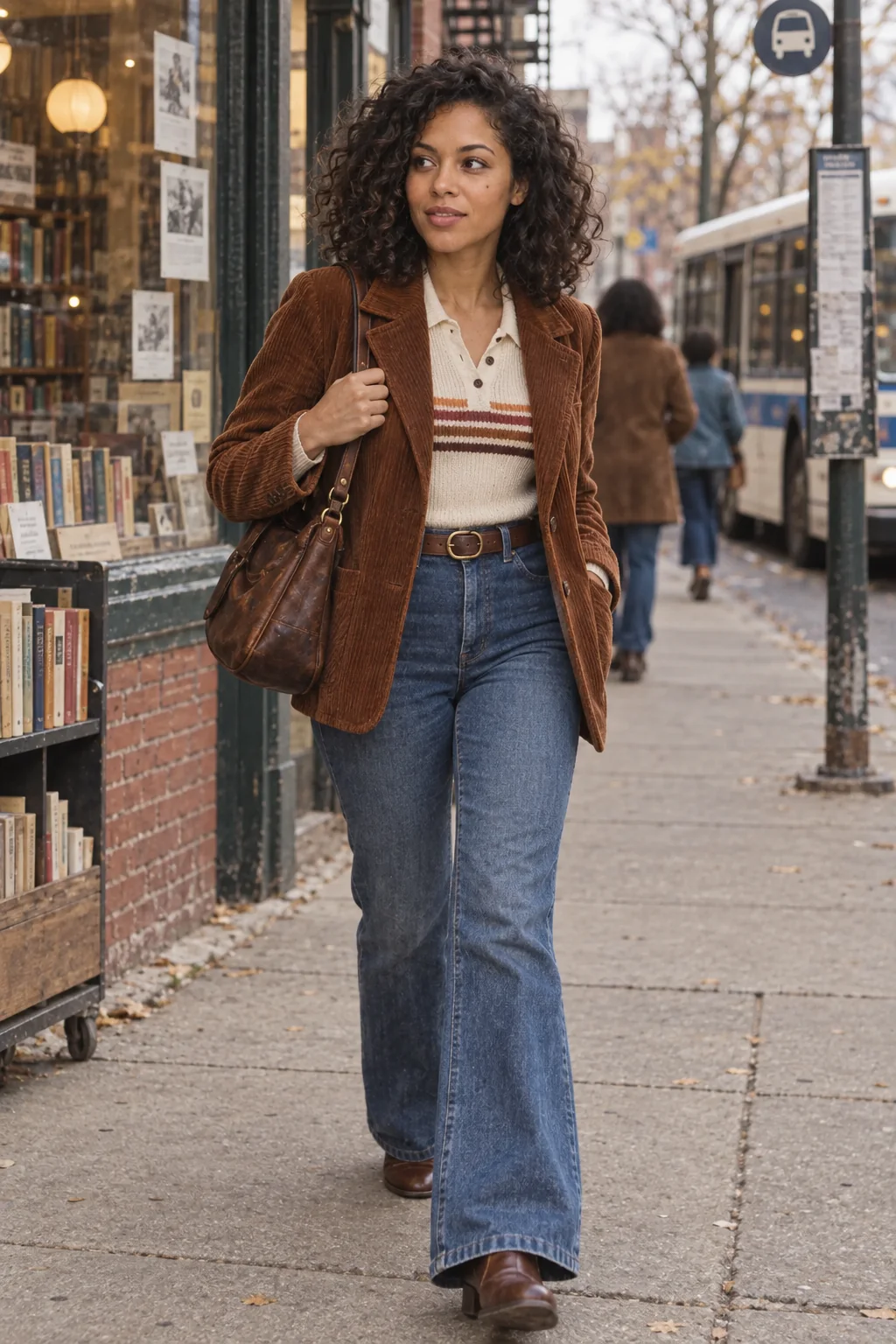
An ordinary neighborhood stop, rendered through corduroy, daylight and a bookshop-lined street.
Hair should have a shape, not a slogan
"Make the hair 1970s" is too vague. Choose a silhouette that belongs to the persona: feathered layers, a rounded natural style, long center-parted waves, a sculpted blowout or a shorter textured cut.
Preserving identity does not require preserving the exact hairstyle. It means keeping facial structure, skin tone and core features steady while the hair changes the outline around them. The small cheek mark remains a steady anchor as the curls and lighting move.
Avoid treating one style as the entire decade. A disco-night portrait and a quiet family snapshot may involve the same person on the same weekend, yet their hair, makeup and finish can differ.
Clothes tell us where the person is going
Wide collars and flared shapes are useful, but context matters more than checking off recognizable items. A wrap dress makes sense at night. Corduroy and knitwear fit an everyday street scene. A tailored jacket can belong in a studio or at work. Denim can move across several personas if the cut and styling are specific.
Choose one dominant idea. If the print is bold, let the accessories settle down. If the silhouette is strong, a plain fabric may be enough. Era detail works best when the person still looks like someone who got dressed, not a mannequin displaying every reference at once.
The photograph needs a history too
Hair and clothes can be convincing while the image itself still feels entirely current. Light, focus, color and framing decide what kind of photograph we believe we are seeing.
Warm indoor practical light can sit beside direct flash. A studio portrait can have mild diffusion. A family snapshot can be a little off-center. A daylight street image can retain natural color while showing restrained grain and softer micro-contrast than a current phone portrait.
The goal is a scene that feels internally consistent, not a pile of period details.
For the camera-process side of the decade, the 1970s photo filter guide explains a different workflow. Throwback's local Golden Hour process keeps the people, clothes and setting already in your photo while changing its camera character. Time Portrait is generative AI: it can reimagine the person within a new era scene after consent.
Once one of these alternate lives feels right, you can try a 1970s Time Portrait in Studio. It reimagines the wider scene rather than applying a local color filter to your existing photo.
Build a better 1970s portrait prompt
Start with five decisions:
- Who are you in this version of the decade?
- Where was the photograph made?
- What are you wearing for that situation?
- What light would actually exist there?
- What kind of camera moment is it: studio, family snapshot, street portrait or nightlife flash?
Then add the identity boundary: preserve facial structure, skin tone and core features. Change era-dependent hair, makeup, clothing, accessories, setting and photographic character.
That order prevents a pile of decade keywords from replacing the person. It also makes comparison useful. You can try the same identity as a family-room regular and a disco-night regular, then decide which alternate life feels more like you.
Make the journey from inspiration to your portrait
Begin with a clear source photo. An unobstructed face, straightforward light and a natural expression give the portrait experience useful identity information. Avoid group shots, heavy beauty filters and sunglasses if you want the face to remain recognizable.
Next, choose one persona rather than asking for every 1970s reference at once. The 1970s visual guide can help you settle on a direction. The AI Time Portraits page explains the wider generative experience.
When you are ready, open the 1970s portrait mode. Each result is generated from the photo you choose and may interpret the styling differently.
The most satisfying answer to "What would I look like in the 1970s?" is rarely the loudest one. Pick a life, keep the face, and let the room around that person do its share of the storytelling.