
The four-shot answer
Plan four separate shoots: a polished studio portrait, sharp Mod geometry, a sleek Space Age fantasy and a psychedelic scene full of colour and layers. Keep the face and basic framing consistent. Hair, silhouette, pose, set and lighting should all change together. You want one recognizable person in four different worlds, not four outfits under the same retro filter.
Think of these as working directions, not a strict timeline. Styles overlapped, and four photographs cannot represent a whole decade. Each frame simply needs a visual logic of its own, with the subject still recognizable at the centre.
The National Gallery of Victoria describes Henry Talbot's modern fashion imagery as connecting clothing with popular culture and emerging youth culture. Use that as a cue to build a whole setting around each outfit. Wardrobe alone cannot carry the period.
Start with one neutral identity reference
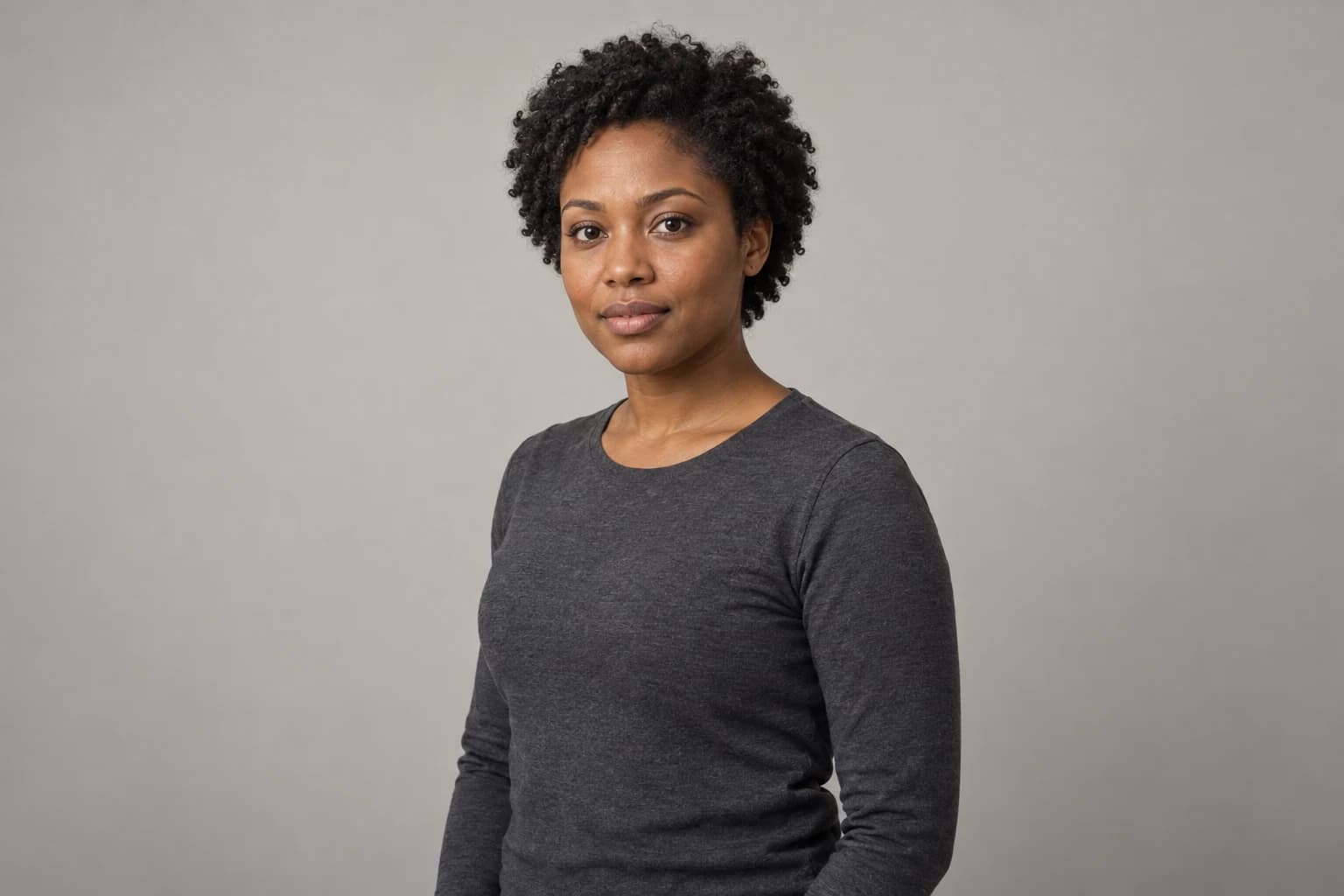
First, make a clean source portrait. A plain background, even lighting and minimal accessories will make the face easier to compare across the later images. Note the camera height, crop and eye line. Then use this original portrait for every transformation rather than feeding one altered version into the next.
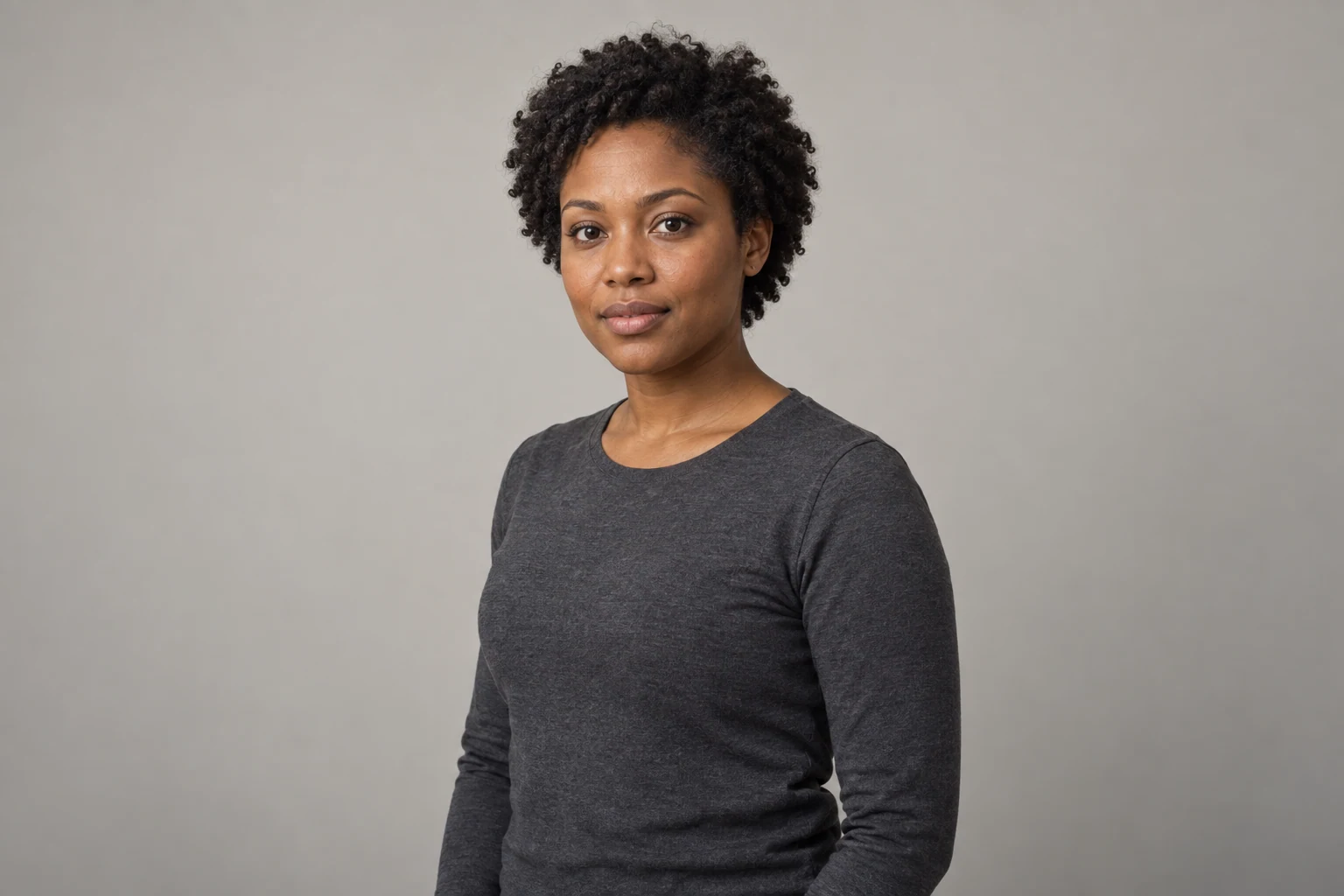
A clean contemporary portrait establishes the face, proportions and skin tone that remain constant across all four looks.
-
Face shape, eye spacing, nose, mouth, skin tone and distinguishing details should stay recognizable.
-
Hair, makeup, clothing, accessories, posture, setting and photographic mood can change with the look.
-
One aspect ratio and similar space around the face will help the finished sequence hang together.
Look one: polished studio restraint
Let the first portrait be quiet. Pair one saturated dress with a sculpted hairstyle and an almost empty cream backdrop. An upright seated pose and composed expression can suggest the period without filling the frame with obvious decade props. The calmer opening also gives the later images somewhere to go.
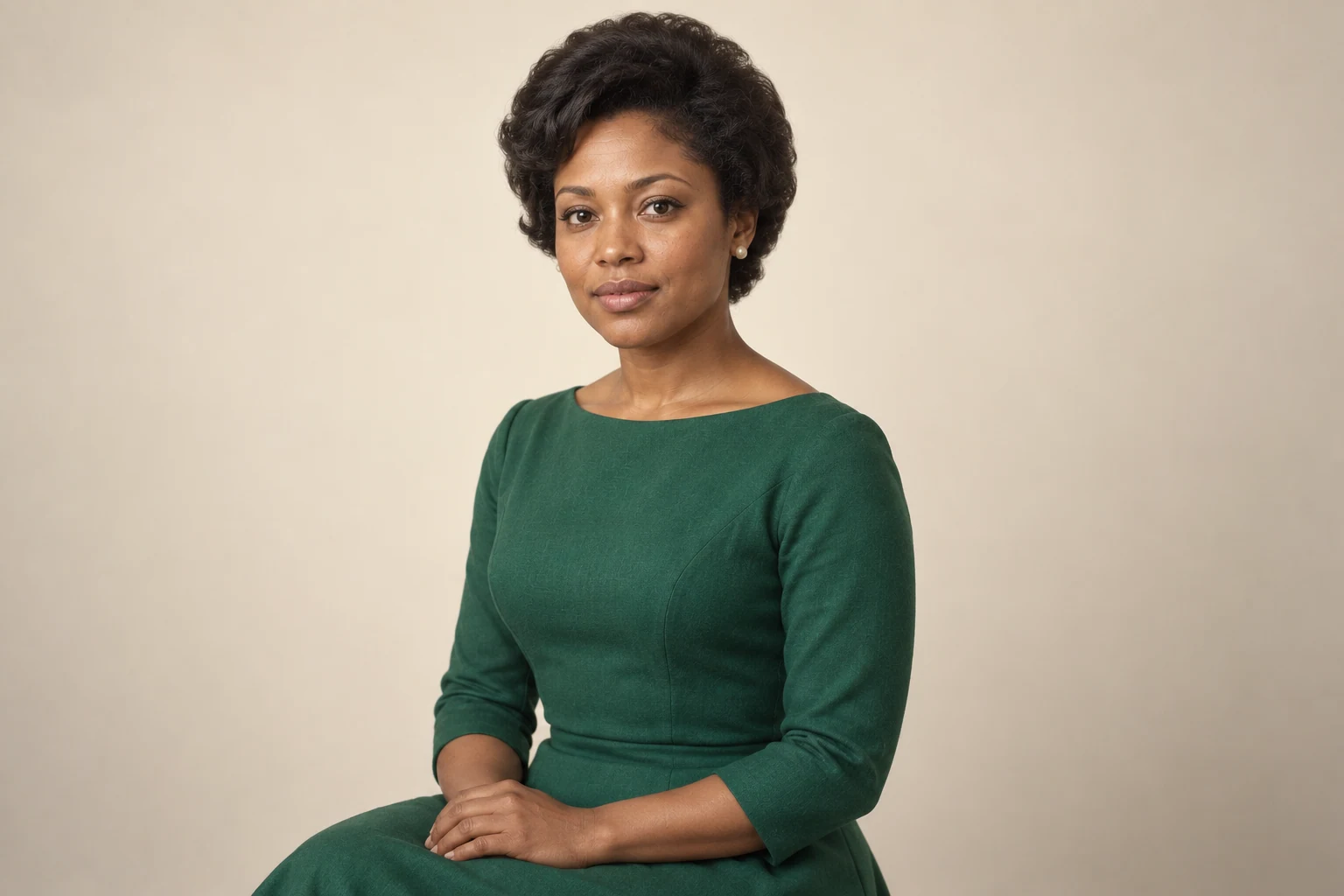
One rich colour, controlled posture and a quiet backdrop give the opening portrait its polished restraint.
An emerald dress works well against a pale background with small accessories. Highly structured hair calls for a simpler pose. Leave enough quiet space for the clean silhouette to register.
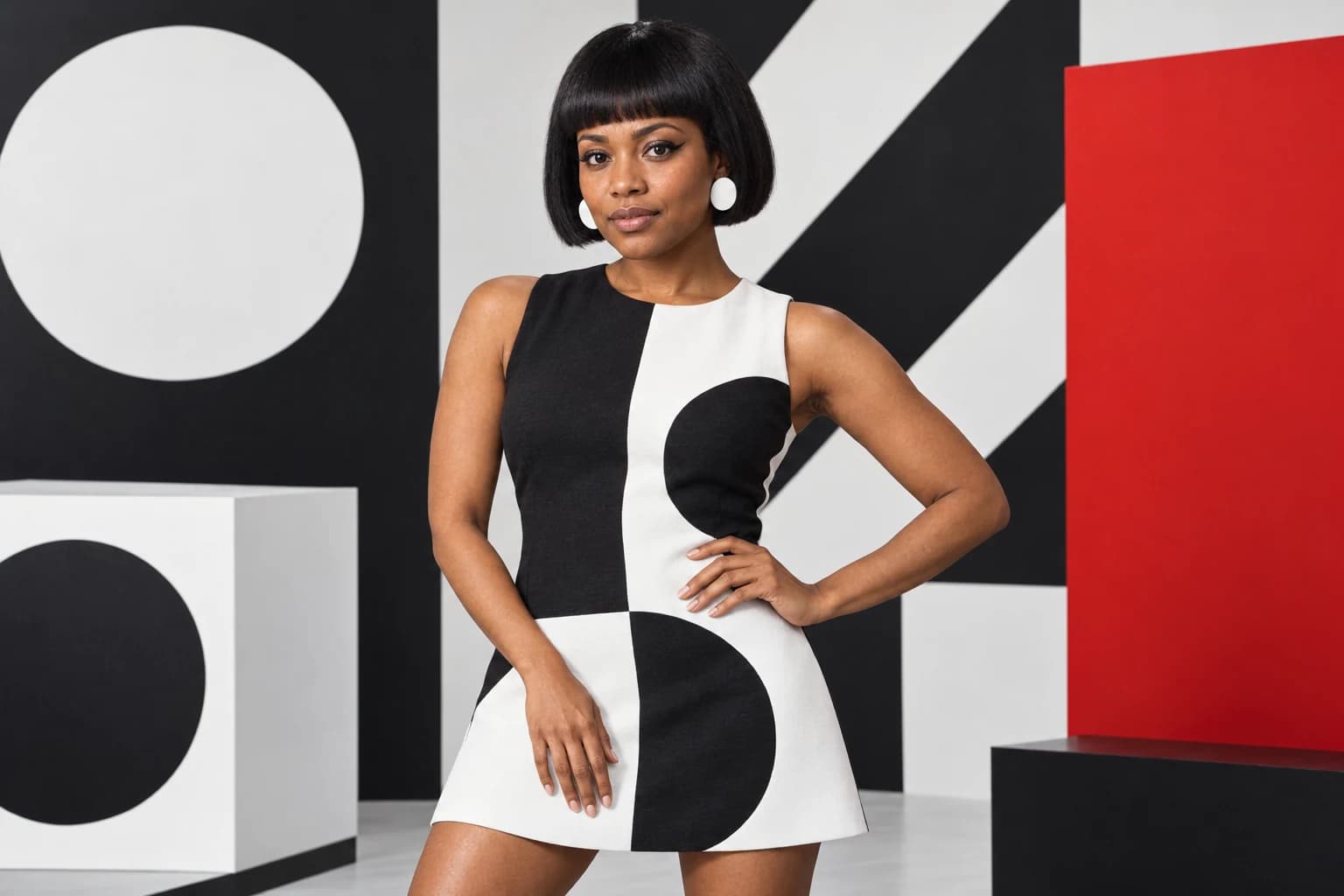
Look two: Mod geometry
The Mod portrait can be the graphic centre of the set. The V&A identifies Mods as particularly influential early in the decade and describes their European-style clothing in terms of high-impact colour and line. Choose a tight palette, a precise haircut and bold eyeliner. Then echo the same shapes in the dress, jewellery and backdrop.
-
Try black and white with one hard accent, such as red, orange or cobalt.
-
Squared shoulders, a bent wrist or one sharply angled arm can give the pose its structure.
-
Circles, stripes or blocks should repeat the garment's geometry rather than fight it.
Skip the box of assorted retro props. A clean relationship between line, colour and pose is stronger than a crowded room of references that do not belong together.
Look three: Space Age fashion fantasy
This is the fantasy shot, not a documentary reconstruction. Start with a white set and one reflective textile. Repeat a curved shape in the hair, an accessory and the scenery. A cool frontal pose keeps the image closer to fashion editorial than astronaut costume.
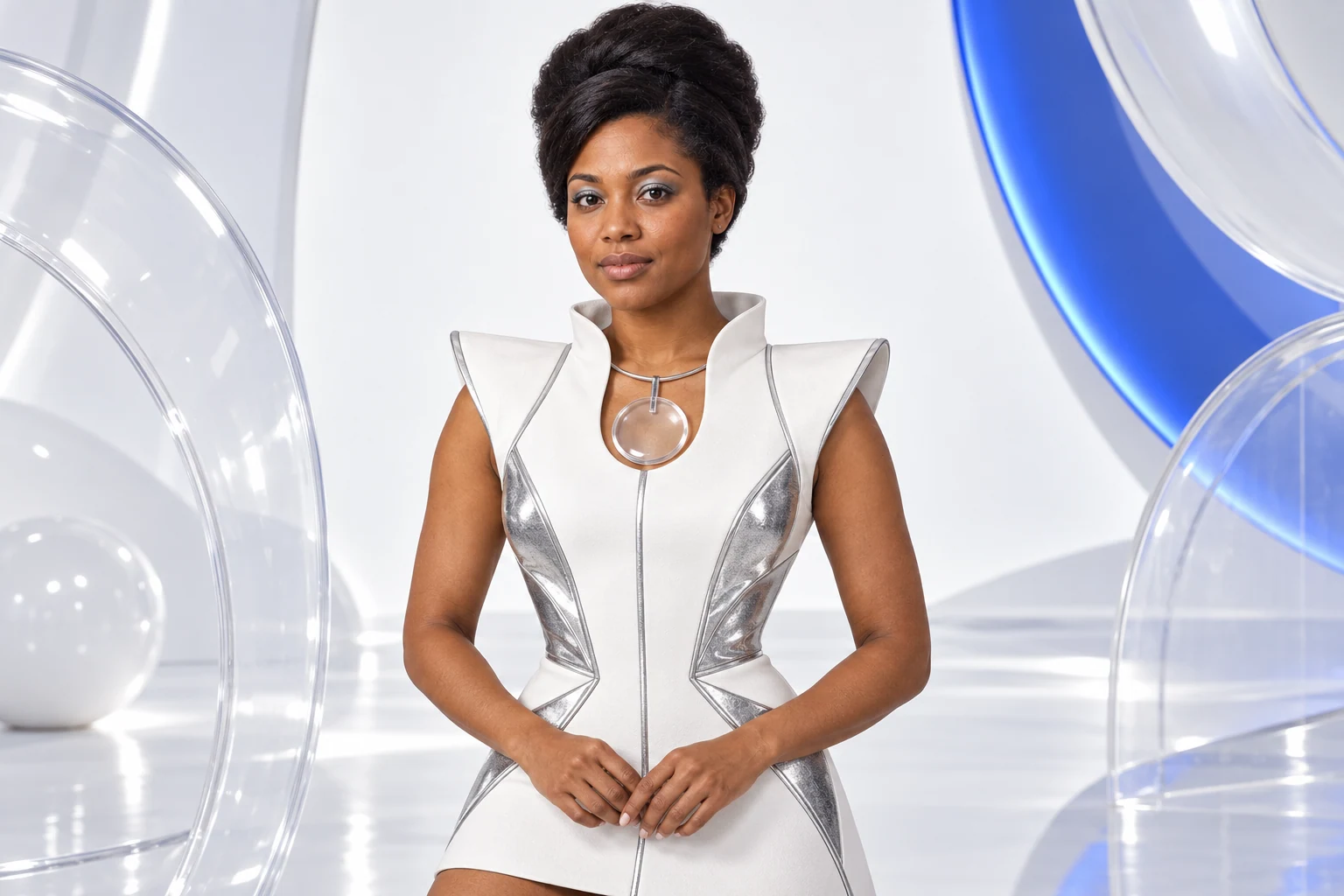
Reflective fabric, curved forms and a cool symmetrical pose create a fashion fantasy without becoming a costume.
The set can be small: a seamless white wall, one circular translucent object and a blue light accent. Keep the face natural enough to preserve identity. Clothes, curved forms and the surrounding space can handle the rest of the transformation.
Look four: psychedelic colour and layers
Save the loosest pose and fullest setting for the end. The V&A documents long, loose and layered outfits inspired by vintage clothing, along with colourful garments sold at London's Kensington Market. Borrow selectively. Layer the shapes, loosen the outline and use a palette that feels more expansive than the controlled opening portraits.
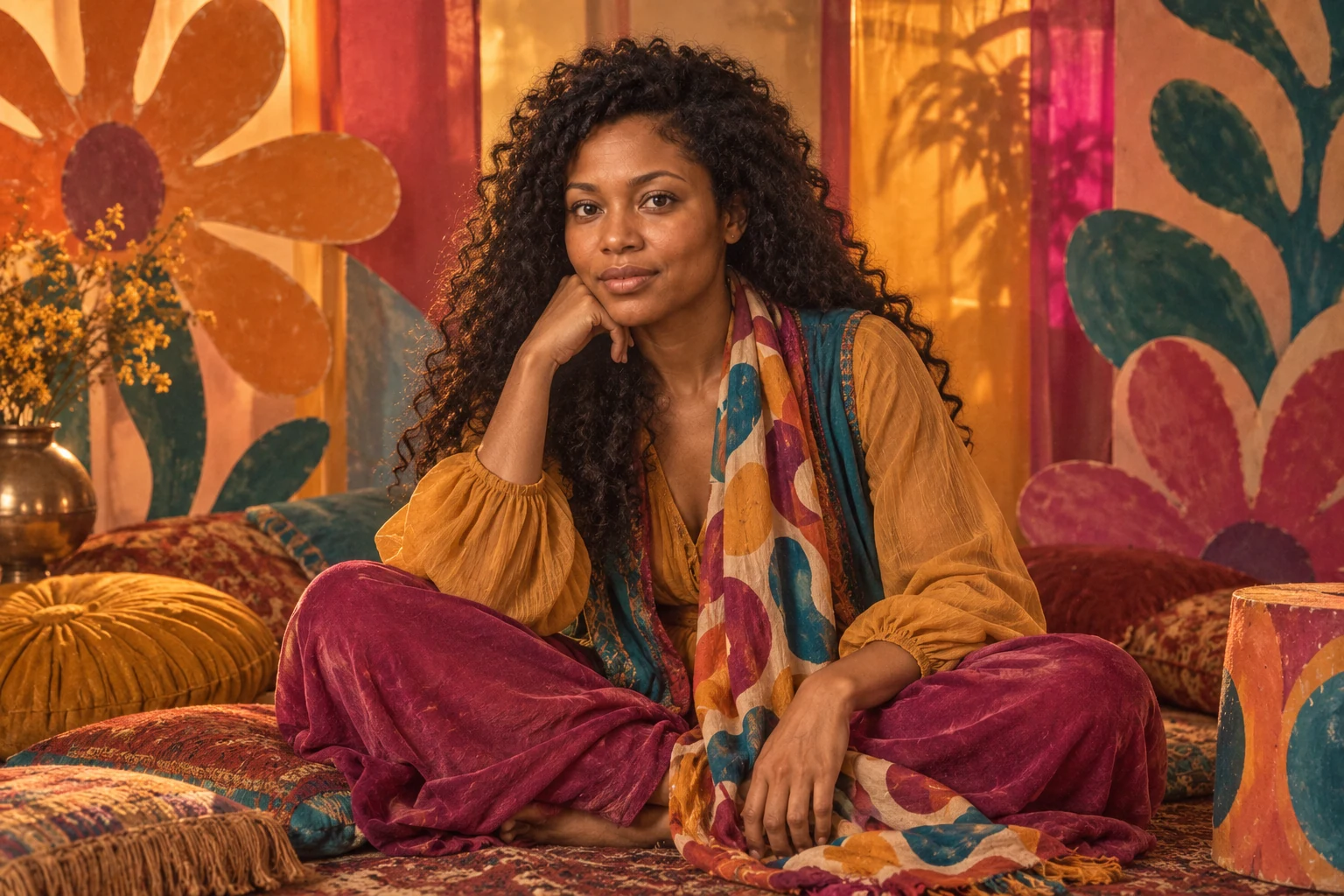
Loose layers and overlapping fields of amber, magenta and teal bring the sequence to its most expansive frame.
Choose three dominant colours and repeat them in the clothes, backdrop and translucent foreground pieces. If you use genuine traditional textiles or motifs, identify them accurately and give them appropriate context. For a wholly invented set, abstract painted shapes add colour without treating a culture as decoration.
Keep four different worlds coherent
-
Carry one compositional anchor through the series, perhaps the camera height, crop or the subject's place in the frame.
-
Each scene should change at least four era-dependent elements among the hair, wardrobe, pose, environment, lighting and colour.
-
A dominant family of shapes gives each frame its structure: soft verticals, hard geometry, smooth curves or overlapping organic forms.
-
Let the sequence grow less restrained as it goes, so the last portrait feels like an arrival rather than another change of clothes.
Check the face after every transformation. If the eyes, nose, mouth, facial proportions or skin tone no longer look like the same person, return to the original reference and try again. A strong set of portraits still needs a consistent identity.
Choose your next retro direction
Want something more formal and theatrical? Compare this series with the Old Hollywood glamour photoshoot guide. For a location-led story with booths, counters and bold colour, try the retro diner photoshoot guide. The silhouettes and settings in the 1970s style inspiration collection take the alternate-life idea into the next decade.
1960s photoshoot questions
How do I stop a 60s photoshoot from looking like a costume party?
Give each frame one strong idea and carry it through the silhouette, pose and set. A precise Mod composition or restrained studio portrait usually looks more intentional than a pile-up of familiar retro accessories.
Can I create these looks in a small room?
Yes. A plain wall or paper backdrop, one chair and one scene-defining object are enough. Change the backdrop colour, clothing silhouette and pose between shots instead of trying to build four complete rooms.
Can the four 1960s styles be mixed?
Yes, but decide which visual language leads. A Mod dress can work in a futuristic set when geometry connects the two. Avoid mixing details solely because they all look retro.
The four scenes are practical editorial lanes, not a claim that 1960s styles changed on a fixed schedule or looked the same everywhere.
The supplied historical evidence primarily covers British fashion and the work of an Australian fashion photographer.
Space Age and psychedelic details are creative interpretations rather than documentary reconstructions.
No genuine Throwback output was supplied or claimed.
Sources
- National Gallery of Victoria: Henry Talbot
- V&A: 1960s fashion
The images in this article are editorial AI inspiration featuring a fictional person; they are not archival photographs or actual Throwback output.