
People did smile in old photos, but a broad grin was not the default for a formal portrait. Early photographic limits played a part, especially in the first years of the medium. The longer-lasting reason was social: portraits borrowed the composed look of painted portraiture, sittings were deliberate occasions, and many people wanted to appear steady rather than caught in a passing laugh.
That makes the familiar wall of stern faces less mysterious. It also makes the exceptions more interesting. Smiling historical portraits survive, so the answer cannot be "people never smiled" or "everyone had bad teeth."
Exposure time mattered, but it is not the whole answer
The earliest photographic processes could require a subject to remain still long enough that a held smile would be uncomfortable and more likely to blur. That explanation fits some early pictures. It does not explain every serious portrait made after exposure times became shorter.
History Nebraska's account of early portrait expressions treats exposure time as one factor alongside social convention and the practical importance of the sitting. Camera technology improved, but the composed portrait face remained.
Holding a relaxed mouth is easier than keeping a broad smile fixed on command. As the cheeks tire, the eyes narrow and the mouth shifts. A photographer working with a slower process had good reason to prefer the steadier expression.
Formal portraits inherited a serious visual language
Photography did not arrive in a world of casual snapshots. Its first customers already knew what a formal portrait was supposed to look like from paintings and miniatures. The pose was controlled. Clothes were chosen carefully. The finished object might be displayed, exchanged or kept as a family record.
The Smithsonian's National Portrait Gallery explains that early photographic portraiture carried forward these older conventions. A closed mouth and steady gaze could signal dignity and self-command. A visible grin belonged more readily to informal amusement than to the public face someone chose to preserve.
This convention outlasted the slowest cameras. Once a serious expression became part of the portrait's visual grammar, people did not need a technical reason to keep using it.
A portrait sitting was an event
Most people in the nineteenth century did not make photographs every day. A studio portrait required time, preparation and payment. The result could be one of relatively few pictures a family owned of that person.
That scarcity changed the mood. Modern phone photography makes room for a dozen expressions because another frame costs almost nothing. An older studio sitter had more reason to choose one controlled version of themselves. The expression says less about whether the person was happy than about what they thought a lasting portrait should be.
Clothing and posture reinforced the choice. A high collar, upright chair, painted backdrop and centered pose all pulled the picture toward ceremony. A restrained face belonged to the same arrangement.
Yes, some people smiled
The rule was never absolute. The Smithsonian's National Portrait Gallery has preserved daguerreotypes in which sitters look lively, relaxed or openly amused. Informal photographs and later snapshots make the range wider still.
The Library of Congress collection of nineteenth-century portraits is useful precisely because it shows variety within the formal pattern. Serious expressions are common, but they do not prove that earlier people lacked humor or warmth. They show what the portrait occasion usually asked of them.
An old portrait face is best read as a performance for a particular kind of picture, not as a direct measurement of personality.
The same face can tell two different stories
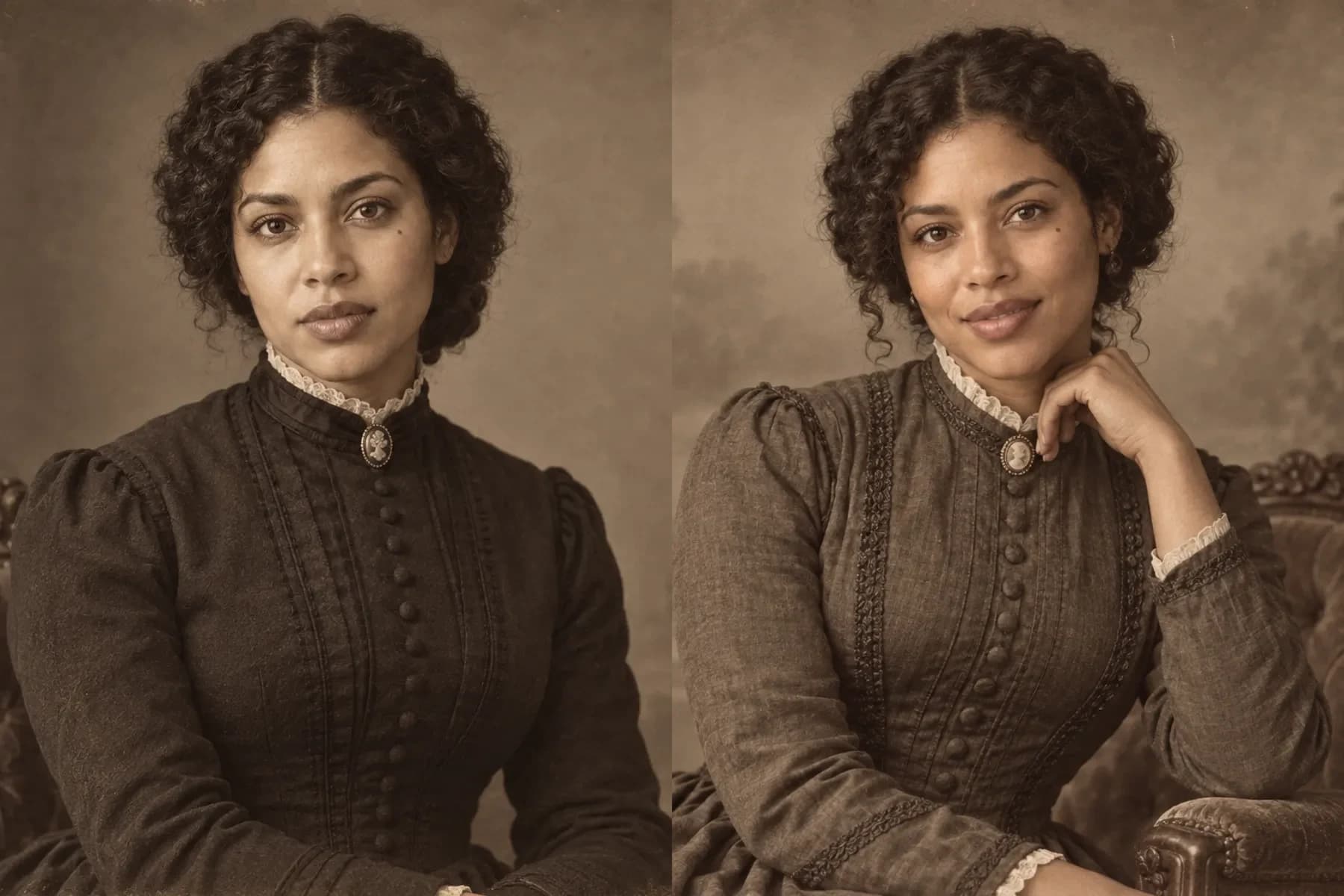
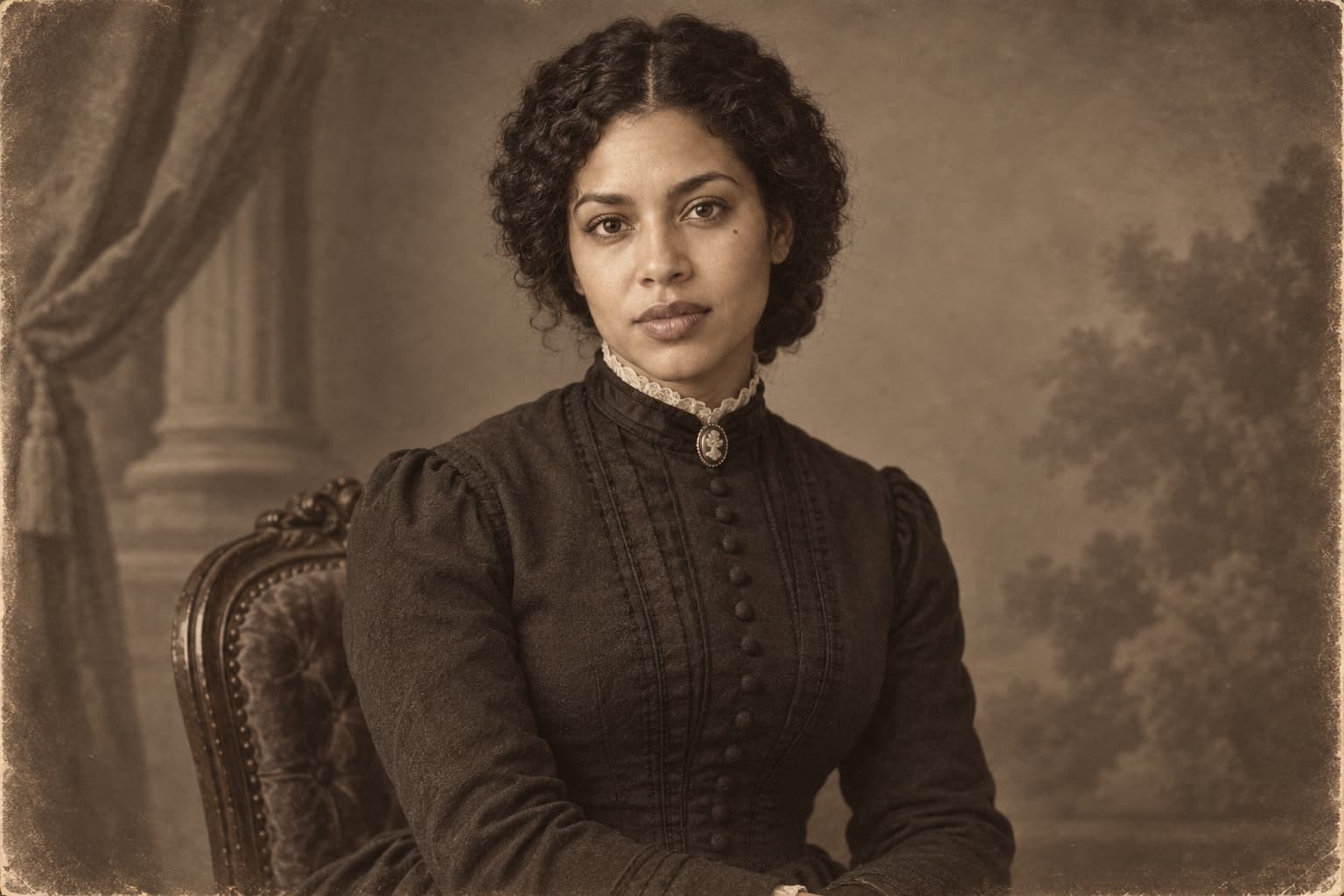
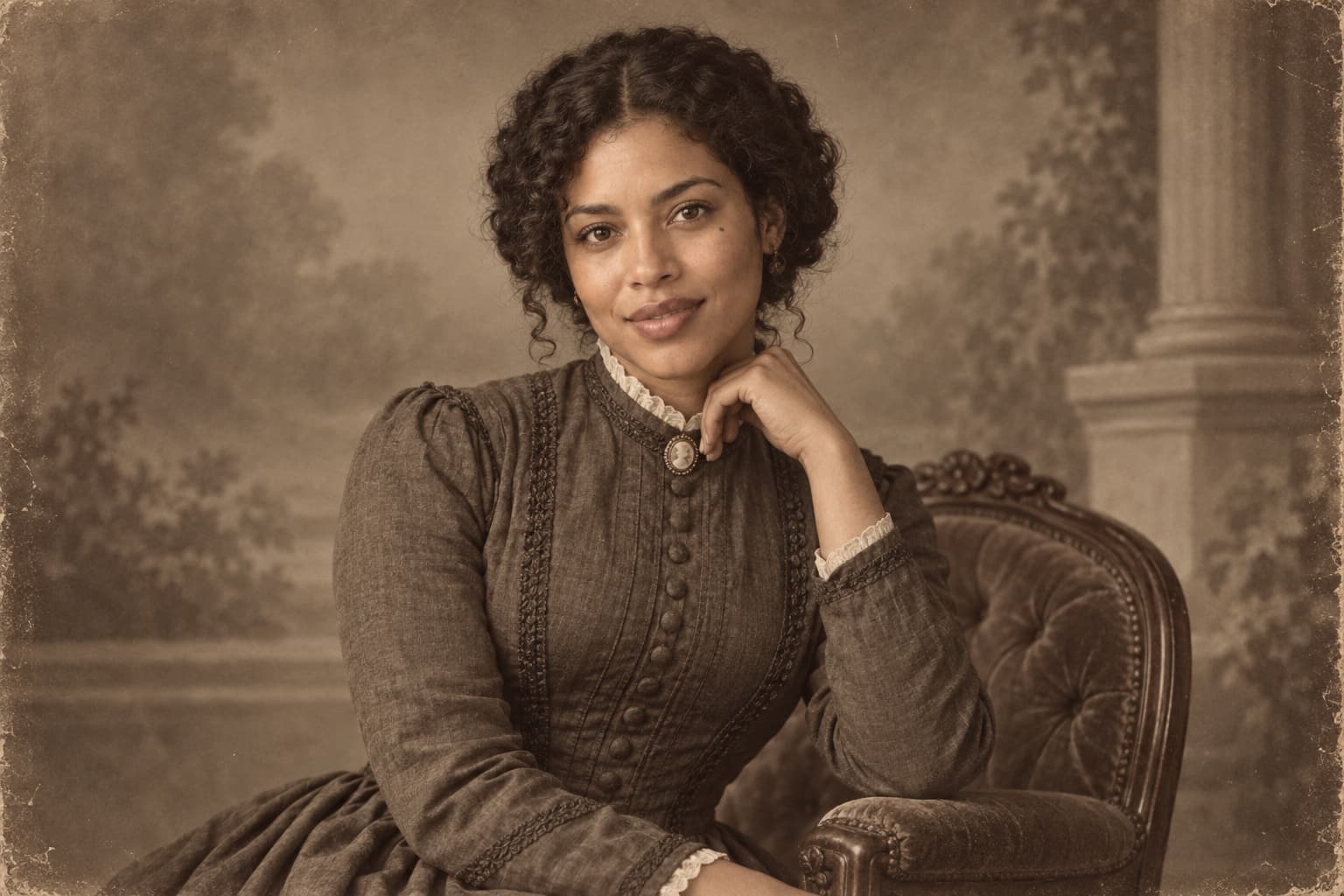
The matched editorial portraits above use one completely fictional identity. Both are period-inspired reimaginings made from the same modern reference. In the first, an upright pose, closed mouth and formal studio arrangement create the familiar serious portrait. In the second, a closer conversational pose and an easy smile make the same person feel more immediate.
The change is larger than the mouth. The eyes, shoulders, chair, crop and sense of distance all take part. That is why asking someone to "just smile" does not fully remake a portrait. Expression works with the whole social setting around the camera.
If you want to explore that wider shift with your own photo, AI Time Portrait is the generative route. It rebuilds hair, clothing and surroundings into another decade rather than applying a local camera filter. Use a portrait you have permission to transform, and check the generated face against the source.
Serious does not mean miserable
It is tempting to read a nineteenth-century portrait with today's snapshot habits. We now expect a smile to reassure the viewer that the moment was pleasant. A sitter in an older formal photograph was working with a different set of expectations.
Their neutral face may have been deliberate, ordinary or simply easier to hold. It may have suited the dignity of the occasion. Without a diary, letter or other evidence, the expression alone cannot tell us whether the person was stern, sad or unhappy.
So why did people not smile in old photos? Some did, but formal portrait culture rewarded stillness and composure. Early camera limits helped establish the look. Social habit kept it alive.
For a closer look at how pose, light and styling can change the meaning of one face, read the Old Hollywood glamour portrait guide. Or open AI Time Portrait when you are ready to imagine your own face in another lifetime.