
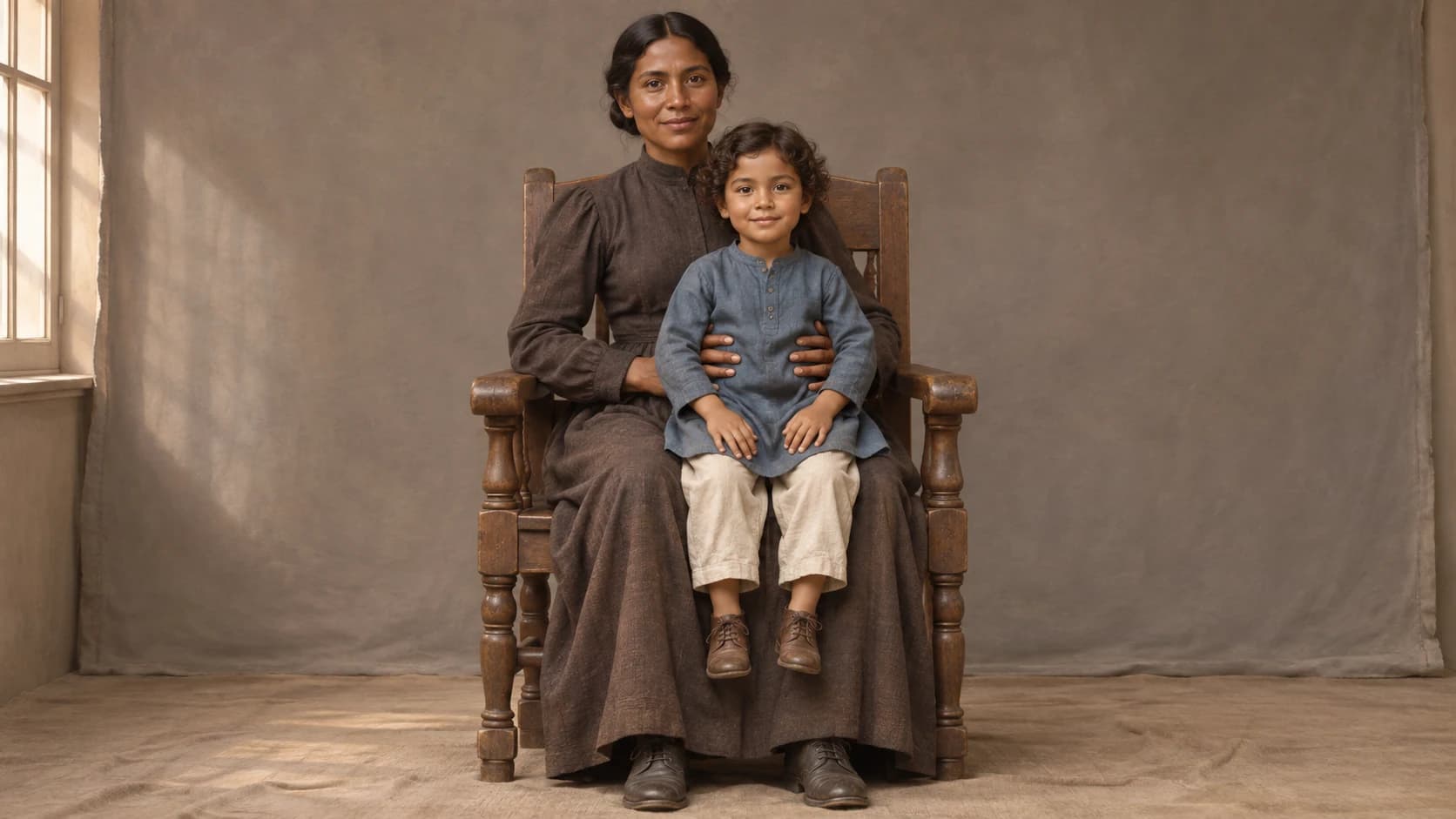
What are hidden mother photos?
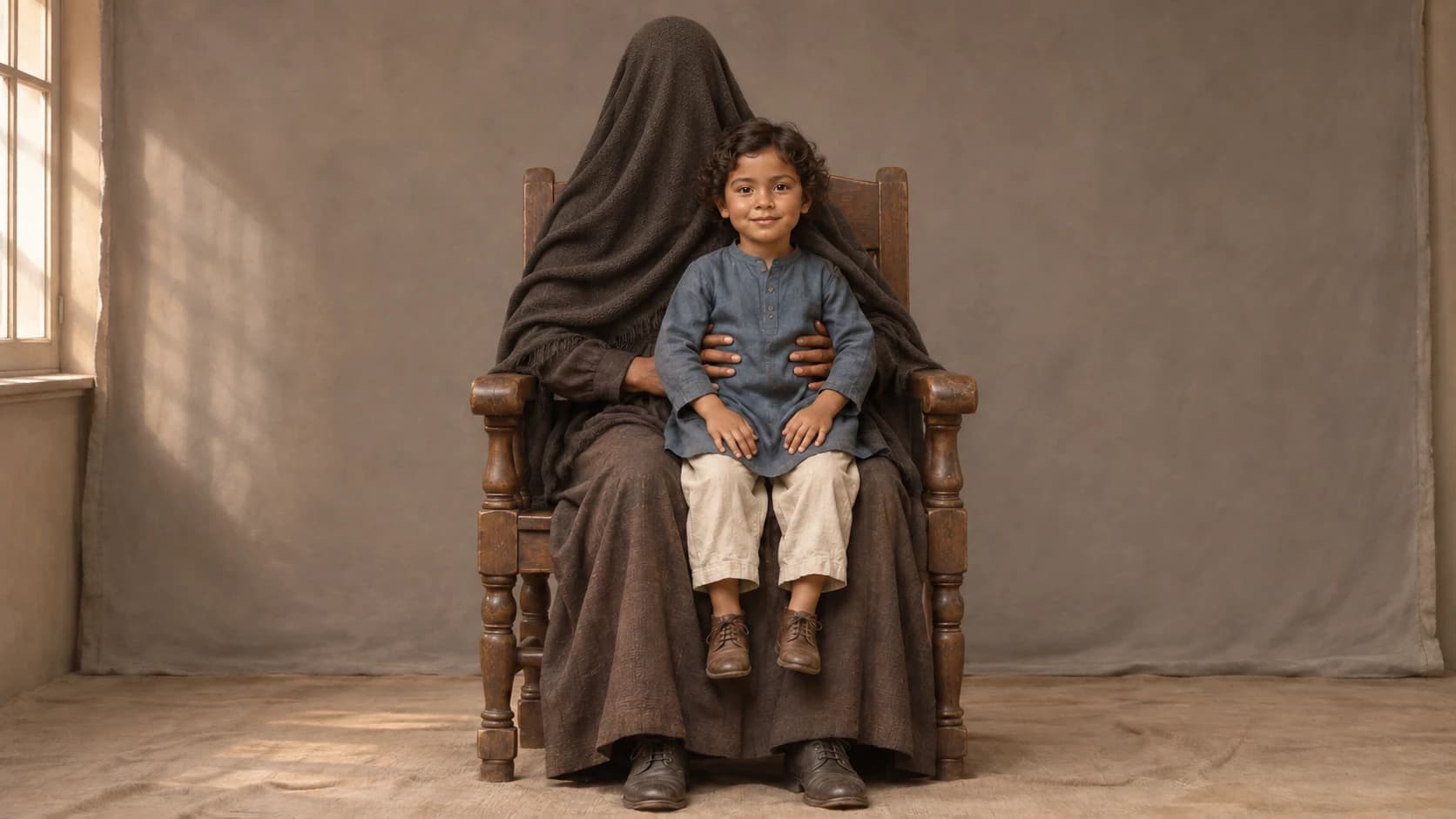
Hidden mother photos are 19th-century child portraits in which an adult steadied a baby or toddler while staying partly outside the intended picture. Look closely around the child and you may find a draped head, a cropped torso, knees behind a chair or a hand holding the child securely.
Read these portraits from the edges inward. The child is the visible subject, yet the nearby hands, fabric and furniture show what it took to hold the pose. Once you can picture the complete setup, the image feels less mysterious.
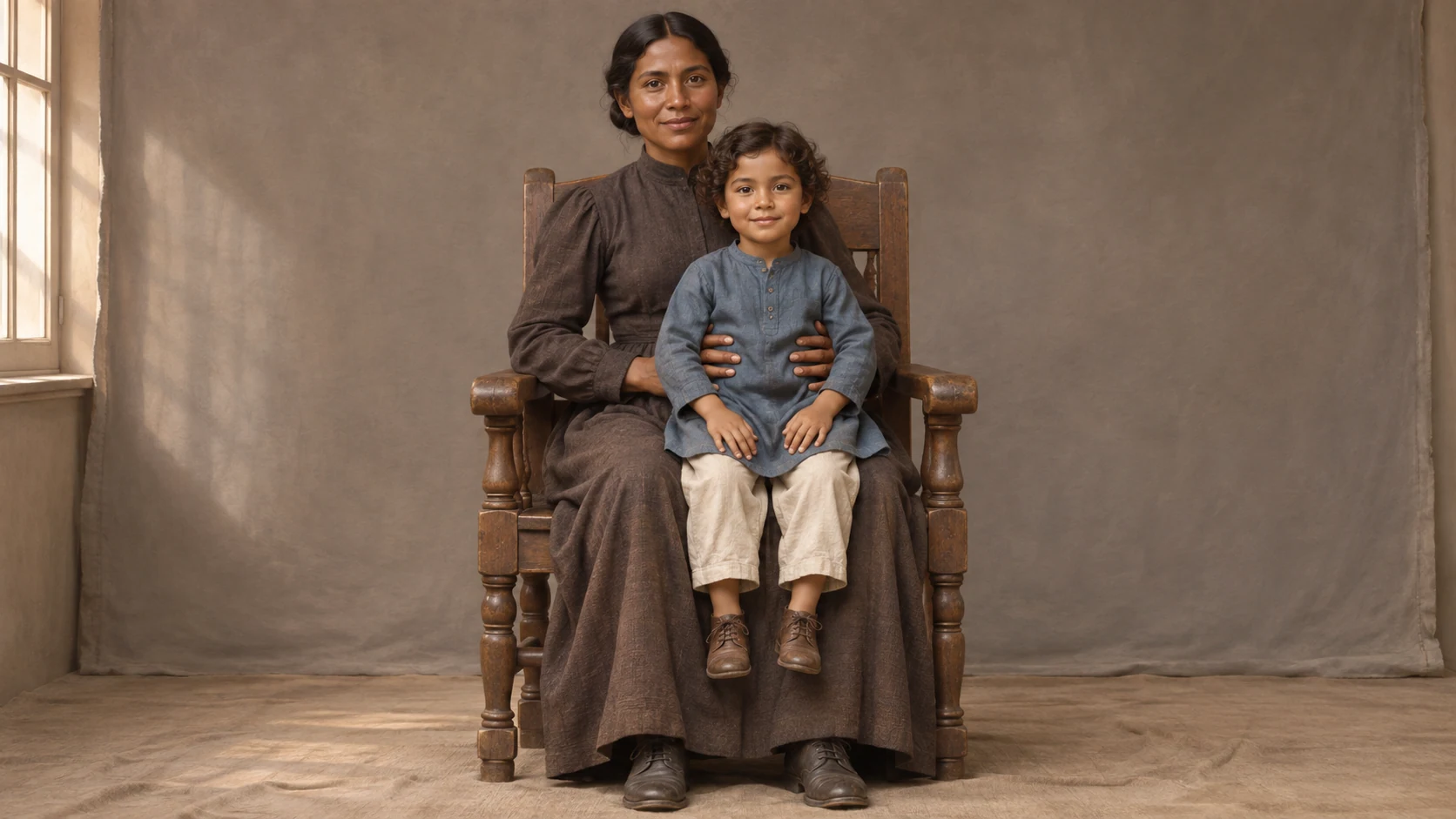
The wider view makes the adult’s supporting posture and the child’s position easy to see.
Why was an adult needed?
Some 19th-century portrait exposures lasted 20 to 60 seconds. That is a long time for a baby to stay calm, upright and still. A trusted adult could soothe the child and keep the pose steady while the photograph was made.
The long exposure helps explain why support was useful. It does not explain why every adult was obscured. Drapery, cropping and mats also controlled what appeared in the finished portrait, so an awkward edge may belong to a composition designed around the child rather than being a simple mistake.
Five visual clues to look for
-
A blanket or dark cloth may cover the adult’s head and shoulders while the outline of a seated body remains visible beneath it.
-
Fingers wrapped around a waist, shoulder or arm may be holding the child steady rather than simply resting there for the pose.
-
What looks like an unusually solid chair back may be fabric covering someone seated behind the child.
-
A shoulder, sleeve or lower body may disappear abruptly at the picture edge without becoming part of the intended portrait.
-
A neat oval opening may come from a physical mat that hides the surrounding embrace and leaves the child apparently suspended in the center.
One detail is not enough to identify the convention. A hand, dark textile or close crop may have another explanation. The reading becomes more convincing when several clues agree: the child’s pose appears to need support, a body-shaped form is nearby and the framing partly hides it.
How concealment changes the picture
In the full pose, the adult, child and chair are all visible. Cover the adult’s head and shoulders and attention moves straight to the child’s face. The adult is still doing the same physical work; the composition simply makes it easier to overlook.
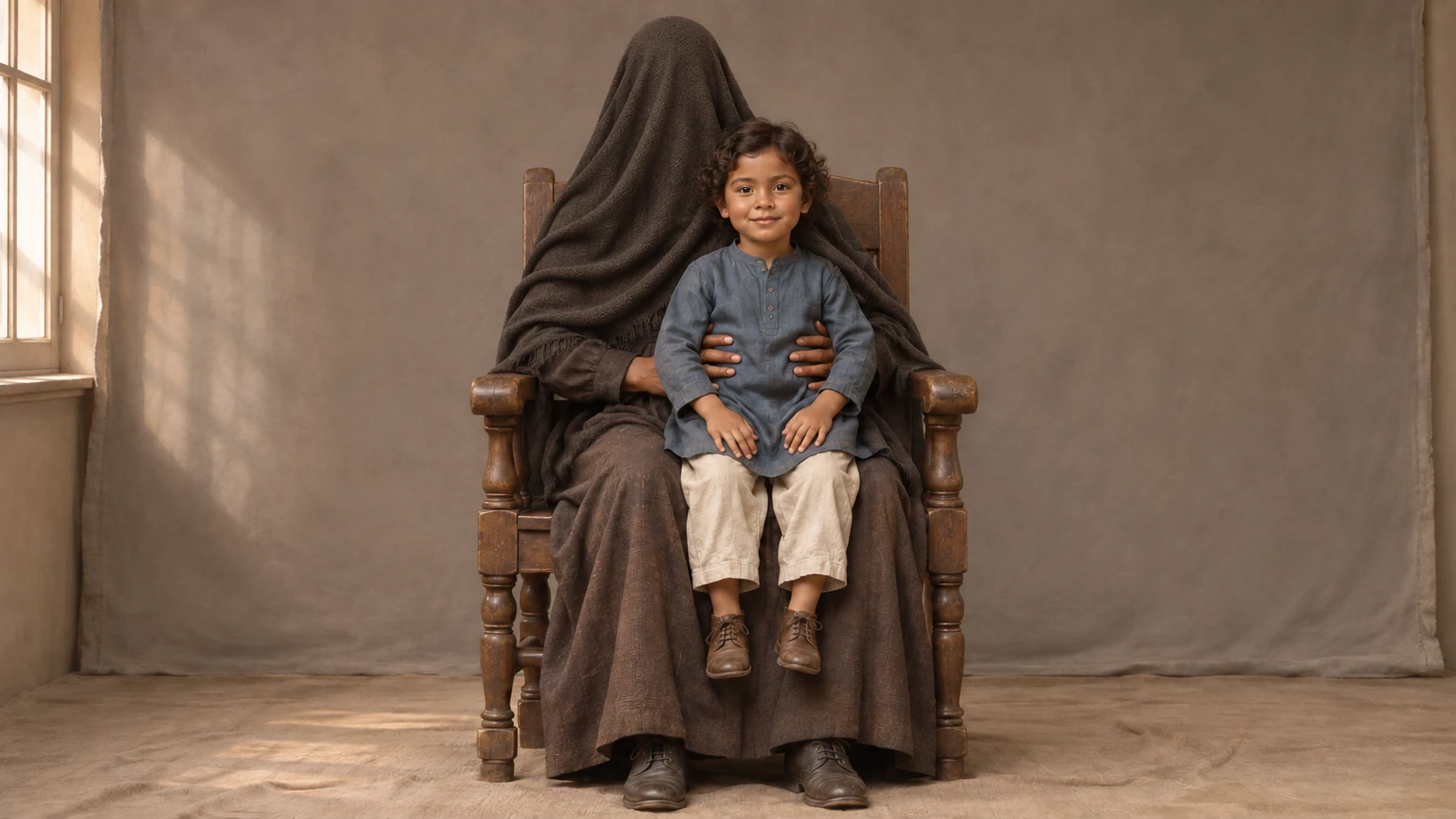
Drapery shifts attention toward the child, yet the supporting hands and seated outline remain visible.
A close oval mat changes the scene again. Most of the shared pose vanishes, leaving the child alone inside a tidy opening. Sometimes a hand, sleeve or strip of fabric is the only sign of the larger setup beyond the mat.
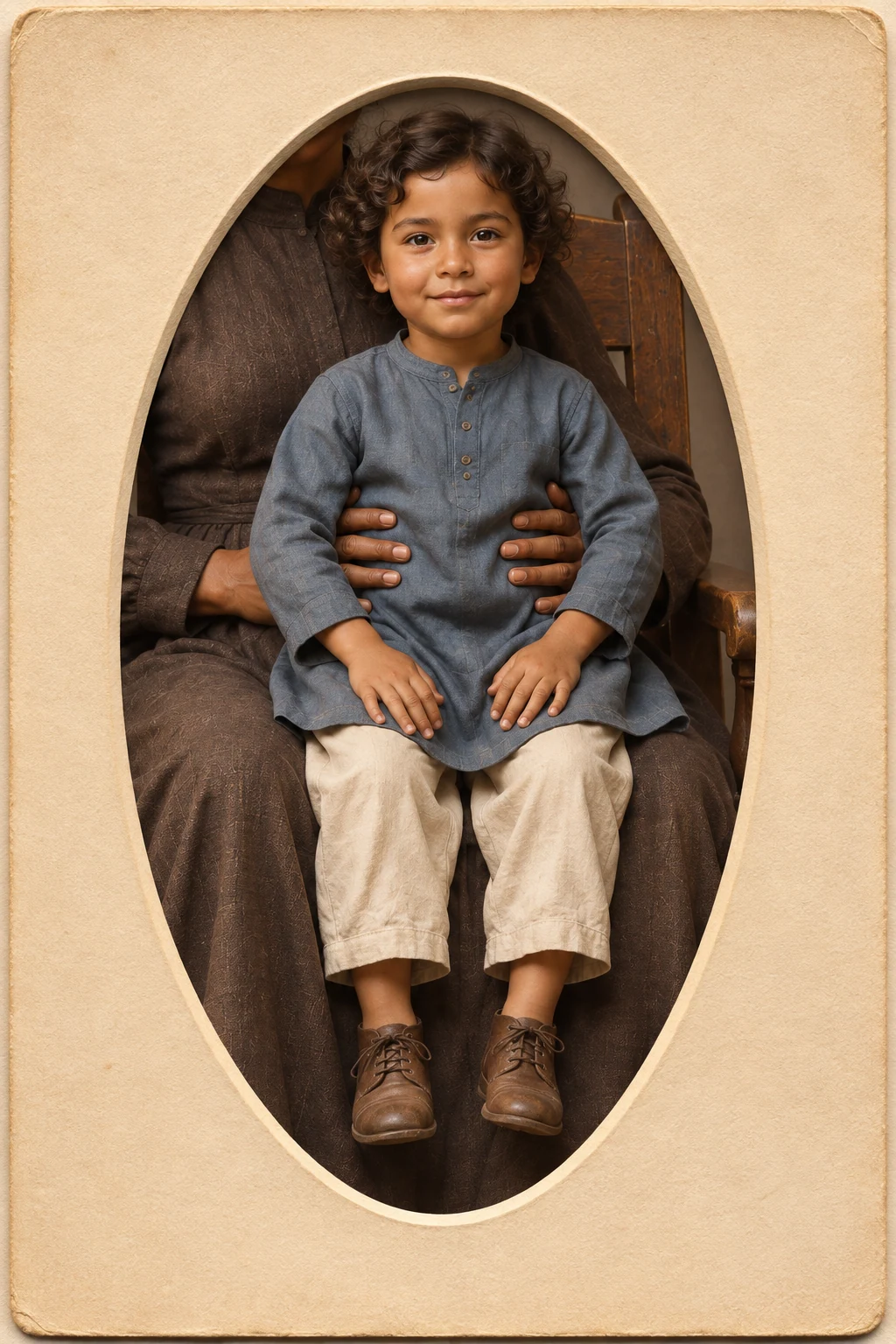
The oval opening removes most of the supporting body and turns a shared pose into a child-centered portrait.
Was the hidden adult always the mother?
Not necessarily. Hidden mother is a convenient modern label, not proof of who was in the picture. Andrea Kaston Tange discusses one draped portrait in which the visible hand and sleeve suggest that the adult was probably a man. Without reliable information attached to a portrait, clothing or a visible hand can offer a clue but cannot confirm an identity.
That uncertainty gets lost when the adult is dismissed as a failed disguise. A closer reading reveals the relationship instead: someone is holding, calming and protecting the child just beyond the frame chosen for the finished portrait.
Why the portraits do not all look alike
These portraits were made during a period of substantial change in photographic technology and practice. Cornell University Library describes the first half-century of American photography as a shift from an expensive, cumbersome novelty to a pervasive medium. Processes, studios, dates and framing choices varied, so there is no single visual formula for these portraits.
The clues are useful, but they are not a rigid test. One portrait may show both hands. Another may leave only a knee visible behind the fabric. A mat may cover almost everything, while a wider surviving version reveals the full embrace.
Look for the person the frame leaves out
When you find one of these portraits, begin with the child’s posture and consider what would be needed to hold it. Then trace the hands, fabric, chair edges and mat. The answer often survives in fragments. The finished portrait centers the child, but traces of the person providing support remain near the frame.
For another portrait convention, read about why people didn’t smile in old photos. You can also explore why old photos were hand-colored or borrow the framing approach for vintage family photoshoot ideas of your own.
Sources
- The Conversation: Hidden mother photographs
- Cornell University Library: Dawn’s Early Light
The visual sequence uses fictional editorial AI reimaginings for illustration; it is not archival photography or actual Throwback output.