
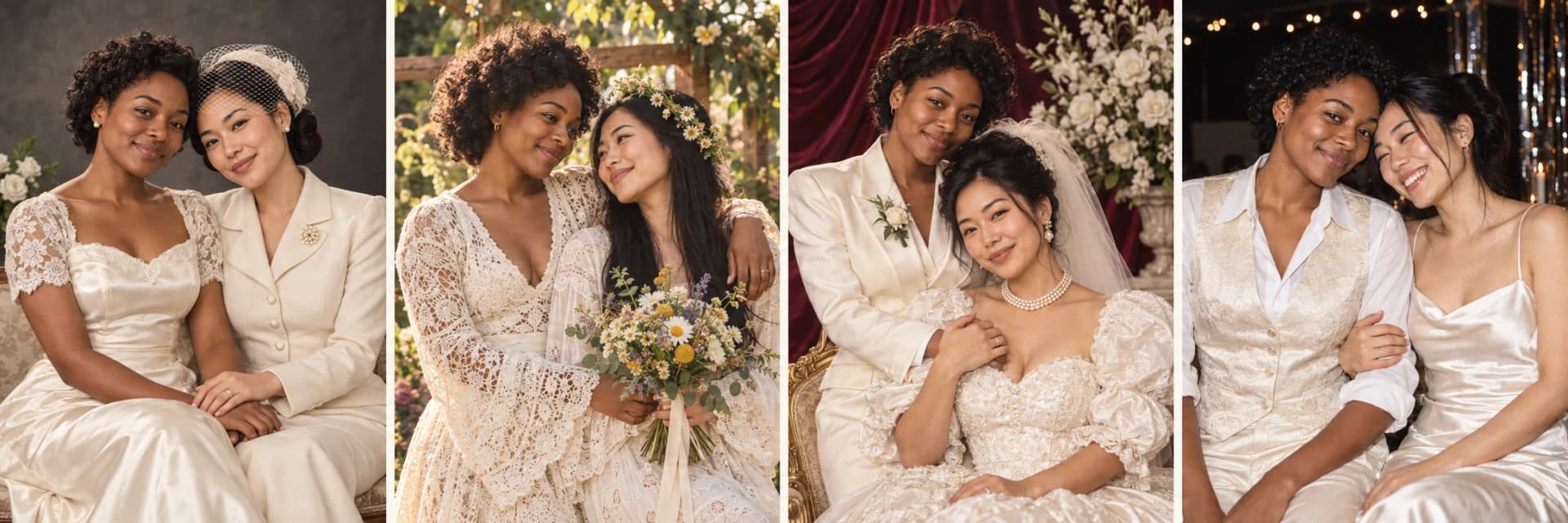
Choose one decade and make every choice belong to it
Pick one decade, then make the entire portrait belong to it. Pose, silhouette, hair, accessories, setting, light and photographic character should all pull in the same direction. Vintage clothes and a tinted finish are not enough by themselves.
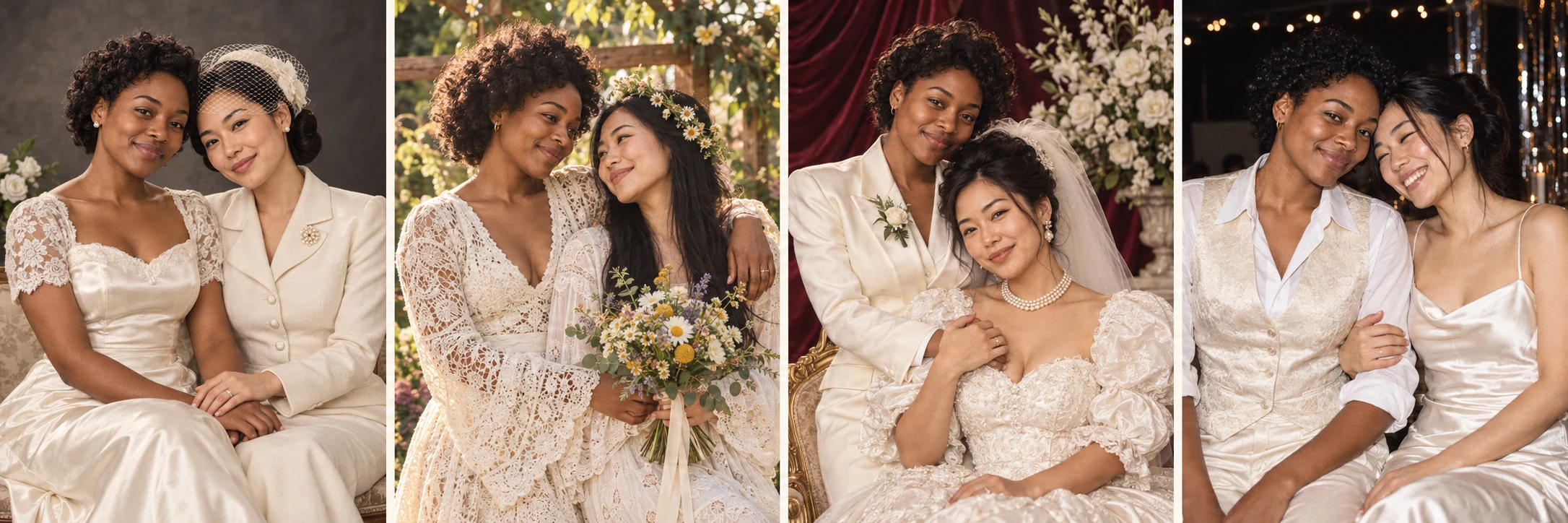
One couple, four wedding portrait worlds shaped by pose, styling, setting and light.
Use these four recipes as starting points, not as rules for how every wedding in a decade looked. The best choice is the mood that fits the couple: composed, sun-warmed, theatrical or candid. If you want to test the premise before planning a shoot, the AI Time Portrait studio can reinterpret a selected shared photograph in another decade. Look closely at the result, because both people may not stay recognizable.
Keep one relationship cue recognizable
Before choosing flowers or furniture, find a gesture that already feels like the couple. Maybe they link hands, align their shoulders, lean toward each other or fall easily into a shared laugh. Keep that cue in the picture as everything around them changes.
-
For a formal portrait, keep the bodies still, place the hands deliberately and choose a clear eye line.
-
For a relaxed portrait, add an easy action such as walking, turning together or adjusting a sleeve.
-
For a candid portrait, give the couple something genuine to react to rather than asking for a generic laugh.
1950s-inspired: a composed studio sitting
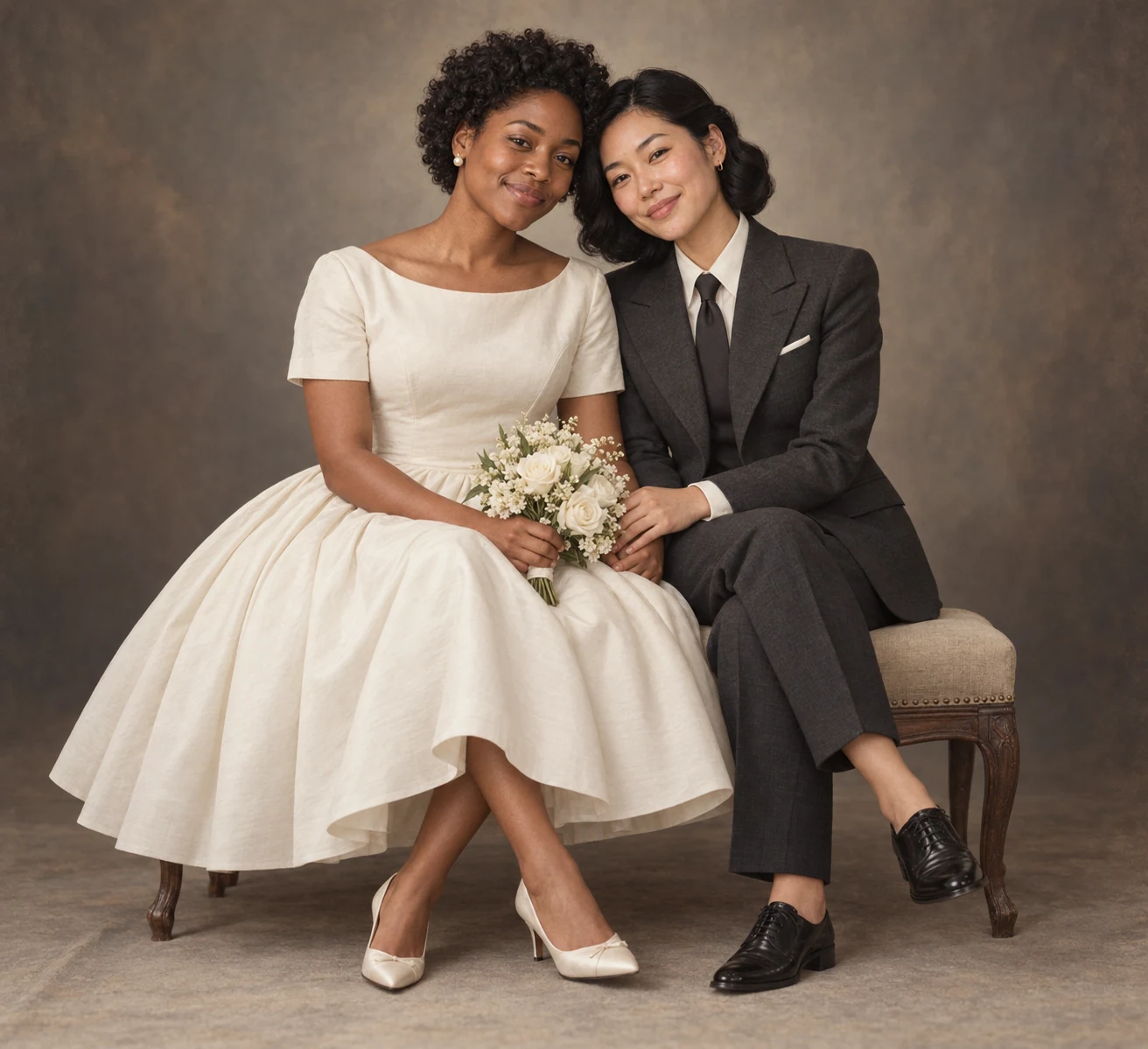
A close pose, restrained palette and broad studio light make formality the central idea.
Treat this portrait like a formal appointment. Seat or stand the couple close together against a restrained backdrop, with visible hands and calm expressions. A structured silhouette, tailored suit, sculpted hair and compact bouquet give the frame enough shape. It does not need a roomful of props.
-
Pose: bring the shoulders together, angle both bodies slightly inward and place the hands with care.
-
Setting and light: use a plain or softly painted backdrop, broad illumination and very little clutter.
-
Photographic character: choose restrained color or monochrome, modest contrast and fine grain.
For something more cinematic, take the Old Hollywood glamour photoshoot guide as a separate direction. Trying to squeeze both moods into one frame will usually muddy the idea.
1970s-inspired: a warm garden celebration
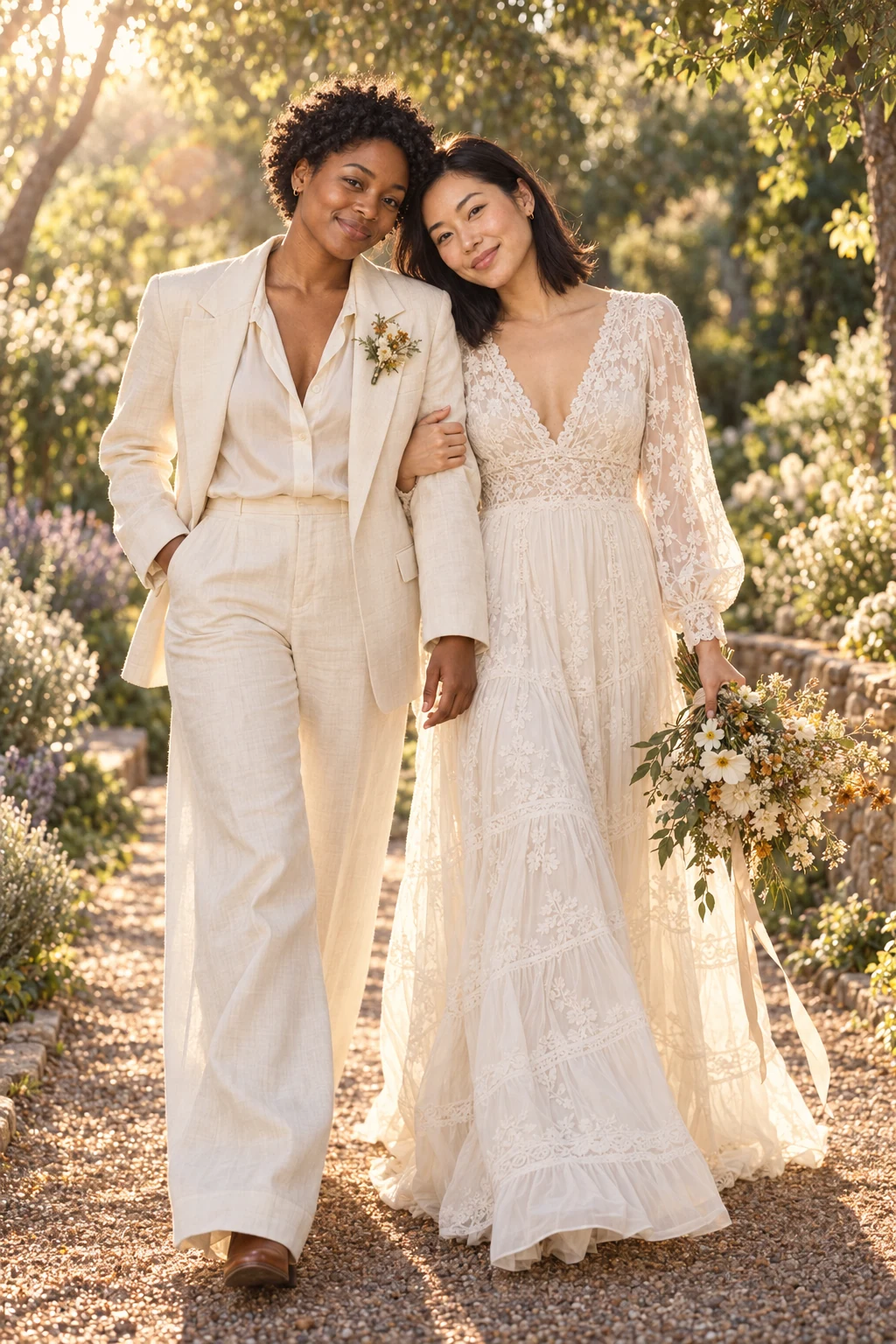
Movement, natural texture and low garden light give this portrait its relaxed warmth.
Let this one breathe. Photograph the couple walking through greenery, pausing beneath a tree or leaning together at the edge of the celebration. Flowing shapes, tactile fabrics and a loosely gathered bouquet do more for the mood than a pile of obvious novelty props.
-
Pose: walk slowly, turn toward each other or pause together between movements.
-
Palette: use warm neutrals, leafy greens, amber highlights and visible natural texture.
-
Photographic character: work with low warm light, gentle flare, soft contrast and visible grain.
1980s-inspired: a dramatic album portrait
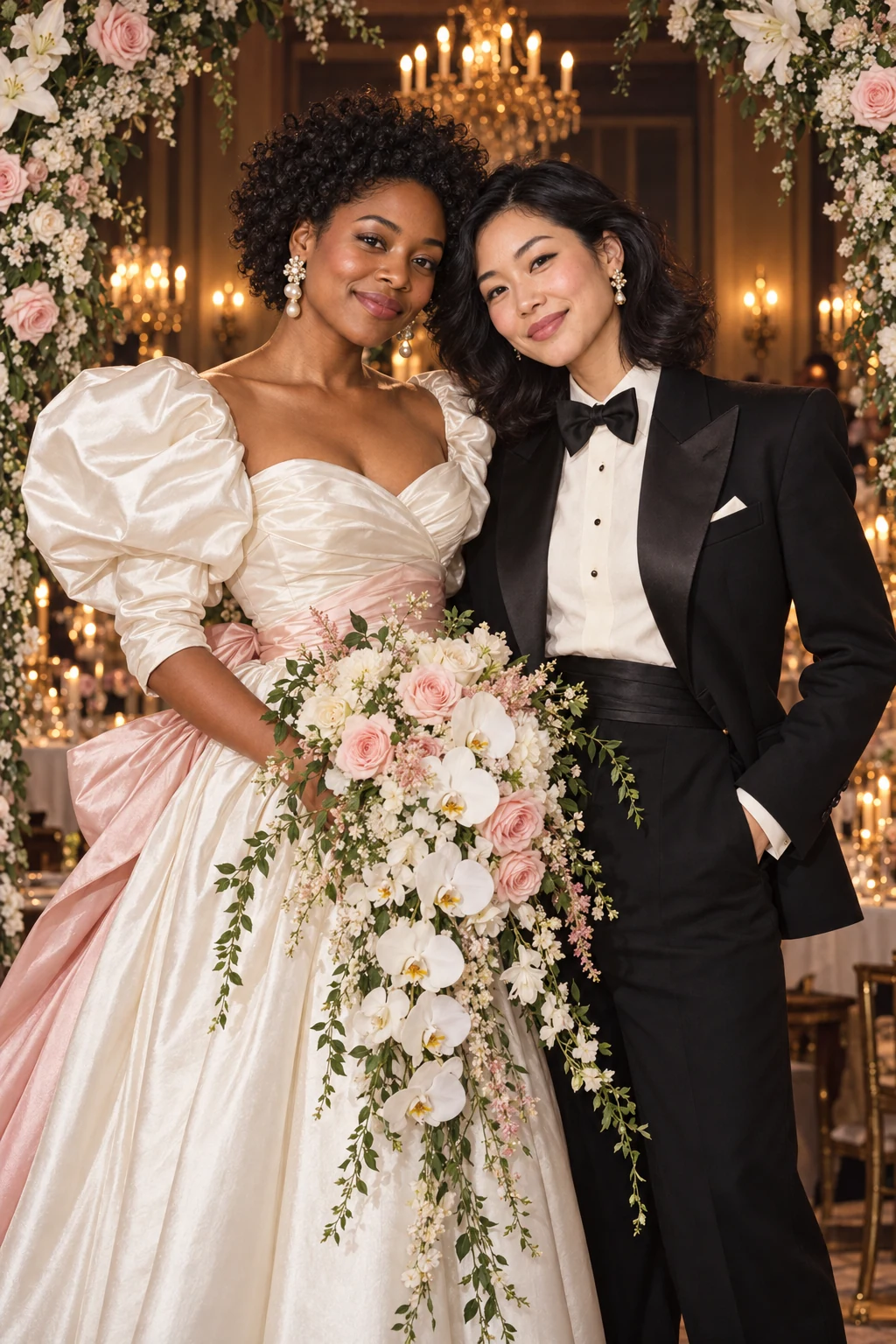
Full silhouettes, statement details and assertive flash turn the portrait into a celebration.
This portrait can afford to be big and confident. Pair fuller hair and a sculptural sleeve with one memorable accessory, a generous bouquet and a strong formal pose. The details should back each other up, not fight to become the star.
-
Pose: start with a symmetrical portrait beneath a floral arch, then make a looser frame with the couple turned inward.
-
Setting and light: place the couple in a darker reception room, then use direct flash against glowing practical lights.
-
Photographic character: use bold color, bright highlights and firm contrast to support the theatrical styling.
For more ways to shape the hair, clothing and wider scene, continue with the 1980s portrait inspiration guide, then adapt the ideas to the wedding setting.
1990s-inspired: a direct-flash reception
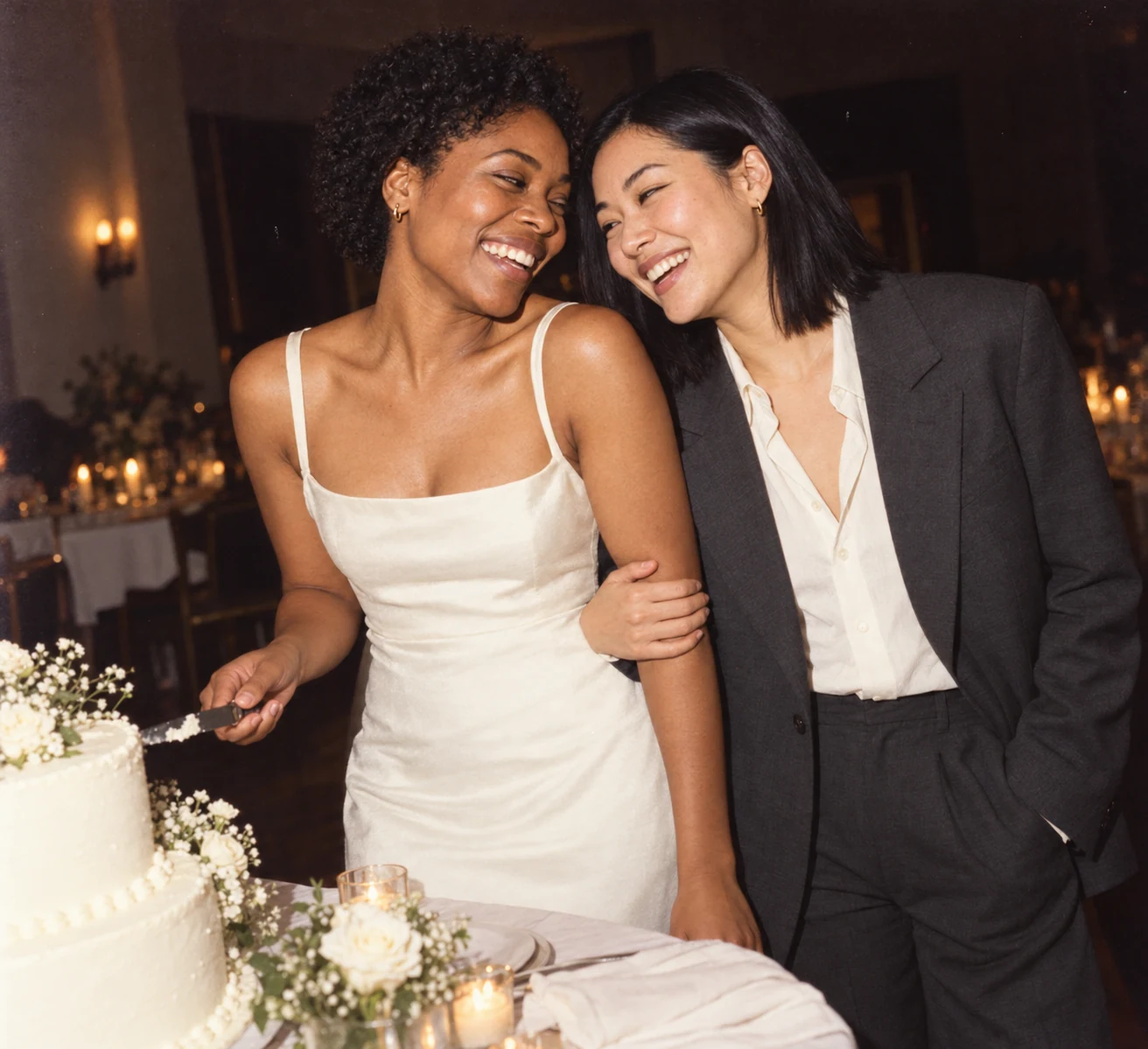
Direct flash and imperfect framing make the reception feel immediate and unguarded.
Build this imagined reception around direct frontal flash. Put the couple beside the cake table, against a plain wall or halfway onto the dance floor. Keep the silhouettes simple so their expressions, the hard-edged light and the slightly awkward framing can carry the picture.
-
Pose: take one camera-facing frame, then photograph the couple laughing or moving before they reset.
-
Setting: keep a few recognizable reception details, but remove anything that takes over the frame.
-
Photographic character: use bright frontal light, deep background shadows and deliberately imperfect composition.
Start with the right shared photograph
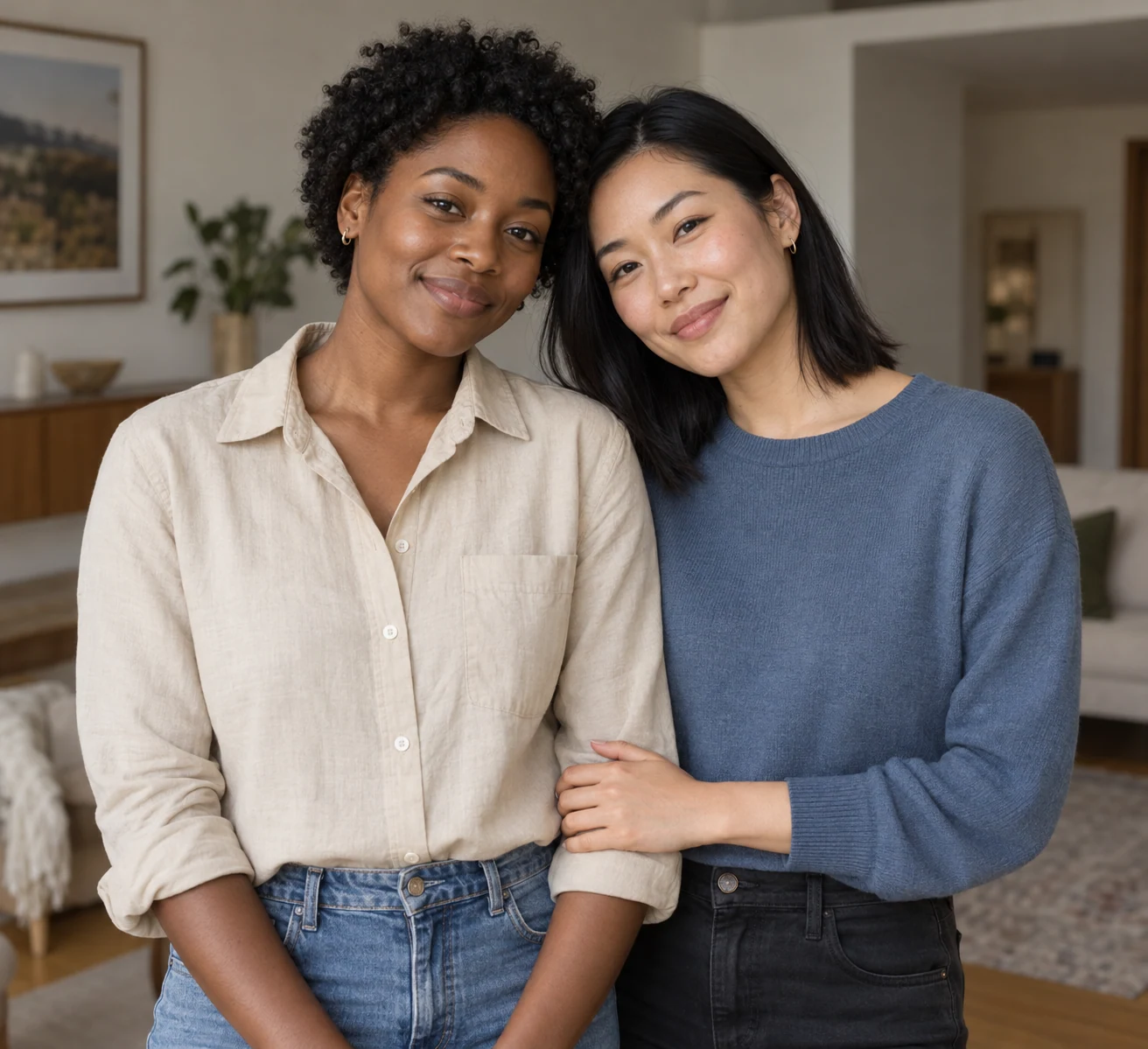
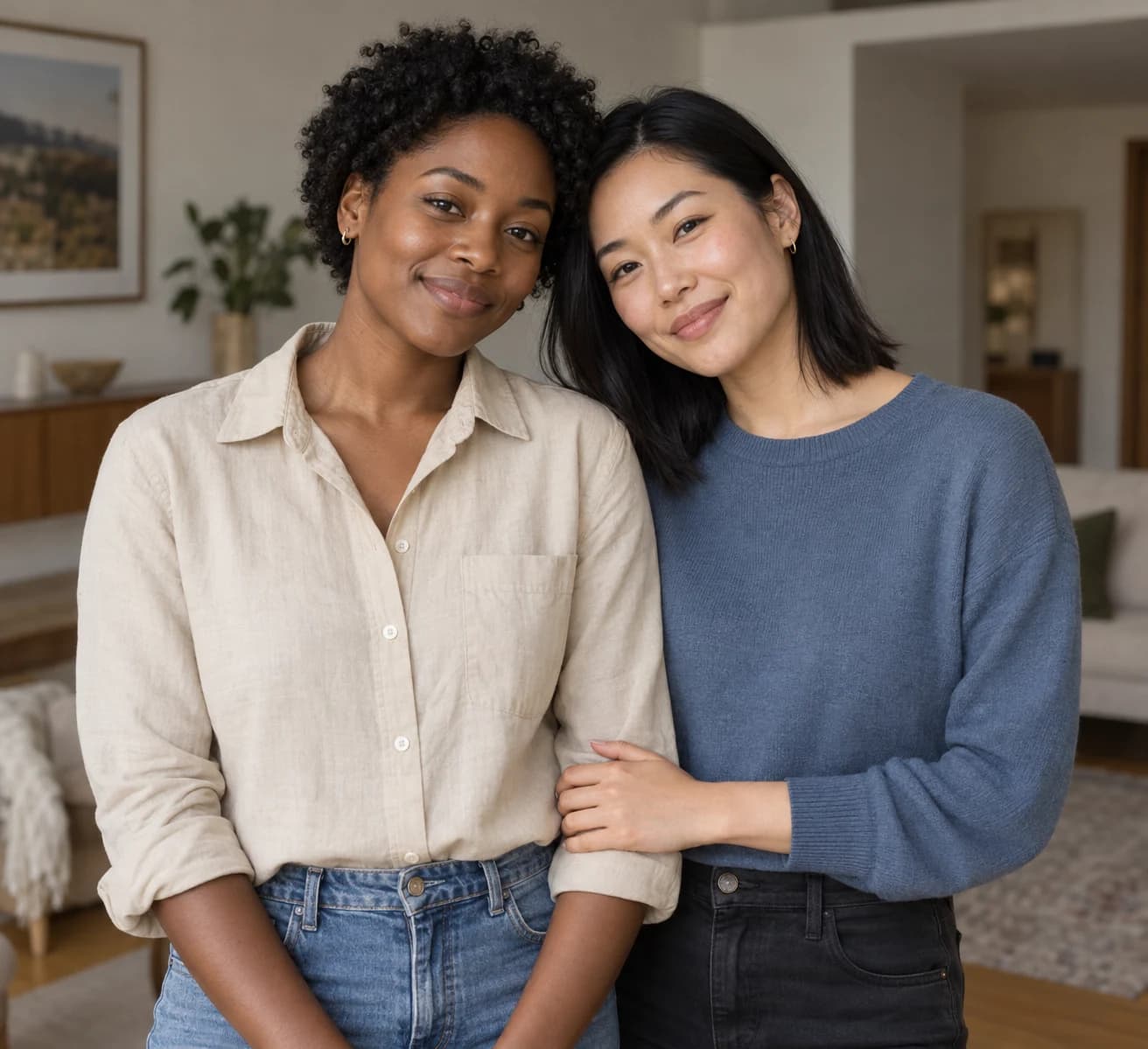
A clear shared portrait gives both faces and the couple's connection room to carry through every concept.
The current Time Portrait flow starts with one photograph that already contains both partners. It does not combine separate portraits. Choose a frame where both faces are clear, reasonably large and free from heavy blur or obstructions.
-
Give both faces similar visual weight rather than leaving one partner small in a corner.
-
Leave some space around the hair and shoulders so there is room for new styling and a different setting.
-
Choose an expression or gesture that already says something recognizable about the relationship.
Everyone pictured should agree before the photograph is submitted for AI processing. The guide to couple photos through the decades has more ideas for shared poses and source photographs.
Treat wedding-party images as a separate challenge
Get the couple's portrait working before bringing in attendants. A larger group means more faces, hands, flowers, jewelry and overlapping silhouettes to manage. Keep the couple at the visual center, but leave enough room for every person to be seen.
-
Build a clean composition for the couple before adapting it to the full wedding party.
-
Choose one styling rule for the group, such as pastel accents or natural textures, instead of giving every person a separate retro motif.
-
During a physical shoot, capture the formal arrangement before asking the group to move, turn or react.
Inspect both identities before keeping an AI portrait
Place the original next to every generated portrait and inspect each partner on their own. Start with facial structure and proportions. Then check the eyes, nose, mouth, skin tone and distinguishing features. A beautiful dress or reception room does not make up for either partner looking like a different person.
-
Once both faces pass that first check, review hairlines, earrings, glasses, teeth and hands.
-
Look at the relationship cue as well. Linked hands, body angle and eye line should still feel intentional.
-
Reject the frame if either partner is no longer recognizable, however good the styling looks.
Turn the chosen concept into a photographer brief
Keep the brief to one page. Include a full-length silhouette, a close reference for hair and makeup, one lighting direction, one setting and two poses. Add a sentence for the mood, perhaps quiet formality or candid flash energy. That gives the photographer a clear priority instead of a crowded nostalgia collage.
-
Wardrobe: settle on the main silhouette and one or two materials before choosing accessories.
-
Hair and makeup: choose a shape and level of intensity that support the portrait without competing with it.
-
Location: pick one background that can carry the concept without extensive decoration.
-
Shot list: plan one formal frame, one movement frame and one close expression.
Give one wedding portrait another lifetime
Choose the portrait world the couple would actually enjoy inhabiting, then carry it all the way from silhouette to lighting. To try the idea digitally, take one shared photograph that everyone has agreed to use into the AI Time Portrait studio and choose a decade. Compare the result carefully with both people in the original. Results vary, so keep only the frames where both people, and the connection between them, remain recognizable.
The images in this article are editorial AI reimaginings for inspiration, not archival photographs or actual Throwback output.